(714) 332-6302

Why How Duct Installation Affects Comfort and Efficiency Is the HVAC Question Orange County Homeowners Should Be Asking
How duct installation affects comfort and efficiency in your home is one of the most important — and most overlooked — factors in your HVAC system’s performance. Most homeowners focus on the air conditioner or furnace when something feels off. But the ductwork carrying conditioned air through every room is often the real culprit behind uneven temperatures, sky-high utility bills, and a system that never quite keeps up.
Here is a quick answer to what you need to know:
How duct installation affects comfort and efficiency — at a glance:
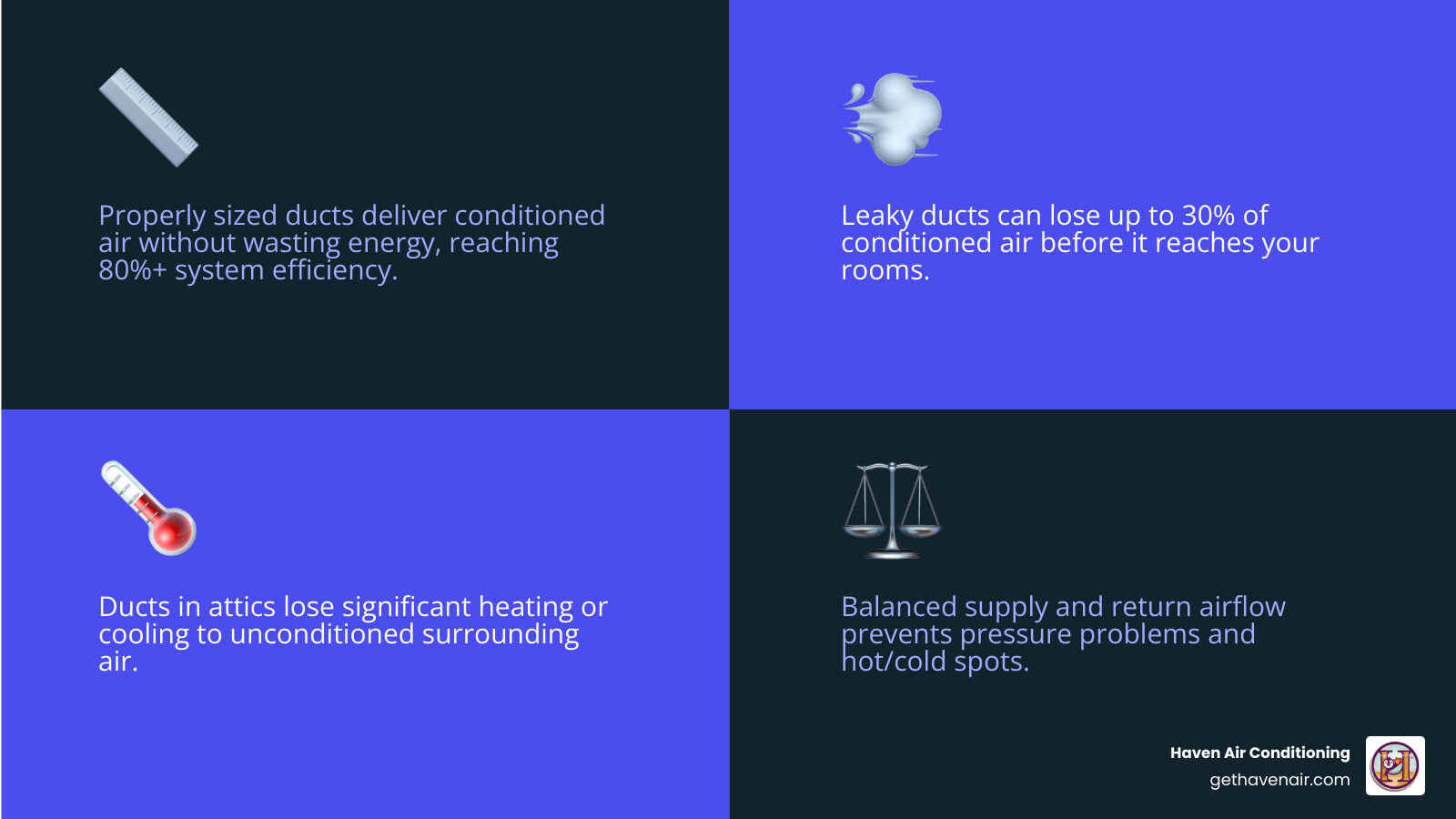
- Properly sized and sealed ducts deliver conditioned air where it needs to go without wasting energy
- Leaky ducts can lose up to 30% of conditioned air before it ever reaches a room
- Poorly designed systems operate at only 60–75% efficiency on average — properly installed systems can reach 80% or more
- Ducts in unconditioned spaces (like attics) lose significant heat or cooling to the surrounding environment
- Balanced supply and return airflow prevents pressure problems, hot and cold spots, and excessive blower strain
- Professional sealing and testing can reduce heating and cooling costs by up to 20%
In Orange County, where air conditioning runs hard from spring through fall, a duct system that is even slightly compromised means your equipment works overtime while your comfort suffers. Homes in Anaheim, Irvine, Fullerton, and surrounding areas often have aging duct systems that were never designed for today’s HVAC demands — and the energy waste adds up fast.
This guide covers everything you need to know: how duct design and installation decisions directly shape your comfort, what mistakes cost homeowners the most, and what proper professional installation actually looks like from start to finish.
Know your how duct installation affects comfort and efficiency terms:
The Science of Airflow: How Duct Installation Affects Comfort and Efficiency

When we talk about how duct installation affects comfort and efficiency, we have to talk about the physics of moving air. Think of your ductwork as the “highway” for your home’s air. If the highway is full of potholes, dead ends, or lanes that are too narrow, the traffic (your conditioned air) can’t get to where it needs to go.
In the HVAC world, we use a standard called Manual D to design these highways. This process ensures that the air velocity and volume are perfectly matched to your specific equipment. If the ducts are installed without these calculations, you run into “static pressure” issues. High static pressure is essentially like trying to breathe through a cocktail straw while running a marathon; it puts immense strain on your system’s blower motor, leading to premature equipment failure and skyrocketing energy use.
Proper Airflow is the heartbeat of a comfortable home. When airflow is restricted, your AC unit might be producing ice-cold air, but that air never makes it to your bedroom in Anaheim or your home office in Fullerton. Instead, it lingers in the ducts, losing its “cool” before it ever reaches you.
| Feature | Properly Sized Ducts | Undersized Ducts |
|---|---|---|
| Airflow Volume | Meets design requirements for every room | Restricted; rooms stay stuffy or warm |
| System Noise | Quiet, balanced operation | Whistling, rattling, or “jet engine” sounds |
| Blower Motor Life | Extended; operates within rated parameters | Shortened due to high static pressure strain |
| Energy Efficiency | Reaches rated SEER2 levels | Drops significantly; system runs longer cycles |
| Static Pressure | Low and steady (approx. 0.5 in. w.c.) | High; forces the fan to work harder |
How Duct Installation Affects Comfort and Efficiency Through Proper Sizing
Many homeowners in Orange County assume that “bigger is better” when it comes to ducts, but that’s a common misconception. If ducts are oversized, the air velocity drops so low that the air simply “falls” out of the vents rather than being projected into the room for proper mixing. This leads to stagnant air and uneven temperatures.
On the flip side, undersized ducts are a recipe for disaster. We start every project with a Manual J load calculation to determine exactly how much cooling each room needs based on square footage, window exposure, and insulation levels. We then follow up with a Manual D Duct Installation plan. This ensures the duct diameter is perfectly calculated to minimize friction loss—the resistance air meets as it travels through the pipes.
Why Balanced Supply and Return Airflow is Critical
Your HVAC system is a closed loop. For every cubic foot of air pushed into a room through a supply vent, a cubic foot of air must be pulled back through a return vent. This is called pressure balance.
When how duct installation affects comfort and efficiency is ignored during the return air design, you get “pressure imbalances.” If a bedroom door is closed and there is no return path (like a dedicated return grille or a jumper duct), the room becomes pressurized. The supply air can’t enter, so it leaks out under the door or through ceiling gaps into the attic. Meanwhile, the rest of the house becomes “depressurized,” potentially pulling in hot, dusty air from the garage or crawlspace. Our Duct Services focus on creating a neutral pressure environment, ensuring that air circulates freely even when doors are closed.
Common Installation Mistakes That Drain Your Wallet
It is a startling industry fact: up to 30% of the air that passes through ducts in the average American home is lost to leaks. In a place like Orange County, where summer temperatures can climb, that is 30% of your money literally blowing into your attic or crawlspace.
Common mistakes include:
- Sharp Bends and Kinks: Using flexible ductwork is common, but when it’s installed with sharp 90-degree turns or allowed to sag, it creates massive airflow resistance.
- Improper Joint Connections: Many DIY or low-quality installs rely on standard “silver” duct tape. As we move into May 2026, we know that standard adhesive dries out and fails under the heat of a California attic.
- Poor Layout: Long, winding runs that bypass closer rooms to reach distant ones often result in the “end of the line” rooms never getting enough air.
If you’re noticing high bills, it might be time for a professional Duct Repair to address these “potholes” in your air highway.
How Duct Installation Affects Comfort and Efficiency in Unconditioned Spaces
In Southern California, many of our duct systems live in the attic. During a typical July afternoon in Irvine or Buena Park, your attic can reach 130 degrees or more. If your ducts aren’t properly insulated to at least R-8 standards, that cold air inside the duct is battling a 70-degree temperature difference.
Without a proper thermal barrier and a high-quality vapor barrier, your ducts can actually “sweat.” This condensation can lead to mold growth and water damage to your ceilings. When considering The Best Ductwork Options for Your Modern Home, we always recommend keeping ducts within the conditioned space of the home whenever possible. If they must be in the attic, they need to be sealed tight and heavily insulated to prevent heat gain.
Identifying Signs of Poor Ductwork in Your Home
How do you know if your home is a victim of poor installation? Look for these warning signs:
- Uneven Temperatures: The master bedroom is a sauna while the living room is a refrigerator.
- Excessive Dust: Leaky return ducts pull in attic dust and dander, blowing it directly into your living space.
- High Utility Bills: Your AC runs constantly, but the house never feels quite right.
- Noisy Vents: Whistling or banging sounds often indicate undersized ducts or loose connections.
- Weak Airflow: You can barely feel air coming out of certain registers.
Understanding Why Regular Vent Cleaning Matters for Home is part of the solution, but if the underlying installation is flawed, cleaning is only a temporary fix.
The Long-Term Value of Professional Sealing and Testing
When we install or repair a system, we don’t just “hope” it works. Professional installation involves specialized testing, such as a duct blower test, to verify that leakage is under 5%.
We use mastic sealant—a gooey, fiber-reinforced paste—to create a permanent, airtight bond at every joint. Unlike tape, mastic doesn’t peel or dry out over time. This level of detail can save you as much as 20% on your cooling and heating costs. For homeowners in cities like Santa Ana or Garden Grove, that translates to hundreds of dollars in savings every year. You can learn more about the technical side of these processes in our Duct Cleaning Services Complete Guide.
Improving Indoor Air Quality and Equipment Longevity
How duct installation affects comfort and efficiency also extends to the air you breathe. When ducts leak in an unconditioned space, they don’t just let cold air out; they pull “bad” air in. This includes insulation fibers, pollen, dust mites, and even fumes from the garage.
A tightly sealed system ensures that 100% of the air going through your vents has passed through your high-efficiency filter. This protects your family’s health and keeps the sensitive internal components of your AC unit clean. A clean system lasts longer—often 15 to 20 years—compared to a system choked by dust from leaky ducts. For more on maintaining a healthy home, check out our guides on Residential Duct Cleaning and Professional Air Duct Cleaning – What to Expect.
Frequently Asked Questions about Ductwork Performance
Can I use standard duct tape to seal my vents?
Actually, no! Despite the name, standard “duck” tape or cloth-backed tape is one of the worst things you can use for HVAC ducts. The adhesive is not rated for the high temperatures found in Orange County attics. It will dry out, become brittle, and fall off within a year. Professionals use UL 181 rated mastic sealant or foil-backed tape, which are designed to withstand heat and vibration for decades.
How much can I save by sealing my ducts?
The average American home loses about 20% to 30% of its conditioned air through leaks. By professionally sealing and insulating your ducts, most homeowners see a reduction of up to 20% on their monthly utility bills. In a high-use climate like ours, the ROI for duct sealing often pays for itself within just a few seasons.
How long does a professional duct installation take?
For a standard residential home in Orange County—whether you’re in Costa Mesa or Yorba Linda—a full duct replacement or installation typically takes between 1 and 3 days. We work efficiently to ensure minimal disruption to your daily life, protecting your floors and furniture while we work in the attic or crawlspace.
Conclusion: Your Partner for Orange County Comfort
At Haven Air Conditioning, we know that your home is your sanctuary. Whether you’re in Anaheim, Irvine, or Fullerton, you deserve a system that provides consistent comfort without wasting your hard-earned money. Understanding how duct installation affects comfort and efficiency is the first step toward a better home environment.
We take a scientific approach to every Duct Services project, using Manual J and Manual D calculations to ensure your home’s “air highway” is built for performance. Our team of certified, friendly professionals is dedicated to transparency and exceptional customer service.
If you’re tired of hot and cold spots or high energy bills, we invite you to reach out for an expert second opinion. We also offer a membership maintenance plan that includes priority scheduling, ensuring your system stays in top shape year-round. Let us take care of your comfort so you can relax.
Ready to optimize your home’s performance? Contact Haven Air Conditioning today to schedule a ductwork evaluation and feel the difference that professional installation makes.