(714) 332-6302

What Homeowners in Orange County Should Know About How Duct Cleaning Improves Indoor Air Quality
Understanding how duct cleaning improves indoor air quality is more nuanced than most service companies will tell you — and if you live in Orange County, where marine layer humidity, wildfire smoke, and year-round HVAC use all put extra strain on your system, it matters even more.
Here is a quick answer before we dive in:
How duct cleaning can improve indoor air quality:
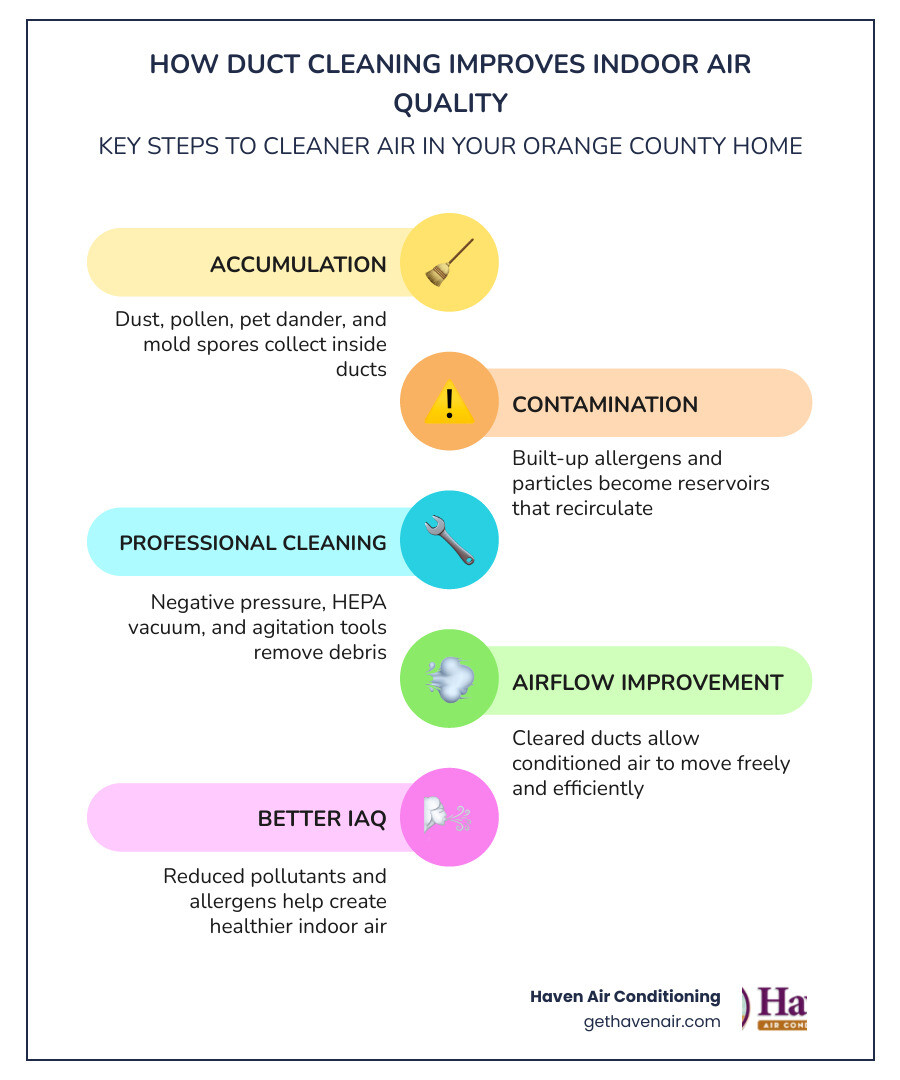
- Removes accumulated contaminants — dust, pet dander, pollen, and mold spores can build up inside ductwork over time
- Reduces allergen reservoirs — ducts can act as a holding area for particles that recirculate through your home
- Supports HVAC airflow — removing debris from ducts and system components can help air move more freely
- Addresses specific problems — visible mold growth, vermin infestation, or post-renovation debris are clear situations where cleaning helps
- Complements other IAQ strategies — works best alongside regular filter changes, moisture control, and proper ventilation
Important caveat: According to the EPA and independent scientific reviews, duct cleaning has never been proven to prevent health problems on its own, and routine cleaning is not universally recommended. The evidence is strongest when a specific contamination problem exists.
That said, your home’s duct system is the pathway through which every breath of conditioned air travels. In Orange County homes — many of which have aging ductwork, coastal humidity, or have recently gone through renovations — knowing when cleaning genuinely helps (and when it does not) can save you money and protect your family’s health.
For more on the most common pollutants circulating through Orange County homes, see our guide to the Most Common Indoor Air Pollutants.
Must-know how duct cleaning improves indoor air quality terms:
What is Air Duct Cleaning and How Does the Process Work?
To understand how cleaning your air channels affects the air you breathe, we must first look at what a professional duct cleaning process actually entails. It is not simply a matter of sticking a household vacuum hose down your floor register. True duct cleaning is a comprehensive mechanical process that targets your entire heating and cooling system.
A proper cleaning must follow professional industry guidelines, such as the National Air Duct Cleaners Association (NADCA) standards. The process relies heavily on the “source removal” method. Here is what you should expect when a certified team services your home:
- System Inspection: Before turning on any machinery, technicians inspect the ductwork. This is often done using specialized cameras to check for structural integrity, leaks, and the exact nature of the buildup (such as dust, mold, or pest debris).
- Establishing Negative Pressure: Technicians hook up a high-powered, truck-mounted or portable vacuum equipped with a High-Efficiency Particulate Air (HEPA) filter. This vacuum is connected directly to a main trunk line of your duct system. It creates a continuous negative pressure (a powerful suction) throughout the entire duct network. This ensures that any dust or debris dislodged during the cleaning is pulled directly into the vacuum and contained, rather than escaping into your living rooms.
- Agitation and Mechanical Cleaning: While the vacuum maintains negative pressure, technicians insert physical agitation tools into the individual branch lines. These tools include rotary brushes, air whips, and compressed air nozzles. They slide through the ductwork, physically scrubbing and loosening dirt, pet hair, and debris that have adhered to the inner walls of the ducts.
- Component Cleaning: A complete service does not stop at the metal or fiberglass ducts. It must include cleaning the supply and return registers, grilles, diffusers, the blower motor, housing, and the evaporator coils.
When you schedule this service, knowing what to watch for is key to ensuring you get a thorough job. For a deeper look at this process, check out our guide on Professional Air Duct Cleaning What to Expect.
The Science Behind How Duct Cleaning Improves Indoor Air Quality
When discussing how duct cleaning improves indoor air quality, it is vital to look at what scientific studies actually show. The relationship between clean ducts and clean air is highly debated, and the science is more nuanced than many marketing brochures suggest.
For decades, researchers have analyzed whether scraping the inside of heating and cooling ducts leads to a cleaner breathing zone. The general consensus from organizations like the U.S. Environmental Protection Agency (EPA) is that a light layer of household dust inside your ducts is entirely normal. Because this dust tends to adhere to the duct surfaces, it rarely becomes airborne unless disturbed.
However, controlled scientific field studies have shown that under specific conditions, mechanical duct cleaning can make a measurable difference. Let’s look at the data. A well-known field study conducted in nine single-family homes measured both indoor air quality (IAQ) parameters and HVAC performance before and after mechanical cleaning. The findings revealed that while mechanical duct cleaning is highly effective at removing physical dust from the ducts—consistently bringing dust levels down to meet strict industry standards—its immediate impact on daily airborne particle levels (like PM2.5 and PM10) was often masked by outdoor air pollution and daily household activities (like cooking or smoking).
Interestingly, the study also showed that during the actual cleaning process, airborne particle counts and bioaerosol concentrations briefly spike because of the physical disturbance of the debris. However, when measured forty-eight hours after the cleaning was completed, bioaerosol levels were lower than pre-cleaning levels.
To give you a clearer picture, here is a general comparison of how different pollutants behave before, during, and after a professional cleaning based on scientific observations:
| Pollutant / Metric | Pre-Cleaning Levels | During Cleaning | Post-Cleaning (48 Hours) |
|---|---|---|---|
| Adhered Duct Dust | High (years of accumulation) | Being dislodged | Extremely low (meets NADCA standards) |
| Airborne Particles (PM2.5/PM10) | Baseline (dependent on filtration) | Temporary spike (due to disturbance) | Returns to baseline or slightly lower |
| Bioaerosols (Fungi/Bacteria) | Variable (can amplify in damp spots) | Temporary spike | Lower than pre-cleaning levels |
| Airflow Rates | Restricted in heavily soiled systems | N/A | Improved by 4% to 32% |
To explore broader ways to manage the air in your home, read our Better Indoor Air Quality Ultimate Guide.
How Duct Cleaning Improves Indoor Air Quality by Removing Allergen Reservoirs
Even though normal household dust often stays stuck to the metal walls of your ducts, your HVAC system can still serve as a massive physical reservoir for allergens. This is especially true in homes with multiple pets, heavy carpet, or active families.
Every time your air conditioner or heater kicks on, air travels through your ducts at velocities ranging from 600 to 900 feet per minute. At these high speeds, loose particles can undergo what scientists call “re-entrainment”—meaning they are swept back up into the air stream and blown directly into your living spaces.
For families dealing with allergies or asthma, these reservoirs can contain a cocktail of irritating materials:
- Pet Dander and Hair: Microscopic pet dander is sticky and lightweight. It easily bypasses basic air filters and settles in the return ductwork, where it acts as a constant source of allergens.
- Dust Mites: These microscopic pests thrive on human and pet skin flakes, which make up a large portion of household dust. Accumulations of dust in return vents provide a perfect feeding and breeding ground for them.
- Pollen: Brought in from outdoors on shoes and clothing, pollen can settle in the ductwork during spring and summer, only to be recirculated later in the year.
By physically removing these deep-seated reservoirs, you eliminate the source of these recirculating irritants. For more information on maintaining clean vents, check out our Air Vent Cleaning Ultimate Guide.
How Duct Cleaning Improves Indoor Air Quality and HVAC System Efficiency
There is a direct connection between the cleanliness of your duct system and the physical efficiency of your HVAC unit. When a system is heavily clogged with dust and debris, it has to work much harder to push air through your home.
When technicians perform a comprehensive duct cleaning, they don’t just clean the pipes; they clean the entire air handler unit, including the blower wheel and the evaporator coils. This is where the real efficiency gains happen.
According to the U.S. Department of Energy, even an incredibly thin layer of dust—just 0.042 inches—on a heat exchanger or cooling coil can reduce your system’s operating efficiency by up to 21%. This happens because the dust acts as an insulating blanket, preventing the coils from effectively heating or cooling the air.
Furthermore, field studies have shown that mechanical duct cleaning can increase supply airflow rates by 4% to 32%. When airflow is restored:
- Your system runs shorter cycles to reach your desired thermostat setting.
- Energy consumption is reduced, leading to lower utility bills.
- There is less wear and tear on vital components like the blower motor and compressor, extending the life of your system.
Maintaining clean ducts and coils is particularly important when installing new equipment. Learn why in our article on Why IAQ Matters During AC Installation.
When is Professional Duct Cleaning Actually Recommended?
Because routine, yearly duct cleaning is not recommended by the EPA, it is important to know the specific situations where hiring a professional is highly beneficial. If your home in Anaheim, Irvine, or Santa Ana matches any of the following scenarios, scheduling a Residential Duct Cleaning is a smart move:
- Visible Mold Growth: If you can see mold growing inside your hard metal ducts or on other components of your heating and cooling system, immediate action is required. That many substances can look like mold, so professional laboratory analysis (which usually costs around $50) is recommended to confirm biological growth. You must also locate and fix the underlying moisture source that allowed the mold to grow in the first place, or it will simply return.
- Vermin Infestation: If rodents, insects, or birds have nested in your ductwork, they leave behind droppings, nesting materials, and unpleasant odors. A professional cleaning is necessary to sanitize the system and prevent these biological contaminants from spreading through your home’s air.
- Excessive Dust and Debris: If your ducts are visibly clogged with large amounts of dust, pet hair, and debris, or if you notice actual chunks of dust blowing out of your supply registers, it is time for a cleaning.
- Recent Home Renovations: Remodeling projects produce massive amounts of fine drywall dust, sawdust, and insulation fibers. Even if you seal off your registers during construction, these fine particles almost always find their way into your return ducts, where they can severely restrict airflow and damage your blower motor.
Potential Risks and Downsides of Duct Cleaning
While a proper cleaning can resolve specific contamination issues, an improperly performed job can actually make your indoor air quality worse. It is critical to understand the potential risks before hiring a service provider.
The most common risk is contaminant resuspension. If a service provider uses low-quality equipment, fails to establish proper negative pressure, or does not use HEPA-filtered vacuums, they will dislodge years of settled dust and mold spores and blow them directly into your living spaces. This can cause a temporary, severe spike in airborne pollutants, triggering allergy attacks and respiratory distress for occupants.
Another major concern is duct damage. Many homes in Orange County utilize flexible, insulated ductwork (often called “flex duct”). These ducts consist of a thin plastic inner liner wrapped in fiberglass insulation. If a technician uses overly aggressive, stiff-bristled brushes or high-pressure air whips designed for rigid sheet metal, they can easily tear or puncture the inner liner. This creates air leaks, allows fiberglass fibers to enter the air stream, and pulls dirty attic air directly into your home.
Finally, you should be extremely cautious regarding the use of chemical biocides and sealants. Some duct cleaning companies may encourage spraying chemical disinfectants or sealants inside your ducts to kill mold or “seal in” dust. However, the EPA has not registered any chemical biocides for use on internally insulated duct systems or fiberglass duct boards. Introducing these harsh chemicals into your air system can cause chemical sensitivities, lung irritation, and long-term health risks for your family. A thorough mechanical cleaning is always preferable to chemical treatments.
For official government guidelines on these risks, you can refer to the EPA Indoor Air resources.
How to Maintain Duct Cleanliness and Good IAQ Without Cleaning
The best way to keep your ducts clean is to prevent dirt, moisture, and pollutants from entering your HVAC system in the first place. By adopting a few proactive habits, you can maintain excellent indoor air quality and avoid the need for frequent duct cleanings altogether.
Here are the most effective preventive measures you can take:
- Upgrade Your Air Filters: Use high-quality, pleated air filters with a MERV (Minimum Efficiency Reporting Value) rating of 11 or 13. These filters are highly efficient at capturing fine particles like pet dander, mold spores, and pollen before they can settle in your ductwork. Avoid cheap, flat fiberglass filters, which only protect your system from large debris.
- Change Filters Regularly: Replace your air filters every 1 to 3 months, depending on whether you have pets or smokers in the home. A clogged filter restricts airflow and can cause dirty air to bypass the filter entirely through small gaps.
- Control Indoor Moisture: Mold cannot grow without moisture. Ensure your air conditioner’s condensate pan drains properly and is free of blockages. Keep your home’s relative humidity between 30% and 50% using exhaust fans in bathrooms and kitchens, or by utilizing a whole-home dehumidifier.
- Practice Clean Habits: Regular vacuuming with a HEPA-filtered vacuum and dusting with damp cloths will significantly reduce the amount of loose dust available to be pulled into your return registers. Taking your shoes off at the door also prevents outdoor dirt and pollen from entering your home.
- Seal Your Ducts: Ensure your duct connections are properly sealed with professional mastic or foil tape. This prevents dirty air from unconditioned spaces like attics or crawlspaces from being sucked into your duct system.
To learn more about tracking and verifying the air quality inside your home, read about the benefits of professional testing in our guide: Breathe Easy with These Home Air Quality Testing Perks.
Frequently Asked Questions about Duct Cleaning and IAQ
To help you make the most informed decision for your home, we have compiled answers to some of the most common questions we hear from homeowners in the Greater Orange County area.
Does duct cleaning prevent health problems?
The straightforward answer is: there is no definitive scientific evidence proving that routine duct cleaning prevents specific health problems or chronic illnesses. While removing large reservoirs of dust, dander, and mold can provide welcome relief for individuals suffering from severe allergies, asthma, or chemical sensitivities, a light layer of normal household dust inside your ducts is not considered a health hazard. If you are experiencing unexplained respiratory issues, it is always best to consult a medical professional and look at overall home air quality, rather than relying on duct cleaning as a cure-all.
How often should I have my air ducts inspected in Orange County?
In our local climate, we recommend having your ductwork visually inspected every 2 to 3 years. Because we experience unique environmental factors in Southern California—such as coastal humidity (which can promote mold growth on cold AC coils) and seasonal wildfire smoke—pollutants can accumulate faster than in milder climates. A quick visual check during your regular HVAC maintenance plan is the best way to determine if a full cleaning is warranted.
If you are looking for certified professionals to inspect your system, you can search for Residential Air Duct Cleaning Near Me to find local experts who understand our unique climate.
Can I clean my air ducts myself?
We strongly advise against attempting a DIY duct cleaning. Standard household vacuums do not have the suction power or the specialized HEPA filtration needed to contain dislodged dust, meaning you will likely blow contaminants directly into your living spaces. Furthermore, without professional training and specialized tools like flexible air whips, you risk tearing expensive flexible ductwork, creating costly air leaks, and damaging sensitive components like your system’s blower wheel or evaporator coils.
Conclusion
When it comes to maintaining a healthy, comfortable home, your ductwork plays a quiet but incredibly important role. While routine duct cleaning is not a magic fix for every home, a professional, mechanical cleaning is highly beneficial when dealing with visible mold, post-renovation dust, or pest infestations.
At Haven Air Conditioning, we believe in keeping things transparent, reliable, and neighborly. We proudly serve homeowners across the Greater Orange County and Riverside areas—including Anaheim, Fullerton, Irvine, Santa Ana, Costa Mesa, and beyond. Whether you need an honest second opinion on the state of your ductwork, a routine seasonal tune-up, or a comprehensive indoor air quality assessment, our certified, friendly team is here to help. We will take care of your comfort so you can relax in your home.
If you are ready to ensure your home’s air is as fresh and clean as possible, explore our specialized services or schedule a professional check-up today. We invite you to visit our Air Duct Cleaning Service Clean Air at Home page, or reach out directly to our team via our Haven Air Conditioning Duct Services page. Let us put your indoor comfort in expert hands!