(714) 332-6302

Is Your Heat Pump Acting Up? Try These Fixes First
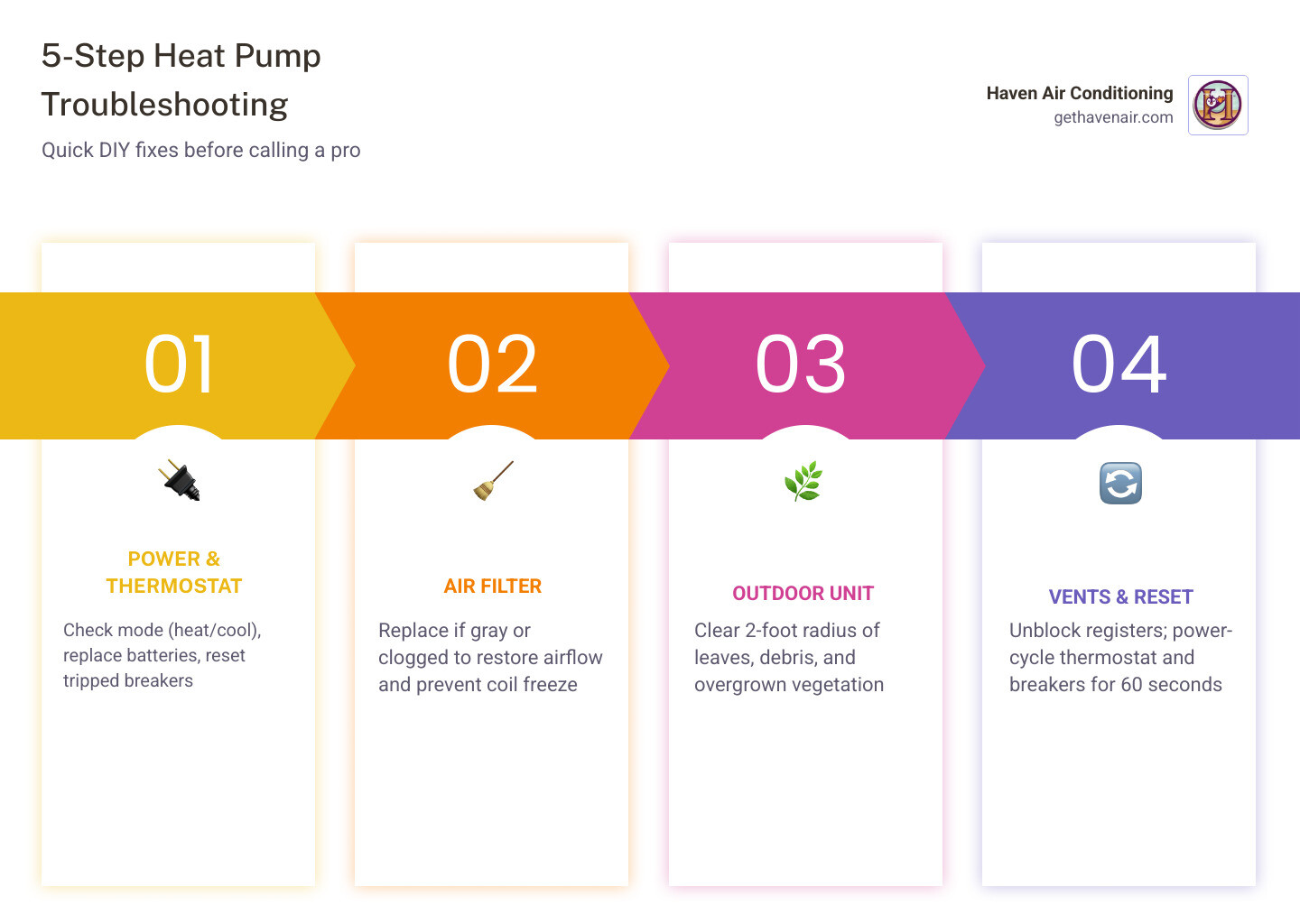
If you’re looking for heat pump troubleshooting tips before calling a professional, here’s a quick summary of what to check first:
- Check power and thermostat settings — Verify the mode (heat or cool), replace thermostat batteries, and reset any tripped breakers.
- Inspect the air filter — A clogged filter is the single most common cause of heat pump failures. Replace it if it looks gray or blocked.
- Clear the outdoor unit — Remove leaves, debris, or overgrown vegetation within two feet of the unit.
- Check vents and registers — Make sure none are blocked by furniture or closed off.
- Reset the system — Turn the thermostat off, flip both breakers off for 60 seconds, then restore power.
Here in Orange County, your heat pump works hard year-round — keeping your home cool through Anaheim summers and warm on those cooler winter nights. So when it starts acting up, it’s easy to assume the worst and reach for the phone.
But here’s the thing: many heat pump problems have simple fixes you can handle yourself in under 10 minutes. According to HVAC technicians, a surprising number of service calls come down to a dirty filter or a thermostat set to the wrong mode — issues that cost nothing but a few minutes of your time.
That said, some problems do need a licensed professional. Knowing the difference can save you money, protect your equipment, and keep your home comfortable without unnecessary stress.
This guide walks you through five safe, straightforward steps to diagnose your heat pump before picking up the phone — and tells you exactly when it’s time to call in the experts at Haven Air Conditioning.
Heat Pump Troubleshooting Tips Before Calling a Professional
It is May 2026, and as we head into another beautiful California spring, keeping your HVAC system running efficiently is likely top of mind. In the U.S., about 52% of household energy consumption goes toward heating and cooling. For the 13% of households using a heat pump as their primary system, maintaining that efficiency is the difference between a comfortable home and a massive utility bill. In fact, there is a 10–25% energy consumption gap between a well-maintained heat pump and one that has been neglected.
Before we dive into the steps, let’s talk safety. Always turn off the power at the thermostat and the circuit breaker before inspecting any internal components. If you have to open a panel, capacitors can hold an electrical charge even after the power is off—waiting five minutes after shutdown is a smart precaution.
To get started, you’ll only need a few basic tools:
- A bright flashlight
- A screwdriver (for access panels)
- A fresh, high-quality air filter
If you are new to these systems, you might be wondering, What Is a Heat Pump? How Does It Work? Unlike a furnace that creates heat, a heat pump simply moves it from one place to another using a reversing valve and refrigerant. Because it handles both heating and cooling, it’s a complex piece of machinery that deserves a little “DIY detective work” before you pay for a service call.
Step 1: Essential heat pump troubleshooting tips before calling a professional for power issues
The most common reason a heat pump won’t turn on is often the simplest: a lack of power or a settings error. We’ve seen many cases in Irvine and Fullerton where a simple accidental bump to the thermostat caused a “no-heat” emergency.
Check the Thermostat Mode Ensure the thermostat is actually set to “Heat” in the winter or “Cool” in the summer. It sounds obvious, but during the transition months in Orange County, it’s easy to leave it in the wrong mode. Also, check the fan setting. If it’s set to “On,” the fan will blow air even when the system isn’t actively heating or cooling, which can feel like a draft. Setting it to “Auto” ensures air only moves when the system is working.
Battery Replacement If your thermostat screen is blank or flashing a low-battery icon, replace the batteries immediately. A thermostat with dead batteries cannot send the signal to your outdoor unit to start up.
Inspect the Circuit Breakers Heat pumps usually run on two separate breakers: one for the indoor air handler and one for the outdoor condenser. Check your home’s electrical panel. If a switch is in the middle position, flip it all the way to “Off” and then back to “On.” If the breaker trips again immediately, stop troubleshooting and call us—this indicates a dangerous electrical short. For those late-night worries, check out Emergency Heat Pump Fixes That Won’t Keep You Up All Night to see if you can find a quick resolution.
If you’re in a pinch in South County, Don’t Sweat It: Fast, Reliable Emergency Heat Pump Repair in Irvine is always an option if the power checks don’t solve the mystery.
Step 2: Inspect and replace the air filter to restore airflow
If your system is running but your home isn’t reaching the right temperature, the culprit is almost always airflow. A dirty air filter is the single most common cause of a heat pump failing to heat or cool properly.
When a filter is clogged with dust, pet hair, and dander, the blower motor has to work twice as hard to pull air through. This can cause the indoor evaporator coil to freeze over in the summer or the system to overheat and shut down in the winter. If you’ve ever asked, Why Is My Heat Pump Blowing Cold Air?, a suffocated system is a likely answer.
The Light Test Hold your current filter up to a bright light. If you can’t see the light shining through the fibers, it’s time for a change. We recommend MERV 8 to 11 filters for most Orange County homes; they provide excellent filtration without putting too much “static pressure” on your motor.
For residents in North County, our Emergency Heat Pump Repair Anaheim Guide provides more detail on how restricted airflow can lead to major component failure if left unchecked.
Step 3: Using heat pump troubleshooting tips before calling a professional to clear the outdoor unit
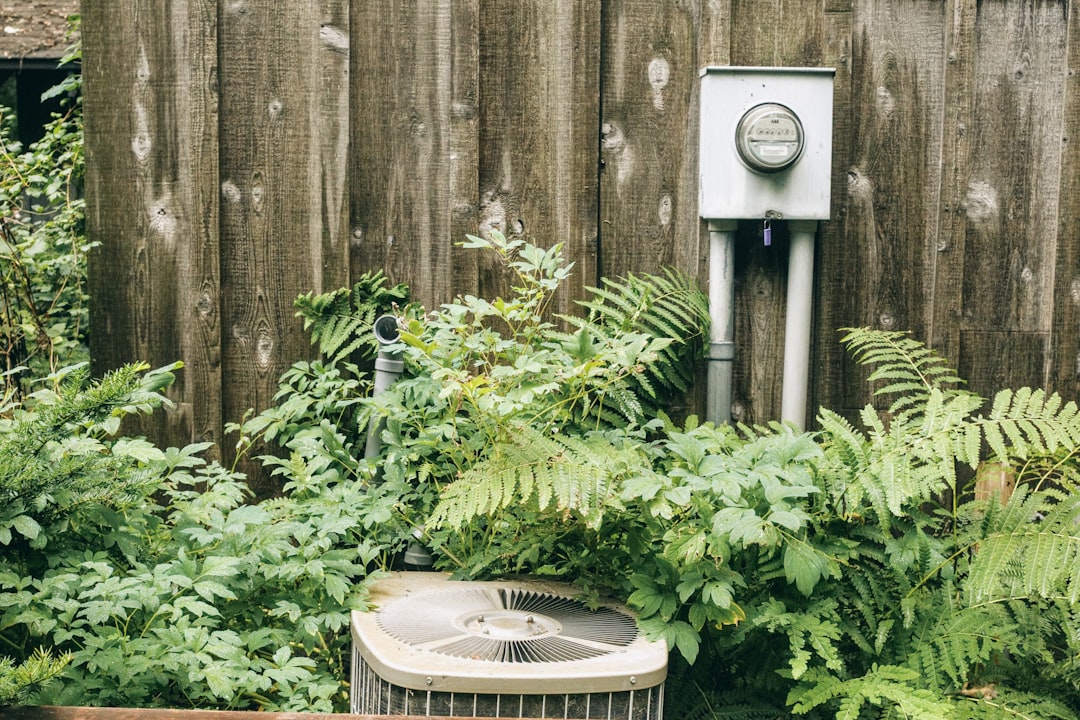
Your outdoor unit needs to “breathe” to exchange heat effectively. In neighborhoods like Rossmoor or Laguna Hills, where landscaping is lush, it’s common for plants to grow too close to the unit.
Maintain a 2-Foot Buffer Ensure there is at least a two-foot clear perimeter around the entire outdoor unit. Trim back bushes, remove tall weeds, and clear away any fallen leaves or grass clippings that may have collected against the metal fins. If the unit is “choked” by debris, it can’t pull heat from the air (in winter) or release it (in summer).
Check for Blockages If you notice your system struggling after a windstorm, check the top of the unit for branches or debris that might be blocking the fan. If your My Heat Pump Is Not Heating, a physical blockage is a prime suspect. For those searching for a “pro near me” to handle a deep cleaning of the coils, you can find Finding Expert Heat Pump Repair Near You to get that unit back to peak performance.
Step 4: Check vents and registers for obstructions
Sometimes the problem isn’t the heat pump at all—it’s how the air is moving through your house. We often find that homeowners in Whittier or La Habra have rearranged furniture and inadvertently blocked a primary return vent.
Open the Vents Walk through every room and ensure that all supply registers (where the air comes out) and return vents (where the air goes in) are open and unobstructed. Blocking vents doesn’t save energy; it actually creates pressure imbalances that can lead to duct leaks or a cracked heat exchanger.
If you are debating whether your current ductwork is up to the task, you might find our comparison on Heat Pumps vs. Furnaces: Which Is Better? helpful for understanding how airflow requirements differ between the two systems.
Step 5: Perform a safe system reset
Sometimes the “computer” inside your heat pump just needs a fresh start. Modern systems have safety sensors that might “lock out” the unit after a minor power surge or a temporary sensor glitch.
The 60-Second Reset
- Turn the thermostat to “Off.”
- Go to your electrical panel and flip both the indoor and outdoor heat pump breakers to “Off.”
- Wait at least 60 seconds (this allows the capacitors to discharge and the system memory to clear).
- Flip the breakers back to “On.”
- Wait five minutes, then turn the thermostat back to your desired mode.
This simple “reboot” resolves a surprising number of issues. If you’ve tried this and the system still won’t behave, it’s time to look into Expert Heat Pump Repair Services in Laguna Hills or your local service area.
Distinguishing Normal Defrost from System Failure
One of the most common reasons people call us during the winter is because they see “smoke” coming from their outdoor unit or notice it’s covered in frost. In most cases, this is actually perfectly normal!
Because a heat pump extracts heat from the cold outdoor air, the outdoor coils can get very cold, causing moisture in the air to freeze on them. To fix this, the system occasionally enters a Defrost Cycle. It temporarily reverses into “cooling mode” to send warm refrigerant to the outdoor coils to melt the ice.
| Feature | Normal Defrost Behavior | Problematic System Failure |
|---|---|---|
| Visuals | Light frost or thin ice coating | Solid block of ice (looks like an igloo) |
| Sounds | A “whooshing” sound as the valve shifts | Grinding, shrieking, or heavy clanking |
| Duration | Lasts 10–15 minutes | Ice persists for hours or days |
| Output | Steam rising from the unit | No steam; fan may be frozen stuck |
| Indoor Air | May feel slightly cool for a few minutes | Blows cold air indefinitely |
If your unit is encased in thick ice that doesn’t melt, you likely have a faulty defrost timer, a bad sensor, or low refrigerant. Never attempt to chip ice off the coils with a hammer or sharp object, as you could easily puncture a refrigerant line, leading to a very expensive repair.
When to Call a Licensed Technician in Orange County
While we love empowering our neighbors with heat pump troubleshooting tips before calling a professional, there is a clear line where DIY ends and professional expertise must begin.
Signs It’s Time to Call Haven Air Conditioning:
- Strange Noises: Hissing or bubbling usually indicates a refrigerant leak. Grinding or squealing often means a motor bearing is failing.
- Burning Smells: If you smell electrical burning, shut the system off at the breaker immediately. This could be a short circuit or a failing blower motor.
- Short-Cycling: If the system turns on and off every few minutes, it’s putting massive strain on the compressor.
- Refrigerant Issues: Low refrigerant causes 95% of heating failures in heat pumps. However, refrigerant doesn’t “get used up”—if it’s low, you have a leak. Handling refrigerant requires an EPA Section 608 certification by law.
- Age of the System: How Long Does a Heat Pump Last? Usually 12–15 years. If your system is older and requiring frequent repairs, it might be time to discuss a high-efficiency replacement.
We provide 24/7 emergency availability for those critical moments when your comfort can’t wait. Whether you’re in Anaheim, Fullerton, Irvine, or anywhere in the Greater Orange County area, our NATE-certified technicians are ready to provide a transparent, expert diagnosis.
Frequently Asked Questions
Why is my heat pump running but not heating?
This is often due to restricted airflow (a dirty filter), a stuck reversing valve, or low refrigerant. Check your filter first. If that’s clean, the reversing valve—the part that tells the heat pump whether to heat or cool—may have failed, requiring a professional replacement.
Is it normal for my heat pump to ice up in winter?
A light dusting of frost is normal and should be cleared by the defrost cycle within 15 minutes. However, if the unit is completely encased in ice, it indicates an issue with the defrost control board, the outdoor fan motor, or the refrigerant levels.
How often should I change my heat pump filter?
For most homes in Orange County and Riverside, we recommend changing the filter every 1 to 3 months. If you have pets, allergies, or live near a construction site, you should check it every 30 days.
Conclusion
Taking a few minutes to run through these heat pump troubleshooting tips before calling a professional can save you time and money. Often, the solution is as simple as a $20 filter or a flipped breaker. However, when the simple fixes don’t work, you need a team you can trust to get the job done right the first time.
At Haven Air Conditioning, we are committed to keeping our community comfortable. From Anaheim to Laguna Niguel, we offer expert repairs, second opinions, and comprehensive maintenance plans that give our members priority scheduling and peace of mind. Our “neighborly” approach means we treat your home with the same care we’d give our own.
Don’t spend another hour in an uncomfortable home. Schedule Expert Heat Pump Repair in Orange County Today and let us put your indoor comfort in expert hands.