(714) 332-6302

Why Your Furnace Pilot Light Matters for a Warm Home
Picture this: it’s a cold Orange County evening, and your furnace pilot light decides to take an unexpected break. Suddenly, your heating system goes silent, and you’re left wondering why the warm air has stopped flowing through your vents.
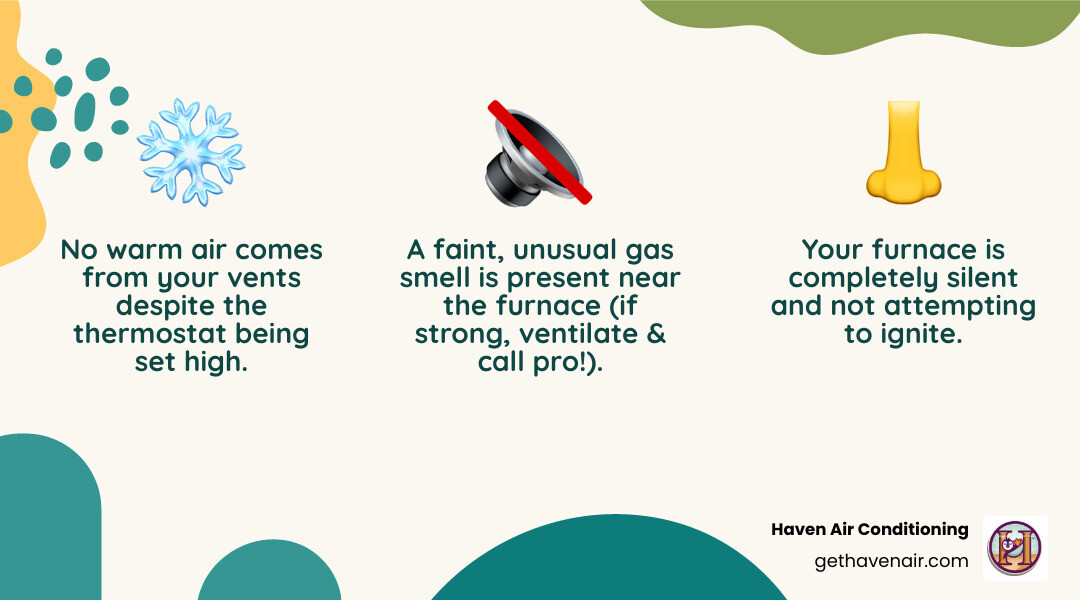
Quick Answer: Signs Your Pilot Light Is Out
- No heat coming from your vents despite thermostat settings
- Complete silence from your furnace when it should be running
- Faint gas smell around your furnace area
- Thermostat unresponsive to temperature adjustments
A pilot light is a small, continuous flame that ignites your furnace’s main burner. When it goes out, your entire heating system stops working. The good news? Relighting a pilot light is often a simple DIY fix that can restore warmth to your home in minutes.
Many furnaces older than 20 years still rely on traditional standing pilot lights, making this a common issue for Orange County homeowners. While newer systems use electronic ignition, understanding how to safely relight your pilot can save you from a cold night and an emergency service call.
Safety first: If you smell gas strongly or feel uncomfortable with any step, stop immediately and call a professional. Gas appliances require careful handling, and your safety is worth more than any DIY savings.
Related content about furnace pilot light:
What is a Furnace Pilot Light and How Does It Work?
Think of your furnace pilot light as the faithful guardian of your home’s warmth. This small, continuously burning flame sits patiently inside your furnace, ready to spring into action whenever your thermostat calls for heat. When you turn up the temperature on a chilly Orange County evening, magic happens: the gas valve opens, gas flows to the main burner, and your trusty pilot light ignites it with a satisfying whoosh.
This standing pilot light design has been keeping homes cozy for decades. It’s beautifully simple – a tiny flame that never goes out, always ready to light the bigger fire that heats your house. Most furnaces that are 20 years or older still use this tried-and-true system.
But here’s the clever part: your furnace isn’t just about creating heat; it’s also designed with your safety in mind. If that little pilot flame ever decides to take an unexpected break, a safety valve immediately shuts off the gas supply. No flame means no gas flowing freely through your home – which is exactly what we want.
The trade-off? That continuous flame does consume a small amount of gas around the clock, even when you’re not heating your home. It’s not a huge amount, but it’s worth knowing about, especially since heating and cooling typically make up about 43% of your energy bills.
Standing Pilot vs. Electronic Ignition
Here’s where things get interesting. While your older furnace might rely on that faithful furnace pilot light, newer systems have gone high-tech with electronic ignition. It’s like comparing a classic match to a modern lighter – both get the job done, but one’s definitely more efficient.
| Feature | Standing Pilot Light | Electronic Ignition System |
|---|---|---|
| Operation | Small flame burns continuously | Ignites only when heat is called for (intermittent spark) |
| Energy Use | Consumes a small amount of gas 24/7 | More energy-efficient, as it doesn’t constantly use gas |
| Reliability | Can be blown out by drafts, susceptible to clogs | Generally more reliable, less prone to going out |
| Maintenance | Requires occasional cleaning, prone to thermocouple issues | Typically maintenance-free for ignition, less prone to issues |
| Safety Risk | Small risk of gas leak if flame goes out and safety fails | Reduced risk of gas leaks due to on-demand ignition |
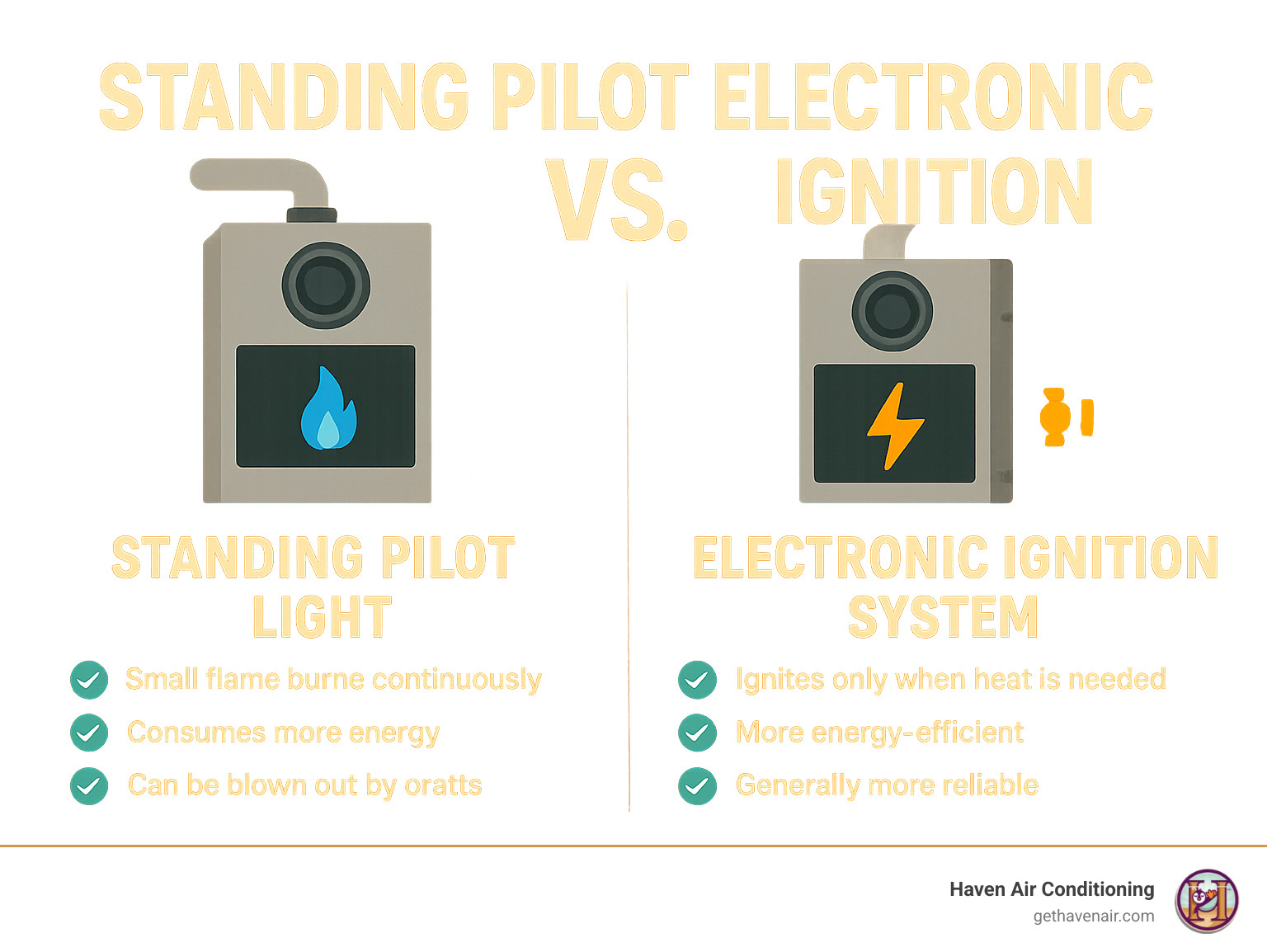
Electronic ignition systems work more like a gas grill – they create a spark only when needed. No constant flame, no continuous gas consumption, and generally fewer headaches. They’re the reason newer furnaces are so much more energy-efficient.
If your older furnace pilot light keeps giving you trouble – going out frequently or requiring constant relighting – it might be your furnace’s way of telling you it’s ready for an upgrade to a more modern, efficient system.
The Look of a Healthy Flame
When your furnace pilot light is happy and healthy, it shows off with a beautiful, steady blue flame. This crisp blue color is like a thumbs-up from your furnace – it means the gas is burning completely and efficiently, just as it should.
But if you peek at your pilot light and see something that looks more like a lazy campfire – yellow, orange, or flickering weakly – that’s your furnace waving a red flag. A yellow or orange flame is actually quite concerning because it indicates incomplete combustion, which can produce dangerous carbon monoxide. For an overview of health risks and safety guidance, see carbon monoxide poisoning.
Carbon monoxide is the sneaky villain of home heating – it’s colorless, odorless, and extremely dangerous. Plus, a weak or discolored flame isn’t hot enough to properly signal the thermocouple (that’s the safety sensor we’ll talk about next), which means your furnace might keep shutting itself off.
The bottom line? A strong, steady blue flame means all systems go. Anything else means it’s time to take action – either with some simple maintenance or a call to the professionals.
Is Your Pilot Light Out? Key Signs & Common Causes
When your furnace pilot light decides to call it quits, your home quickly becomes an uncomfortable place to be. The most obvious sign is the sudden absence of warm air flowing through your vents, even though your thermostat is set correctly. You might notice your furnace sitting completely silent when it should be humming to life, or perhaps you’ll hear just a faint click followed by… nothing.
Another telltale sign is catching a subtle whiff of gas near your furnace area. Don’t panic – this is actually your furnace’s safety system doing its job. When the pilot light goes out, a small amount of gas may escape before the safety valve kicks in and shuts everything down. If you smell gas strongly, though, that’s a different story and requires immediate professional attention.
You might also find your thermostat seems completely unresponsive. No matter how much you adjust the temperature setting, your furnace just won’t fire up. This happens because without that tiny pilot flame, there’s no way to ignite the main burner, leaving your heating system essentially powerless.
Common Culprits: Why Your Furnace Pilot Light Goes Out
Understanding why your furnace pilot light extinguishes can help you prevent future cold nights. In our experience serving Orange County homes, we see several recurring causes that catch homeowners off guard.
Strong drafts are surprisingly common troublemakers. Just like blowing out birthday candles, a gust of wind from an open window, a leaky exhaust vent, or even a furnace located near a frequently used door can snuff out that delicate flame. Sometimes the culprit is improper venting or an air leak that creates downdrafts, literally pushing the flame out.
Dirt and debris buildup causes more problems than you might expect. Over time, dust accumulates around the tiny opening that supplies gas to your pilot light. This clogged pilot orifice creates a weak, flickering flame that struggles to stay lit. When the flame burns yellow instead of blue, it’s often too weak to properly heat the thermocouple, causing your furnace to shut off the gas supply as a safety measure.
Gas supply issues can leave your pilot light starved for fuel. This might happen during utility work in your neighborhood, or it could indicate problems with your home’s gas regulator or main gas line. If other gas appliances in your home are also acting up, the issue likely extends beyond just your furnace.
Condensation problems occasionally drip water directly onto the pilot light, extinguishing it instantly. This usually points to ventilation issues or problems within your furnace system that need addressing.
The age of your furnace plays a significant role too. Furnaces that have been faithfully serving for 10 years or more, especially those pushing 20+ years, simply experience more frequent component failures. Worn parts are naturally more prone to causing pilot light problems.
The Role of the Thermocouple
Meet the unsung hero of your furnace’s safety system – the thermocouple. This thin metal probe sits right next to your pilot light assembly, acting like a vigilant guardian that never takes a break.
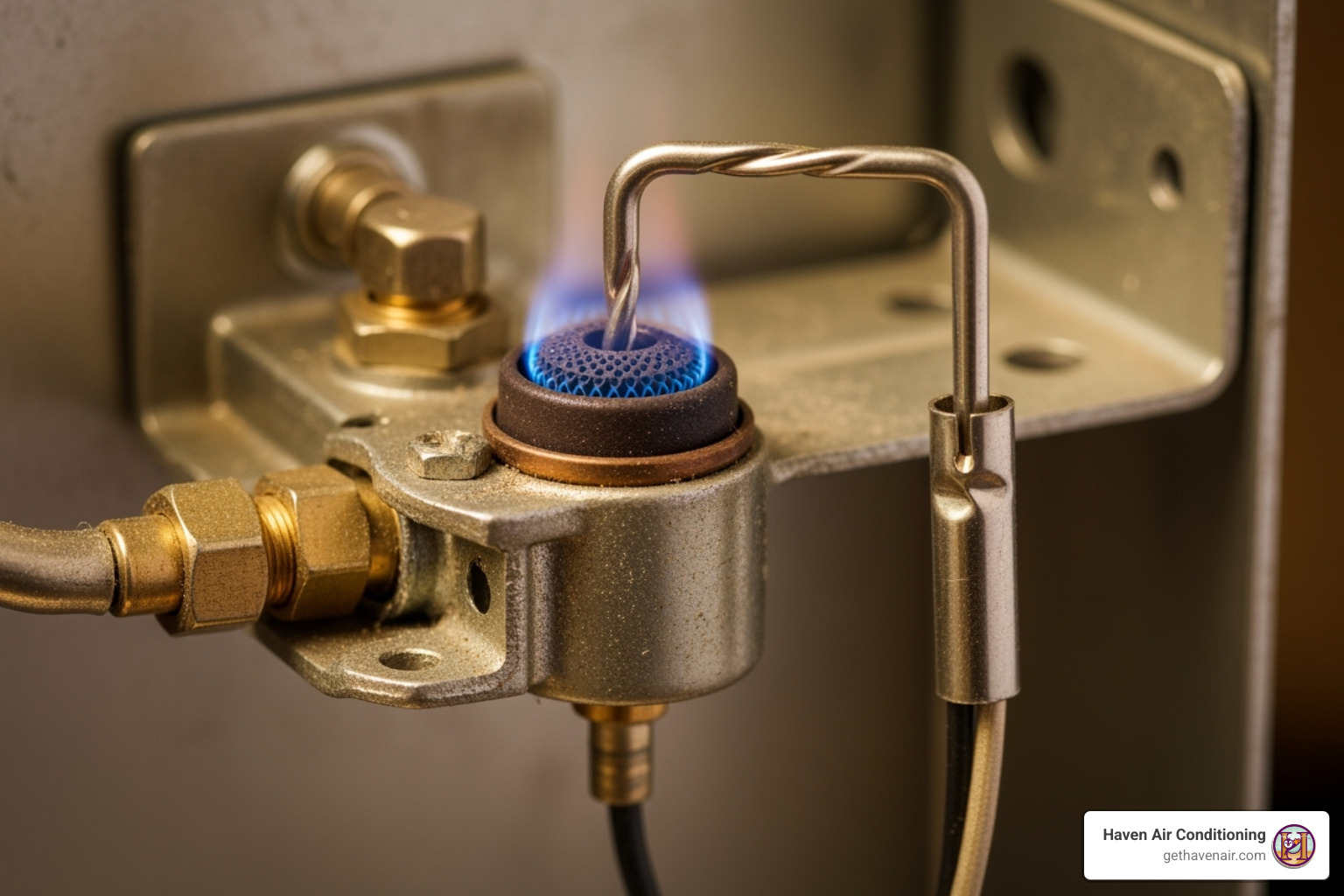
When your furnace pilot light burns properly, its heat creates a small electrical current within the thermocouple. This tiny current sends a signal to the gas valve, essentially saying “all clear – keep the gas flowing.” It’s a simple but brilliant safety mechanism.
Here’s where it gets interesting: the moment your pilot light goes out, the thermocouple cools down and that electrical current stops. Without this signal, the gas valve immediately shuts off, preventing gas from leaking into your home. It’s like having an automatic safety switch that never sleeps.
Unfortunately, thermocouples don’t last forever. A faulty thermocouple is actually the most common reason pilot lights won’t stay lit. Over time, they can get dirty, bent, or simply wear out from constant use. When this happens, even a perfectly good pilot flame might not generate enough current to keep the gas valve open.
If your pilot light ignites easily but dies the moment you release the control knob, you’re likely dealing with thermocouple trouble. Signs of a faulty thermocouple include pilot lights that won’t stay lit despite multiple attempts, weak flames that seem to struggle, or pilots that work intermittently. The good news? Thermocouples are relatively inexpensive components that experienced technicians can replace quickly, restoring your furnace to reliable operation.
A Step-by-Step Guide to Safely Relighting Your Pilot Light
Ready to tackle this yourself? Relighting your furnace pilot light is actually pretty straightforward – think of it like lighting a candle, just with a few extra safety steps. Most homeowners can handle this task, but safety always comes first.
Before we dive in, grab your furnace’s owner’s manual if you can find it. Don’t worry if it’s buried somewhere in that kitchen drawer with all the other manuals – most furnaces have the instructions printed right on a label inside the access panel.
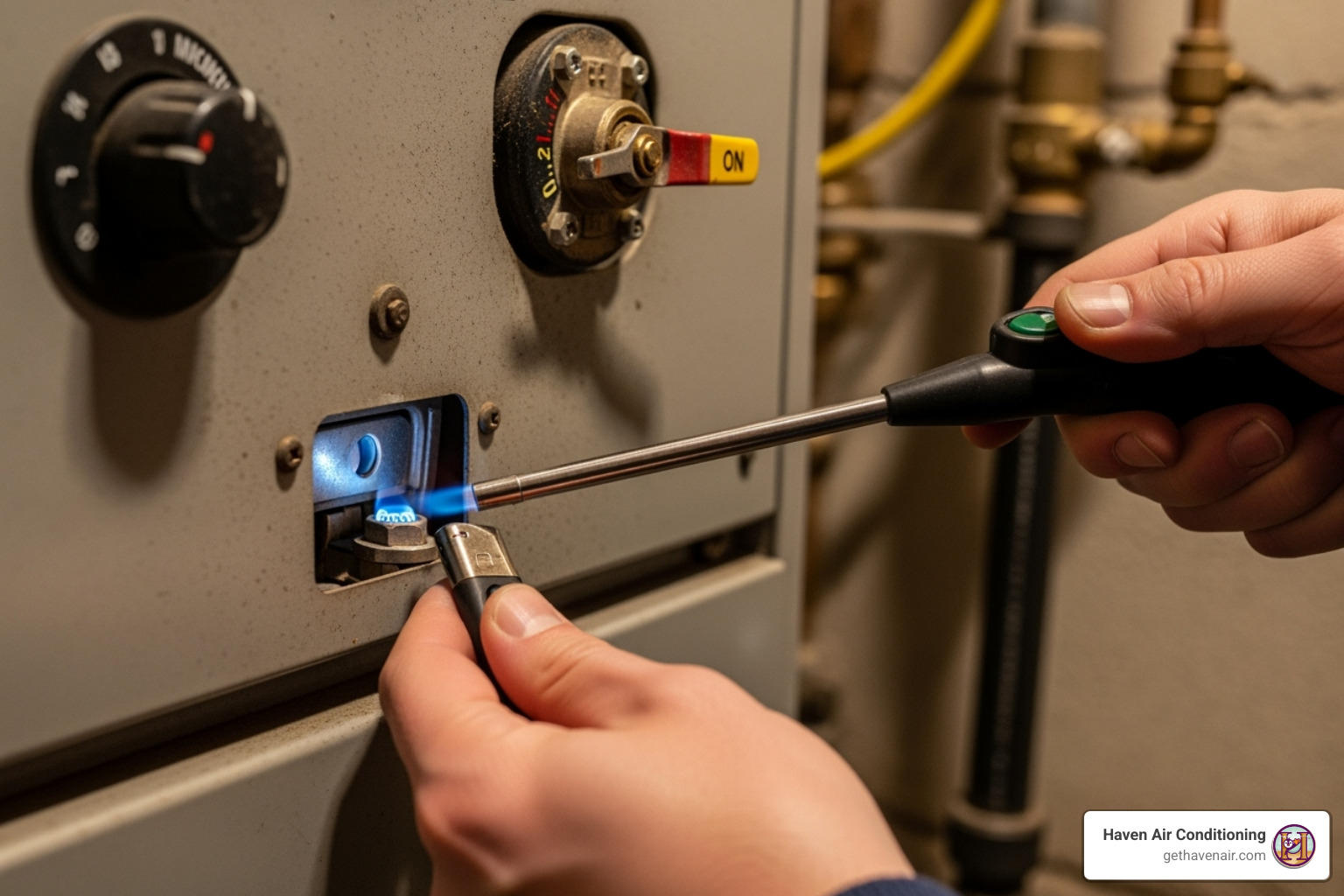
Here’s what you’ll need:
- Your furnace’s owner’s manual (or that handy label inside the furnace)
- A long barbecue lighter or long matches – this keeps your hands safely away from the gas
- A flashlight to help you see what you’re doing
- A little patience (trust me, rushing never helps with gas appliances)
Step 1: Turn Everything Off
Think of this as the “clearing the stage” step. We need everything completely shut down before we start working with gas.
Head to your thermostat first and turn it to “OFF.” If you see a fan setting, make sure that’s off too. This tells your furnace to stop calling for heat while you work.
Now comes the important part: locate the gas control knob near your pilot light assembly. You’ll see a knob with settings like “ON,” “OFF,” and “PILOT.” Turn this knob all the way to “OFF.” This cuts off the gas flow completely.
Here’s where patience becomes your best friend – wait at least 5 minutes. I know it feels like forever when you’re cold, but this waiting period lets any lingering gas dissipate completely. Think of it as letting the air clear before you strike a match. This simple step prevents any dangerous gas buildup that could cause problems when you light that pilot.
Step 2: Prepare for Ignition
After your patient wait, it’s time to prep your furnace pilot light for its comeback performance.
Turn that control knob from “OFF” to “PILOT.” You’re not turning the gas fully on yet – just allowing a small, controlled amount to flow to the pilot light area.
Now you’ll need to press and hold the reset button. This might be a red button near the gas valve, or it could be built right into the control knob itself (you’d push the knob in). This button does two important things: it allows that small amount of gas to flow to the pilot, and it helps the thermocouple get ready to do its safety job.
You might hear a soft hissing sound – that’s just the gas starting to flow. Totally normal, and actually a good sign that everything’s working as it should.
Step 3: Light the Flame
This is the exciting part! While you’re still holding down that reset button, bring your long lighter or match to the pilot opening. You’ll usually find this small opening or tube right where the pilot flame should appear.
The moment your flame meets the gas, you should see the pilot light spring to life with a little pop or whoosh. It’s a satisfying moment – like successfully lighting a campfire on the first try.
Here’s the crucial part: keep holding that reset button for about 30 to 60 seconds after the flame appears. This gives the thermocouple time to heat up properly. That little safety device needs to get hot enough to generate its electrical signal. If you let go too early, the pilot will just go out again, and you’ll be back to square one.
Step 4: Confirm and Turn On
You’re in the home stretch now! After holding the button for that full minute, gently release it. Your furnace pilot light should stay burning steadily. If it goes out, don’t get discouraged – sometimes the thermocouple needs a bit more time to heat up. Just start over from Step 1.
Once that little blue flame is burning strong and steady, turn the control knob from “PILOT” to “ON.” You should hear the main burners kick in – that familiar whoosh sound that means your furnace is back in business.
Replace any access panels you removed, then head back to your thermostat. Set it to a temperature a few degrees higher than your current room temperature. This tells your furnace to start heating, and you should feel warm air flowing through your vents within a few minutes.
Take a moment to listen and watch your furnace for the first few minutes. Everything should sound normal – no unusual noises or smells. If something seems off, don’t hesitate to turn everything off and call for professional help.
Congratulations! You’ve successfully brought your heating system back to life. There’s something pretty satisfying about fixing your own furnace, isn’t there?
Troubleshooting a Stubborn Pilot Light
Sometimes, despite following every step perfectly, your furnace pilot light seems to have a mind of its own. You light it, it flickers to life, and then – poof – it’s gone again the moment you release that reset button. Or maybe it stays lit for a few minutes, giving you false hope, before deciding to call it quits. Don’t worry – you’re not doing anything wrong. Your furnace is simply trying to tell you that something deeper needs attention.
This kind of stubborn behavior is actually quite common, especially in older furnaces. Think of it like a car that turns over but won’t stay running – the basic systems are working, but there’s an underlying issue preventing everything from operating smoothly.
Why Won’t My Furnace Pilot Light Stay Lit?
When your furnace pilot light plays hard to get, there’s usually a specific reason behind its rebellious behavior. The most common culprit? A faulty thermocouple. Little safety sensor we talked about earlier? If it’s dirty, bent, or simply worn out from years of faithful service, it won’t properly sense the pilot flame’s heat. Without that heat signal, the gas valve thinks there’s no flame and shuts off the gas supply for safety.
A dirty pilot tube or orifice is another frequent troublemaker. Even the tiniest bit of dust, lint, or debris can partially block that small opening where gas flows to create the pilot flame. The result? A weak, flickering, or yellowish flame that can’t maintain itself or properly heat the thermocouple. It’s like trying to drink a thick milkshake through a clogged straw – everything struggles.
Sometimes the problem lies with your home’s gas pressure. A malfunctioning gas regulator might not be delivering consistent gas pressure to your furnace. Too little pressure creates a weak flame that can’t stay lit, while inconsistent pressure causes the flame to flicker and die. If you notice issues with other gas appliances in your home, this could be the smoking gun.
Persistent drafts can also be the villain in this story. While a one-time gust might blow out your pilot light, repeated extinguishing often points to ongoing airflow issues. This could be from leaky ductwork, improper venting, or even your furnace’s location near frequently opened doors or windows.
Cleaning and Maintenance Tips
The good news is that many pilot light issues can be prevented with some simple maintenance. Just like changing the oil in your car keeps the engine running smoothly, a little TLC for your furnace pilot light components can save you from chilly nights and frustration.
Cleaning the thermocouple is often the simplest fix. With your gas supply completely shut off and the furnace cooled down, you can carefully remove the thermocouple if it’s easily accessible. Gently clean the metal probe with fine sandpaper or emery cloth to remove any buildup that might be preventing proper heat detection. Wipe it clean with a soft cloth, being extra careful not to bend or damage this delicate component.
For a clogged pilot orifice, you can try clearing the tiny opening with a very thin wire – a straightened paperclip works perfectly. Again, make sure everything is turned off and cool before attempting this. Sometimes, years of dust and debris create blockages that prevent proper gas flow.
Here’s where we need to talk about the bigger picture: annual professional maintenance is your best defense against pilot light problems. A gas furnace can last 10 to 15 years with proper care, but without it, you’ll likely face more frequent breakdowns and higher energy bills. Our certified technicians at Haven Air Conditioning inspect and clean all the components that keep your furnace pilot light burning reliably – the thermocouple, pilot assembly, burners, and gas connections.
This preventative approach isn’t just about avoiding cold nights. Regular maintenance keeps your system running efficiently, which matters when heating and cooling costs typically account for about 43 percent of your total energy expenses. Older furnaces, especially those 10 years or older, start losing efficiency and breaking down more often, making professional tune-ups even more valuable for maintaining comfort and avoiding costly emergency repairs.
When to Call a Professional
While successfully relighting your furnace pilot light can feel like a real victory, there are times when the smartest move is stepping back and letting the experts take over. Gas appliances demand respect, and knowing when you’ve reached the limits of DIY troubleshooting can save you from bigger headaches down the road.
Sometimes your furnace is trying to tell you something more serious is going on. Maybe you’ve followed all the steps perfectly, but that stubborn flame just won’t cooperate. Or perhaps you’ve noticed something that makes you pause and think, “Hmm, that doesn’t seem right.” Trust those instincts – they’re usually spot-on.
Signs You Need an Expert
Your furnace pilot light might seem like a simple component, but when certain warning signs appear, it’s time to call in the professionals. These red flags often indicate issues that go beyond what a homeowner should tackle alone.
A yellow or weak flame is your furnace waving a serious warning flag. A healthy pilot light burns bright blue. If yours is consistently yellow, orange, or flickering weakly even after you’ve tried cleaning, you’re looking at incomplete combustion. This creates carbon monoxide – a colorless, odorless gas that’s extremely dangerous. This isn’t something to mess around with.
When your pilot goes out repeatedly, despite your best relighting efforts, something deeper is wrong. Maybe you’ve become a pro at the relighting process, but you shouldn’t have to do it every few days. Persistent pilot light problems usually point to faulty thermocouples, gas supply issues, or even cracked heat exchangers that need professional diagnosis.
Strong gas smells after relighting attempts are an immediate call-the-pros situation. A faint gas odor during the relighting process is normal, but if you’re smelling gas strongly or persistently afterward, stop what you’re doing. Turn off the gas, ventilate the area, and get professional help right away.
Unusual furnace noises – rattling, banging, grinding, or squealing – especially when combined with pilot light issues, often signal mechanical problems that require specialized tools and expertise to fix safely.
And here’s the most important sign of all: you’re uncomfortable with the process. There’s absolutely no shame in saying, “You know what, I’d rather have a professional handle this.” Your comfort level and peace of mind matter, and gas appliances aren’t worth taking risks with.
The Benefits of Professional Service
When your furnace pilot light problems move beyond simple fixes, calling Haven Air Conditioning brings real advantages that go far beyond just getting the flame lit again.
Our expert diagnosis means you’re not just treating symptoms – you’re getting to the root of the problem. Our certified technicians have seen every type of pilot light issue across Orange County, from simple thermocouple replacements to complex gas valve problems. We bring specialized tools and years of experience that help us quickly identify exactly what’s wrong, saving you time and preventing future breakdowns.
Safe repairs are non-negotiable when dealing with gas systems. Our professionals follow strict safety protocols and industry standards, ensuring every repair is done correctly the first time. We handle the gas lines, electrical connections, and safety systems with the expertise that comes from proper training and certification.
What many homeowners don’t expect is the comprehensive system tune-up that often comes with professional service calls. While we’re fixing your pilot light, we’re also checking your entire furnace for potential issues. This proactive approach catches small problems before they become expensive emergencies and helps your system run more efficiently – which means lower energy bills for you.
Perhaps most valuable is the peace of mind that comes with professional service. When our team finishes the job, you know your furnace is safe, reliable, and ready to keep your family comfortable. We’re not happy until you’re completely satisfied with the work.
Don’t let a troublesome furnace pilot light keep you in the cold. If you’re dealing with persistent issues or simply prefer to have professionals handle your heating system, our team at Haven Air Conditioning is here to help. We’ve been keeping Orange County families warm and comfortable for years, and we’d love to do the same for you.
Schedule HVAC service in Riverside, CA today, and let our certified technicians restore warmth and reliability to your home. Your comfort is our priority!