(714) 332-6302

What the R-410A Phase-Down Means for Orange County Homeowners Right Now
Understanding how AC refrigerant changes affect homeowners is more urgent than ever — especially if you own a home in Orange County. As of January 1, 2026, new rules from the U.S. Environmental Protection Agency (EPA) now prohibit the installation of new systems using R-410A, the refrigerant found in most residential AC units built over the last two decades. Here is a quick look at what that means for you:
How AC refrigerant changes affect homeowners — at a glance:
- Your existing system is not illegal. You can continue running and repairing your current R-410A unit.
- New installations must use low-GWP refrigerants like R-454B or R-32 (GWP of 700 or less).
- R-410A will become harder to source and more expensive as production phases down toward 2036.
- New A2L refrigerants are mildly flammable but are safe and come with built-in leak detection technology.
- You cannot swap new refrigerants into your old system. R-454B and R-32 are not drop-in replacements for R-410A.
- Rebates and incentives exist to help offset the cost of upgrading to a newer, more efficient system.
The short version: you do not need to panic or rush to replace your AC tomorrow. But you do need to understand what is changing — and why — so you can make smart decisions before a repair bill forces your hand.
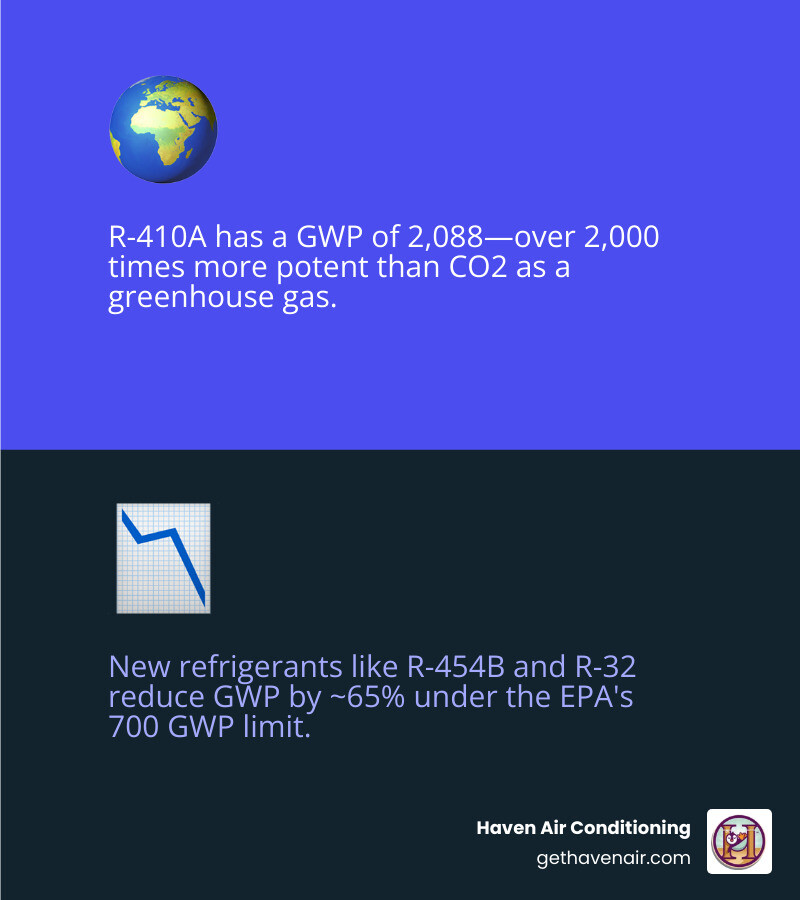
This shift has been years in the making. The American Innovation and Manufacturing (AIM) Act of 2020 gave the EPA the authority to phase down hydrofluorocarbons (HFCs) like R-410A, which carries a Global Warming Potential (GWP) of 2,088 — more than 2,000 times more potent than carbon dioxide. The newer refrigerants replacing it cut that climate impact by roughly 65%. That is a significant environmental win, but it also brings real changes to how HVAC systems are built, serviced, and maintained.
For homeowners in Anaheim, Irvine, Fullerton, and across the greater Orange County area, those changes are already showing up — in refrigerant prices, in the systems available for new installations, and in what your HVAC technician needs to be certified to handle. This guide walks you through everything you need to know, without the technical jargon.
Understanding the 2025/2026 Shift: Why AC Refrigerant Changes Are Happening
The refrigerant change is mainly about environmental impact.
Older refrigerants created one problem, then newer ones solved that problem but created another. R-22 harmed the ozone layer, so the industry moved to R-410A. That was a big step forward for ozone protection, but R-410A still has a very high GWP. In simple terms, if it leaks into the atmosphere, it traps much more heat than carbon dioxide.
That is why the EPA now requires newly installed residential systems to move to refrigerants with a GWP of 700 or less. The most common replacements are R-454B and R-32.

A few key dates help explain the transition:
- The AIM Act of 2020 gave the EPA authority to reduce HFC use.
- Starting in 2025, manufacturers had to transition new equipment designs away from high-GWP refrigerants like R-410A.
- As of January 1, 2026, installing new residential systems using R-410A is no longer allowed under the current rules.
- The broader HFC phase-down continues through 2036.
For homeowners, the big takeaway is simple: this is not a surprise rule that appeared overnight. It is part of a long-term national shift toward climate-friendlier cooling.
And there is a larger public-health context here too. The long-running phaseout of ozone-depleting substances is projected to prevent more than 280 million skin cancer cases, about 45 million cataract cases, and around 1.6 million skin-cancer deaths in the United States over time. Not every refrigerant rule ties directly to ozone depletion today, but the larger refrigerant transition story has real health benefits.
How AC Refrigerant Changes Affect Homeowners with Existing Systems
If your current system uses R-410A, the most important news is this: you do not need to replace it just because the rules changed.
Your existing system can stay in service. We can still maintain it, diagnose it, and repair it when parts and refrigerant are available. The law changed what can be newly installed, not whether you are allowed to keep using the AC you already own.
That said, the phase-down still affects you in a few practical ways:
- Future repairs involving refrigerant may cost more
- R-410A availability will tighten over time
- Major repairs on older systems may become harder to justify
- Well-maintained systems will be worth keeping longer
Most residential AC systems last about 15 to 20 years. If your unit is only a few years old and running well, regular maintenance is usually the smartest move. If it is already aging, leaking refrigerant, or struggling in summer heat, the math may start shifting toward replacement.
If your AC is running but not cooling, the issue may not be refrigerant at all. It could be airflow, a dirty coil, electrical trouble, or thermostat problems. We recommend starting with resources like Your AC Running But Not Cooling and The Ultimate Checklist for an AC Not Cooling Properly so you know what symptoms matter.
One myth we always want to clear up: refrigerant is not like gasoline. Your AC does not “use it up.” If levels are low, there is a leak or an installation problem. Topping it off without fixing the leak is like inflating a tire with a nail still in it. You may get temporary relief, but not a real solution.
How ac refrigerant changes affect homeowners in Anaheim and Irvine
Here in Anaheim, Fullerton, Santa Ana, Garden Grove, Costa Mesa, Riverside, Corona, and nearby communities, long cooling seasons put real stress on air conditioning systems. That matters because an older unit with even a small refrigerant issue can struggle harder during stretches of extreme heat.
Local homeowners should expect a few things:
- R-410A service is still available, but supply conditions may tighten gradually
- Some replacement equipment choices now center on A2L refrigerants only
- Technician training and certification matter more than ever
- Preventive maintenance is more valuable because avoiding leaks saves money and headaches
For Orange County and Riverside area homeowners, this is really a planning issue. If your system is cooling well, great. Keep it maintained. If it is showing age, repeated breakdowns, or leak history, now is the time to start thinking ahead rather than waiting for a mid-summer emergency.
Comparing R-410A to New A2L Refrigerants (R-454B and R-32)
The two low-GWP refrigerants most homeowners will hear about are R-454B and R-32. Both meet the newer environmental standards. Both are classified as A2L, which means low toxicity and mildly flammable.
Here is a simple comparison:
| Refrigerant | Typical Use | GWP | Safety Class | Notes |
|---|---|---|---|---|
| R-410A | Older residential central AC and heat pumps | 2,088 | A1 | Non-flammable, but high GWP |
| R-32 | Some new residential systems, often ductless and some split systems | 675 | A2L | Single-component refrigerant, lower GWP than R-410A |
| R-454B | Many new whole-home ducted systems | 466 | A2L | Blend designed to replace R-410A in newer equipment |
A few homeowner-friendly differences matter here:
- R-410A has a much higher climate impact if released
- R-454B and R-32 both stay under the 700 GWP threshold
- R-32 is a single-component refrigerant, while R-454B is a blend
- Neither R-32 nor R-454B can be used as a drop-in replacement for R-410A systems
In terms of comfort and cooling performance, homeowners should not expect a downgrade. Properly designed systems using these refrigerants can cool your home effectively and efficiently. In many cases, newer systems also bring better controls, updated airflow design, and improved efficiency standards.
There is also some discussion in the industry around refrigerant chemistry and PFAS. One point homeowners may hear is that R-32 is a single-component refrigerant and does not contain PFAS, while R-454B is a blend that includes R-1234yf. For most homeowners, the more immediate decision is not chemistry trivia but choosing equipment that is safe, efficient, code-compliant, and well supported for service in our area.
Safety features and how ac refrigerant changes affect homeowners’ peace of mind
The phrase “mildly flammable” can sound scary until you understand what it actually means.
A2L refrigerants are difficult to ignite and burn much more slowly than highly flammable substances. They are not the same thing as using a fuel gas inside your home. They are also already used in other familiar applications, including automotive air conditioning and some room or portable AC equipment.
Modern A2L-compatible systems add safety layers that older systems did not need, including:
- Refrigerant Detection Systems
- Updated control boards
- Leak mitigation logic
- System designs that follow newer building and safety codes
One especially important feature is the Refrigerant Detection System. If a leak is detected, the system can trigger the indoor blower to move air and help disperse refrigerant rather than allowing it to collect in one place. In some systems, unusual blower operation when the thermostat appears off can be part of that safety response.
So yes, A2L refrigerants are safe for home use when installed in properly designed equipment by trained technicians. The equipment is built around the refrigerant, not just filled with a different gas and sent on its way.
Identifying and Managing Refrigerant Leaks in the New Regulatory Landscape
Whether your system uses R-22, R-410A, or a newer refrigerant, a leak is still a leak, and it should be taken seriously.
Common signs of a refrigerant leak include:
- Warm air coming from the vents
- Longer cooling cycles
- Higher electric bills
- Ice or frost on refrigerant lines or the evaporator coil
- Hissing or bubbling sounds
- Weak cooling during hot afternoons
- Oily residue around copper lines or fittings
If these symptoms sound familiar, our related guides can help you spot the problem sooner:
Low refrigerant can also cause pressure drops that make the evaporator coil freeze. That often confuses homeowners because the system may look icy cold while the house feels warm. Unfortunately, that is not your AC “working extra hard.” It is your AC waving a little white flag.
If you suspect a leak:
- Turn the system off at the thermostat.
- If you notice strong chemical odor or unusual symptoms, ventilate the area.
- Keep children and pets away from the equipment.
- Call a certified HVAC professional.
We use professional leak detection methods such as electronic detectors, pressure testing, and other approved diagnostic steps. This is not a DIY project. Federal rules require certified technicians to handle refrigerant, and knowingly venting refrigerant is illegal.
The right repair is not “add more and hope.” The right repair is:
- Find the leak
- Repair or replace the failed part
- Verify the system is sealed
- Recharge to manufacturer specifications if appropriate
Planning for the Future: Costs, Rebates, and Upgrading Your Home
The biggest planning question for most homeowners is not “What refrigerant is in my system?” It is “Should I repair this one or replace it?”
A good rule of thumb: if your system is newer, reliable, and not leaking, maintenance is often the best move. If it is older, inefficient, and facing a major refrigerant-related repair, replacement may be the smarter long-term decision.
A few points to keep in mind:
- New A2L-compatible systems may cost more upfront because they include updated safety and control features
- Newer systems can also be more efficient, especially when paired with proper sizing and installation
- Replacing old heating and cooling equipment with ENERGY STAR certified units can reduce annual energy bills by more than $160, depending on home and usage
- Federal tax credits and utility incentives may help offset upgrade costs
- Retrofitting old R-410A equipment to use R-454B or R-32 is generally not practical
SEER2 ratings also matter. Even though refrigerant gets the headlines, the bigger monthly impact often comes from overall system efficiency, duct performance, airflow, and installation quality. A well-installed modern system can lower operating costs while improving comfort and humidity control.
If your system struggles during heat waves, this guide may also help: AC Not Cooling in Extreme Heat HVAC Inspection.
Budgeting for upgrades and how ac refrigerant changes affect homeowners’ long-term savings
When we talk with homeowners in Orange County and Riverside County, we encourage them to think beyond the emergency repair bill in front of them.
A replacement can make sense when it delivers:
- Lower energy use
- Better summer comfort
- Improved reliability
- Easier access to approved refrigerants going forward
- Better value over the remaining years you plan to stay in the home
Since most AC systems last around 15 to 20 years, the timing matters. A 6-year-old system with one repair is very different from a 16-year-old system with a leak, aging compressor, and rising summer bills.
Rebates and incentives can change, and they vary by program and equipment type. We recommend checking current federal tax credit eligibility and any local utility or regional energy-efficiency programs before you buy. The best time to research incentives is before your system fails, not when your house feels like an oven.
Frequently Asked Questions about 2026 Refrigerant Changes
Can I retrofit my old R-410A system to use R-454B?
In most cases, no.
R-454B is not a drop-in replacement for R-410A. Older systems were not engineered for the refrigerant properties, control logic, labeling requirements, and safety features required for A2L operation. Making all the necessary changes would usually be impractical and cost-prohibitive.
If someone suggests simply swapping refrigerants in an older R-410A system, that is a red flag. The equipment, sensors, and system design must match the refrigerant.
Is the new A2L refrigerant safe for my family?
Yes, when used in properly designed equipment installed by qualified professionals.
A2L refrigerants are classified as low-toxicity and mildly flammable. They are harder to ignite than many common household aerosols and are used within systems built with specific leak detection and mitigation features. New equipment is tested to modern safety standards, and technicians need the right training to install and service it properly.
Will R-410A become completely unavailable for repairs?
No, not immediately.
R-410A is being phased down, not disappearing overnight. Reclaimed and recovered refrigerant will continue to play a major role in servicing existing systems, much like reclaimed R-22 did after production ended. Between 2000 and 2018, reclaimers reported recovering more than 140 million pounds of HCFC-22, which shows how important reclamation can be during a refrigerant transition.
However, availability will likely tighten over time, and repairs involving refrigerant may become less attractive on aging systems. That is one reason preventive maintenance and leak repair matter so much now.
Conclusion
The R-410A phase-down does not mean your current AC is suddenly obsolete. It does mean the industry is changing, and homeowners who understand that change will make better repair, maintenance, and replacement decisions.
If you are in Anaheim, Fullerton, Garden Grove, Costa Mesa, Riverside, Corona, or nearby areas, we are here to help you sort through it without pressure and without jargon. At Haven Air Conditioning, we provide expert HVAC installation, repair, and maintenance across the greater Orange County and Riverside areas, with certified, friendly professionals who believe comfort should feel straightforward.
If you want a second opinion on an older R-410A system, help diagnosing a suspected leak, or guidance on whether replacement makes sense, we are happy to help. Our maintenance members also enjoy priority scheduling, which can be especially helpful during peak cooling season.
When you are ready, you can schedule your professional AC replacement in Orange County today.