(714) 332-6302

Why Skipping a Heat Pump Tune-Up Costs Orange County Homeowners More Than They Think
Understanding how a heat pump tune-up prevents costly breakdowns can save you hundreds — sometimes thousands — of dollars. Here’s the short answer:
A heat pump tune-up prevents costly breakdowns by:
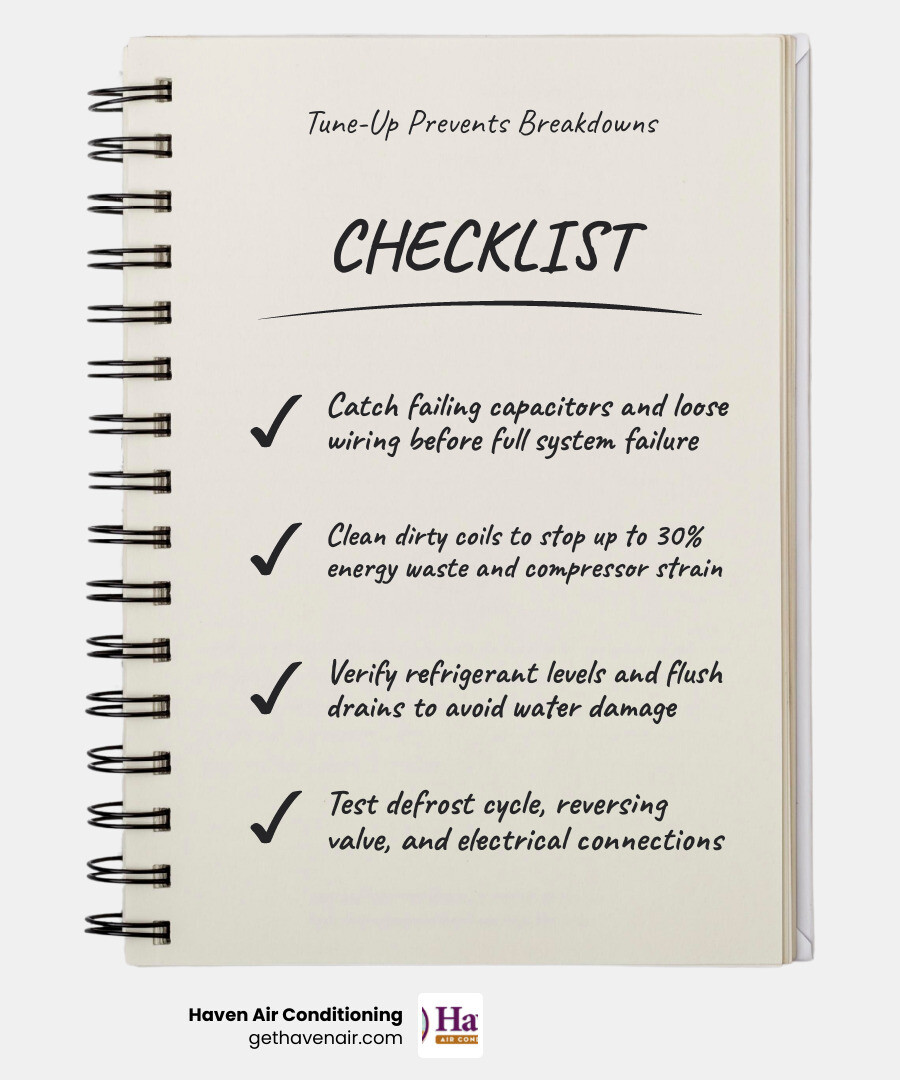
- Catching worn parts early — technicians find failing capacitors, loose wiring, and stressed components before they cause a full system failure
- Cleaning dirty coils — dirty condenser coils alone can increase energy use by up to 30%, straining the compressor
- Verifying refrigerant levels — low refrigerant forces the system to work harder and can permanently damage the compressor
- Flushing condensate drains — clogged drains lead to water damage and mold inside your home
- Testing the defrost cycle and reversing valve — critical for a system that heats and cools year-round
- Checking electrical connections — loose connections are a leading cause of sudden shutdowns
Up to 80% of costly HVAC repairs trace directly back to skipped routine maintenance. That’s not a small number — it means most emergency service calls are preventable.
Here in Orange County, heat pumps don’t get an off-season. Whether it’s a warm January in Irvine or a hot August in Anaheim, your system is running. That year-round workload means wear accumulates faster than it would on a seasonal system — and small problems quietly grow into expensive ones.
Think of it like skipping oil changes on your car. The engine doesn’t seize up immediately, but the damage builds. One day you’re facing a repair bill that dwarfs what routine maintenance would have cost across several years.
At Haven Air Conditioning, we see this pattern regularly. A homeowner calls during the first heat wave of summer, the system has stopped working, and when we ask about the last tune-up — there’s a long pause.
Regular professional service is the simplest, most reliable way to protect your comfort and your investment.
What is a Professional Heat Pump Tune-Up and What Does It Include?

A professional heat pump tune-up is a comprehensive maintenance service designed to clean, optimize, and inspect every critical component of your system. Unlike a standard furnace or air conditioner, a heat pump works double duty. It acts as an air conditioner in the summer and reverses its cycle to provide heat in the winter. To understand the mechanics of this dual function, you can read our guide on Heat Pump 101: How It Heats and Cools Your Home.
Because a heat pump handles both heating and cooling, it experiences twice the operational wear of single-season systems. A professional tune-up is not a simple visual inspection; it is a technical, hands-on optimization process performed by certified technicians. During the visit, a technician will clean internal parts to restore airflow, test electrical safety controls, lubricate moving parts to eliminate friction, and verify that the system is operating within the manufacturer’s strict performance specifications.
The Technical Checklist: What Certified Technicians Inspect
When our team at Haven Air Conditioning performs a professional tune-up, we follow a detailed, multi-point checklist to ensure no component is overlooked. This technical inspection is crucial for understanding how a heat pump tune up prevents costly breakdowns by catching issues long before they disrupt your home’s comfort.
- Evaporator and Condenser Coils: We inspect and clean both coils. Dirt and dust act as insulators, preventing efficient heat transfer and forcing your system to run longer cycles.
- Refrigerant Charge Verification: Refrigerant operates in a closed loop. If the level is low, it indicates a leak. We measure the pressure and check for leaks, as operating with incorrect refrigerant levels will quickly destroy your compressor.
- Electrical Contactors and Connections: We tighten all electrical connections and measure voltage and amperage. Pitted contactors or loose wires are primary causes of sudden system failure.
- Blower Motor and Fan Assembly: We clean the blower wheel, measure static pressure, and lubricate moving parts to reduce motor friction and wear.
- Reversing Valve and Defrost Cycle: These components are unique to heat pumps. We test the reversing valve to ensure the system switches smoothly between heating and cooling modes, and we verify the defrost control board operates correctly so the outdoor unit doesn’t freeze over in cooler weather.
- Condensate Drain Flush: We clear the condensate drain line of algae, dust, and debris to prevent water backups that can cause expensive property damage and mold growth.
Seasonal Timing: Why Spring and Fall Tune-Ups Matter
Because heat pumps run year-round in Southern California, we highly recommend scheduling professional service twice a year: once in the spring before the intense summer cooling demand, and once in the fall before the winter heating season.
Scheduling your service in the spring ensures your system is prepared for the first 90-degree day in Anaheim or Fullerton, helping you beat the summer rush when HVAC technicians are busiest. To learn more about preparing your system for the warmer months, check out our guide on Spring AC Tune-Ups and System Inspection.
| Spring Tune-Up Focus (Cooling Prep) | Fall Tune-Up Focus (Heating Prep) |
|---|---|
| Condensate drain line flush & clearing | Reversing valve operation test |
| Evaporator coil cleaning for maximum heat absorption | Defrost cycle and control board testing |
| Outdoor condenser coil clearing and washing | Auxiliary/Backup heating strip inspection |
| Airflow optimization and ductwork visual check | Thermostat calibration for winter comfort |
| Refrigerant pressure and leak testing | Electrical connection security and safety controls |
How a Heat Pump Tune-Up Prevents Costly Breakdowns
To truly appreciate how a heat pump tune up prevents costly breakdowns, it helps to understand the chain reaction of component failures. HVAC systems are highly integrated; when one minor part struggles, it places immediate, heavy strain on other, more expensive components.
For example, a dirty air filter or dusty evaporator coil restricts airflow. When airflow is blocked, the blower motor must work 15% to 20% harder to push air through your home, leading to overheating. At the same time, the restricted airflow causes the refrigerant temperature to drop too low, which can freeze the indoor coil. This sends liquid refrigerant back to the compressor — a component designed only to pump vapor. The result is a destroyed compressor, which is one of the most expensive repairs in any heating and cooling system.
By scheduling a regular tune-up, you stop this chain reaction before it starts. For a deeper look into how preventative care keeps your system running smoothly, read about how AC Tune-Ups Prevent Mid-Season Breakdowns.
Understanding How a Heat Pump Tune-Up Prevents Costly Breakdowns
Up to 80% of all major HVAC repairs are completely preventable with routine maintenance. During a professional tune-up, technicians perform tests that are impossible to do without specialized diagnostic equipment.
A prime example is capacitor testing. Capacitors act like temporary batteries that provide the electrical boost needed to start your heat pump’s motors. Over time, heat and electrical wear cause capacitors to lose their storage capacity. During a tune-up, our technicians measure a capacitor’s microfarads. If the reading is below the manufacturer’s threshold, we replace it immediately.
Replacing a weak capacitor is a quick, inexpensive preventative step. If left unaddressed, a failed capacitor will prevent the fan or compressor from starting, causing the motor to hum, overheat, and burn out entirely — transforming a simple fix into a major emergency repair. Proactive steps like this are the foundation of effective HVAC Preventive Maintenance.
Warning Signs Your Heat Pump Needs Immediate Attention
While regular tune-ups prevent unexpected issues, your heat pump will often give you subtle warning signs when it is struggling. If you notice any of the following symptoms, you should schedule a professional inspection before a total breakdown occurs:
- Unusual Noises: Squealing, grinding, rattling, or metallic clicking sounds indicate loose components, worn bearings, or a failing motor.
- Weak Airflow: If the air coming from your supply registers feels weak, it could point to a failing blower motor, a severely clogged filter, or leaking ductwork.
- Rising Utility Bills: A sudden, unexplained jump in your monthly energy costs means your heat pump is working much harder than it should to maintain your thermostat settings.
- Short Cycling: If your system turns on and off rapidly every few minutes, it is likely overheating, experiencing an electrical fault, or suffering from restricted airflow.
- Ice Buildup: Finding frost or ice on the outdoor coils in the summer or excessive ice buildup in the winter means there is an airflow issue or a refrigerant leak that requires immediate attention.
The Financial Benefits: Efficiency, Lifespan, and Warranty Protection
Investing in regular heat pump maintenance is not just about avoiding the headache of a broken system; it is a highly effective way to save money. From lower monthly utility bills to extending the overall life of your equipment, the financial return on a professional tune-up is substantial.
As of June 2026, energy standards and utility rates in Southern California continue to rise. Running an inefficient HVAC system is an expensive mistake. Fortunately, keeping your system in peak condition ensures it uses the absolute minimum amount of electricity required to keep your home comfortable.
How a Heat Pump Tune-Up Prevents Costly Breakdowns and Lowers Energy Bills
According to the U.S. Department of Energy, a neglected heat pump can easily consume 10% to 25% more energy than a well-maintained system.
When dirt accumulates on your outdoor condenser coils, it acts as an insulating blanket. The heat pump cannot release heat efficiently in the summer or absorb it effectively in the winter. This single issue can increase your system’s energy consumption by up to 30%.
During a professional tune-up, we thoroughly wash the coils and optimize the system’s airflow. By restoring the system’s Coefficient of Performance (COP), we ensure it operates at peak efficiency. This directly translates to lower monthly heating and cooling bills, allowing the tune-up to quickly pay for itself.
Extending System Lifespan and Protecting Your Warranty
A brand-new heat pump is a major home investment. A neglected system that constantly runs long, hot cycles under heavy strain will often fail permanently in just 8 to 10 years. In contrast, a well-maintained heat pump can easily last 15 or more years. To understand more about what to expect from your system’s lifetime, read our article on How Long Does a Heat Pump Last.
Furthermore, almost all major HVAC manufacturers require proof of annual professional maintenance to keep their equipment warranties valid. If a major component like your compressor fails within the warranty period, the manufacturer will likely request service records. If you cannot provide proof of regular professional tune-ups, your claim may be denied, leaving you to pay for the entire replacement out of pocket. Regular maintenance is your safety net, protecting both your daily comfort and your long-term financial investment.
Frequently Asked Questions About Heat Pump Maintenance
How often should a heat pump be serviced?
A heat pump should be professionally serviced twice a year — once in the spring and once in the fall. Because heat pumps handle both heating and cooling duties without a seasonal break, they accumulate wear and tear much faster than standard air conditioners or furnaces. Regular bi-annual service keeps them running reliably through every season.
Can I perform a heat pump tune-up myself?
Homeowners can easily handle basic tasks like replacing air filters every 1 to 3 months, keeping the outdoor unit clear of leaves and debris, and ensuring indoor vents remain unblocked. However, a comprehensive tune-up requires specialized diagnostic tools, electrical safety training, and EPA certification to handle and measure refrigerant. Attempting a DIY tune-up can damage your system, create safety hazards, and void your manufacturer’s warranty.
Will skipping a tune-up void my manufacturer warranty?
Yes, in many cases it will. Most major HVAC manufacturers explicitly state in their warranty terms that the system must be serviced annually by a licensed professional. If you skip regular tune-ups and a major part fails, the manufacturer can deny your warranty claim, leaving you responsible for the full cost of the repair.
Conclusion
Your home’s heat pump is a hard-working system that keeps your family comfortable through hot Southern California summers and cool winter nights. Protecting that comfort doesn’t have to be complicated or stressful.
At Haven Air Conditioning, we are proud to serve our neighbors throughout the Greater Orange County and Riverside areas — from Anaheim and Fullerton to Irvine and beyond. Our friendly, certified professionals work with transparency and meticulous attention to detail, giving you true peace of mind.
The absolute best way to stay ahead of unexpected repairs is to join our smart maintenance membership plan. As a member, you get two professional tune-ups a year, priority scheduling, and peace of mind knowing your comfort is in expert hands.
Don’t wait for the next extreme weather shift to find out if your system is up to the task. Contact Haven Air Conditioning today to schedule your professional heat pump tune-up or to get a friendly, honest second opinion on your home’s comfort needs. To explore our comprehensive maintenance options, view our HVAC Maintenance Plan Complete Guide.