(714) 332-6302

Why Spring AC and HVAC Maintenance in Orange County Can’t Wait Until Summer
If you’re looking to schedule spring AC and HVAC maintenance for Orange County, here’s what you need to know right now:
Quick Answer: Spring HVAC Maintenance in Orange County
- Best time to schedule: March through early May — before the summer rush
- Who should do it: A certified HVAC technician for safety and refrigerant checks; homeowners can handle basic prep
- What’s covered: Coil cleaning, refrigerant check, electrical inspection, thermostat calibration, condensate drain flush, airflow testing
- Why it matters locally: Santa Ana winds, coastal salt air, and rapid temperature swings put extra stress on Orange County systems
- What’s at stake: Skipping maintenance can mean emergency repair bills of $350–$1,000 or full system replacement at $8,000–$15,000
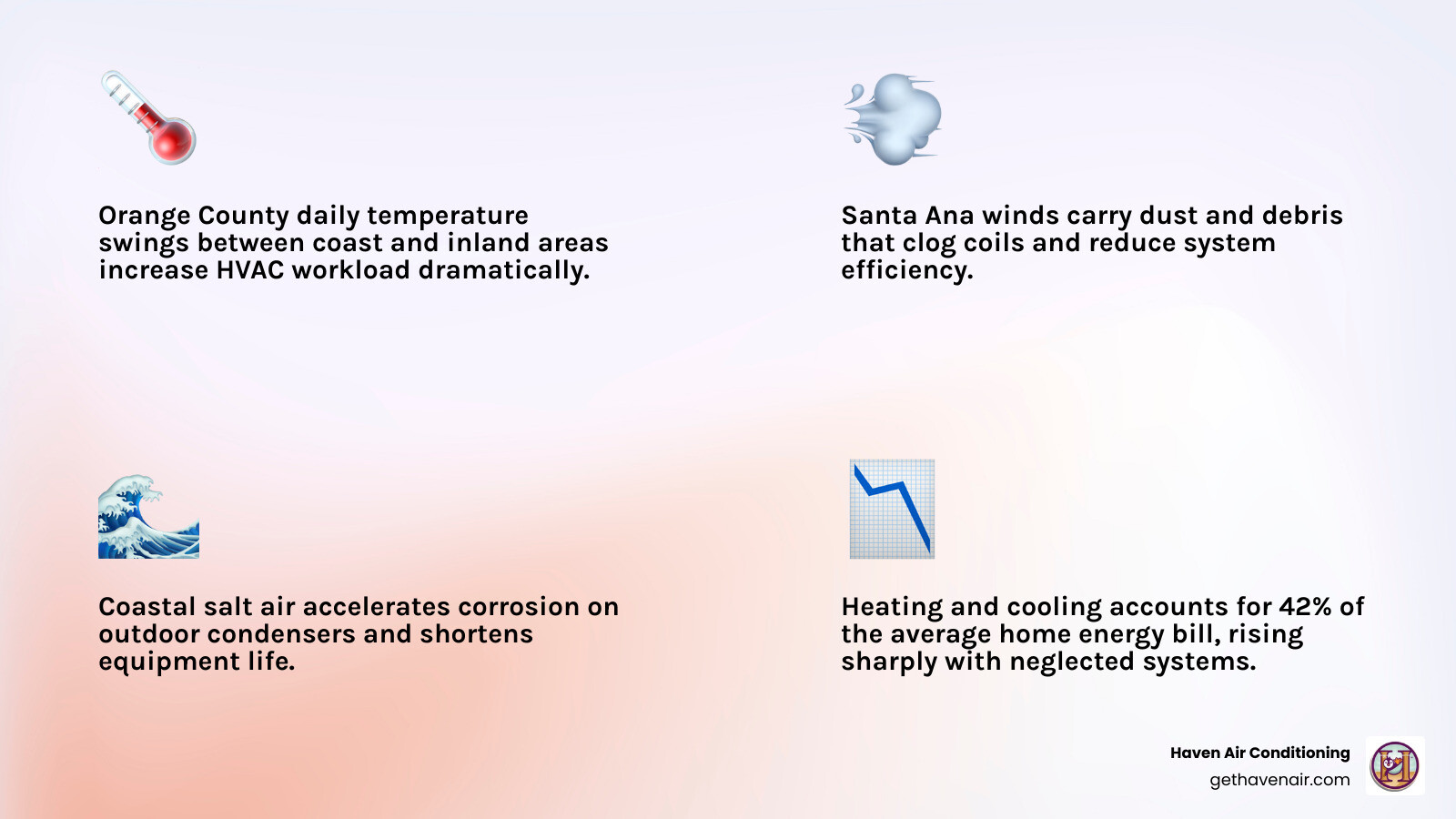
Orange County mornings can feel mild and coastal, then by mid-afternoon the inland heat rolls in fast. That daily temperature swing — combined with salt air near the coast, dusty Santa Ana winds further inland, and a cooling season that stretches well into October — puts your HVAC system under serious strain. Heating and cooling already accounts for roughly 42% of the average home energy bill. Add a neglected system into the mix, and that number climbs fast.
Here at Haven Air Conditioning, we serve homeowners across Anaheim, Irvine, Fullerton, and the wider Orange County area every spring — and we see the same avoidable problems year after year. A little proactive care in March or April can be the difference between a comfortable summer and a panicked call during a heat wave.
In this guide, we’re sharing five practical maintenance hacks we actually use, what a professional tune-up covers, and how to tell when something needs immediate attention.
Why Spring AC and HVAC Maintenance for Orange County is Non-Negotiable

In Orange County, spring maintenance is not just a nice-to-have. It is the smart window to catch problems before your system starts working overtime.
Our local conditions are rough on HVAC equipment:
- Inland cities can heat up quickly, forcing AC systems to ramp from idle to full demand
- Coastal areas deal with salt air, moisture, and corrosion
- Santa Ana winds carry dust and debris that clog coils and filters
- Spring pollen season adds another layer of buildup inside return grilles and filters
All of that affects airflow, heat transfer, and efficiency. Dirty coils and restricted airflow make your equipment run longer to do the same job. Properly maintained systems can use 15% to 20% less energy than neglected ones, and routine maintenance can improve airflow by 10% to 46%.
That is why we recommend spring service before summer arrives. If you want a deeper look at seasonal prep, see our guide on Spring AC Tune-Ups and System Inspection and our local advice on Summer AC Performance Check in Orange.
How Coastal Air Impacts Spring AC and HVAC Maintenance for Orange County
If you live in places like Laguna Beach, Costa Mesa, or other coastal parts of our service area, your outdoor unit has a different enemy: salt and moisture.
Marine air can:
- Accelerate coil oxidation
- Corrode metal fasteners and electrical connections
- Reduce heat transfer at the condenser
- Contribute to musty odors and moisture-related indoor air quality issues
That means coastal systems often need closer inspection of condenser coils, cabinet condition, wiring connections, and drainage. We also pay extra attention to humidity control and signs of microbial growth around drain pans and indoor coils.
For more on what to watch for as temperatures rise, check out Summer AC System Inspection What to Look For.
The Best Time to Schedule Spring AC and HVAC Maintenance for Orange County
The sweet spot is March through early May.
Why then?
- Appointment availability is usually better
- We can test performance before the first big heat spike
- Small problems are cheaper and easier to fix early
- You avoid the peak-season scramble when everybody remembers their AC at the same time
Waiting until the first 90-degree day is a little like buying an umbrella after you are already soaked. If you want to avoid the midsummer surprise, our article on AC Tune-Ups Prevent Mid-Season Breakdowns explains why timing matters so much.
5 Genius Hacks for a Summer-Ready System
Some spring prep tasks are simple and safe for homeowners. Others absolutely belong in professional hands. The trick is knowing the difference.
| Task | DIY | Professional |
|---|---|---|
| Replace air filter | Yes | Yes |
| Clear debris around condenser | Yes | Yes |
| Flush condensate drain lightly | Yes | Yes |
| Rinse outdoor coil gently | Yes, carefully | Yes |
| Test refrigerant charge | No | Yes |
| Tighten electrical components | No | Yes |
| Check capacitor/contactor | No | Yes |
| Measure airflow/static pressure | No | Yes |
| Calibrate thermostat precisely | Basic only | Yes |
For a broader look at year-round upkeep, visit our guide to HVAC Preventive Maintenance.
Hack 1: The 24-Hour Compressor Warm-Up
If your AC has been sitting idle, one overlooked spring step is giving the system time to stabilize before its first heavy run.
Here is the practical version:
- Turn the circuit breaker back on if it has been shut off for the off-season
- Wait about 24 hours before putting the system into full cooling mode
Why? Compressor oil needs time to warm and settle properly. Starting too quickly after a long shutdown is not ideal for system longevity. It is a small step, but small steps are usually the ones we all forget. Like sunscreen on your ears.
If your home also uses heating equipment that needs seasonal attention, our Heater Tune-Up page covers the cold-weather side too.
Hack 2: The Vinegar Flush for Condensate Drains
Condensate drains are easy to ignore until they clog and suddenly your ceiling, closet, or garage area gets an unwanted water feature.
A safe homeowner step is to:
- Shut the system off
- Locate the condensate drain access point
- Pour a small amount of white vinegar into the line
- Let it sit briefly to help break down light algae or buildup
This can help reduce minor clogs, especially in spring when moisture starts building again. But if you already see standing water in the pan, water stains, or repeated backups, call us. A clogged drain can lead to water damage and mold issues fast.
If you are comparing one-time tune-ups with ongoing protection, our Air Conditioner Maintenance Plan guide is a good next read.
Hack 3: Clearing the Two-Foot “Breathing Room”
Your outdoor condenser needs room to breathe. When bushes, patio items, leaves, or windblown debris crowd the unit, heat transfer suffers.
We recommend:
- At least 2 feet of clearance around the condenser
- Trimming shrubs and plants back
- Removing leaves, lint, and debris from the coil face
- Keeping furniture, storage bins, and garden tools away from the unit
This is one of the easiest ways to support airflow and efficiency. A condenser packed into a leafy corner works about as well as a runner wearing a winter scarf over their face.
For local maintenance help, visit HVAC Maintenance Anaheim CA.
Hack 4: Use the Right Filter, Not the “Strongest” Filter
Many homeowners assume the highest-rated filter is always best. Not necessarily.
For many homes, a MERV 8 to MERV 11 filter gives a solid balance between filtration and airflow. Go too restrictive for your system, and you may reduce airflow enough to hurt performance.
As a general rule:
- Replace standard filters every 60 to 90 days
- Check them more often in spring, especially with pets, allergies, or nearby dust
- Replace monthly during heavy pollen or dust periods if needed
A dirty filter is one of the most common causes of weak airflow, frozen coils, and rising bills.
Hack 5: Do a Mild-Day Test Run Before the First Heat Wave
Do not wait until the hottest Saturday in June to find out your AC is only blowing lukewarm disappointment.
On a mild spring day:
- Set the thermostat to cooling
- Let the system run 15 to 20 minutes
- Check for steady airflow
- Listen for buzzing, grinding, or rattling
- Make sure the air coming from vents feels properly cool
- Watch for odd smells or short cycling
If anything seems off, schedule service before the calendar and the weather gang up on you.
The Professional 44-Point Checklist vs. DIY Steps
DIY maintenance helps, but it does not replace a professional tune-up. A thorough spring service is designed to catch the problems homeowners cannot safely or accurately test on their own.
A comprehensive visit may include a detailed multi-point inspection covering:
- Thermostat operation and calibration
- Filter condition and airflow
- Condenser and evaporator coil condition
- Refrigerant level verification
- Superheat or subcooling checks when needed
- Electrical tightening and voltage checks
- Capacitor and contactor testing
- Blower motor inspection
- Condensate drain and pan cleaning
- Safety control testing
- Static pressure and airflow review
- Duct and vent assessment
- Overall cooling performance and temperature split
That matters even more in 2026, as homeowners with older equipment may be weighing repair versus replacement decisions tied to refrigerant changes and aging components. We help our customers understand what is urgent, what can wait, and what supports long-term reliability.
For heating-specific tune-up info, see All You Need to Know About Furnace Tune-Up.
Essential Steps in Spring AC and HVAC Maintenance for Orange County
The most important professional spring tasks usually include:
- Cleaning condenser and evaporator coils
- Checking blower wheel and motor performance
- Measuring refrigerant charge
- Inspecting contactors, capacitors, and wiring
- Flushing condensate lines
- Testing safety controls
- Verifying thermostat accuracy
- Looking for early signs of wear before summer strain begins
If your system is already giving you clues that something is wrong, our article on Signs Your System Needs HVAC Repair Services can help you spot them early.
Why Professional Calibration Saves 15% on Energy
This is where a tune-up starts paying you back.
Heating and cooling make up about 42% of the average home energy bill. When the thermostat is off, airflow is weak, or coils are dirty, your system runs longer than necessary. Proper maintenance can reduce energy use by up to 15%, and in some cases even more when airflow problems are corrected.
Professional calibration helps by:
- Making sure the thermostat reads accurately
- Confirming the system cycles correctly
- Restoring airflow across coils
- Reducing strain on motors and compressors
- Helping rooms cool more evenly
And if your ductwork is leaking in a hot attic, the waste gets even worse. Duct losses can account for up to 30% of a home’s energy consumption. That is why a real tune-up is not just a wipe-down and a thumbs-up.
For more on long-term efficiency and upkeep, see Benefits of Regular Home Furnace Maintenance.
The Real Cost of Skipping Your Seasonal Tune-Up
Skipping spring maintenance rarely saves money. It usually just delays the bill.
Common consequences include:
- Higher utility bills from reduced efficiency
- Weak airflow and uneven cooling
- Frozen evaporator coils from airflow or refrigerant issues
- Water damage from clogged drains
- More emergency repairs during peak heat
- Shorter equipment life
Industry research in our source set shows that neglected systems can use significantly more energy, while routine maintenance may extend lifespan by 3 to 5 years. That is a big difference for equipment you depend on every day during summer.
Even small hidden problems can turn expensive once the system is under load:
- A weak capacitor may fail during a heat wave
- Dirty coils can overheat the compressor
- Low refrigerant may point to a leak
- Duct leakage can waste cooled air before it reaches your rooms
Our End of Summer AC System Check is also helpful if you want to keep that momentum going after the hottest months.
Protecting Your Manufacturer Warranty
Many manufacturers require documented maintenance to support warranty coverage. If major parts fail and there is no service history, that can create headaches you definitely do not need.
Routine tune-ups help by:
- Creating a record of proper care
- Catching problems before they damage major components
- Reducing avoidable wear and tear
- Supporting the longest practical service life of your system
For related reading, visit Furnace Maintenance Keep System Running.
Improving Indoor Air Quality for Allergy Season
Spring is not just AC season. It is also allergy season.
Orange County homes deal with:
- Pollen
- Dust
- Pet dander
- Construction debris
- Fine particles stirred up by dry, windy conditions
Spring HVAC maintenance helps indoor air quality by:
- Replacing dirty filters
- Checking return airflow
- Cleaning buildup around coils and blower components
- Inspecting for moisture issues that can create odors or microbial growth
If your home has persistent allergy symptoms, we may also recommend indoor air quality upgrades based on your system and household needs. For more practical upkeep advice, take a look at Top Furnace Maintenance Tips from Experts.
Frequently Asked Questions about Orange County HVAC Care
How much does a spring HVAC tune-up cost in Anaheim?
Costs vary based on system type, accessibility, and whether you are scheduling a one-time visit or joining a maintenance plan. In the research we reviewed, one-time tune-ups commonly ranged from lower-cost promotional offers up to more comprehensive service visits, with broader national averages often landing around the midrange for a standard maintenance appointment.
What matters more than chasing the cheapest number is understanding what is included. A real tune-up should cover inspection, cleaning, testing, calibration, and clear recommendations. Maintenance plans can also offer value through recurring service, member savings, and priority scheduling.
If you want a breakdown of what plans can include, read our HVAC Maintenance Plan Complete Guide.
What are the signs my AC needs immediate repair?
Call for service sooner rather than later if you notice:
- Warm air instead of cool air
- Weak airflow
- Short cycling
- Grinding, buzzing, or banging noises
- Burning or musty odors
- Ice on refrigerant lines or coils
- Water around the indoor unit
- Sudden jump in energy bills
- Rooms cooling unevenly
- The system struggling to keep up on mild days
These symptoms often point to electrical issues, airflow restrictions, drainage problems, or refrigerant trouble. Waiting usually makes them worse.
Can I clean my own AC coils?
You can do very light exterior cleaning on the outdoor condenser if you do it carefully:
- Shut power off first
- Remove loose debris by hand
- Use a gentle garden hose rinse
- Never use a pressure washer
That said, indoor evaporator coils, deeper coil cleaning, chemical cleaning, fin straightening, and anything involving disassembly should be handled professionally. Coils are easy to damage, and bent fins or electrical mistakes can create bigger problems than the dirt you started with.
Conclusion
Spring is the best time to get ahead of HVAC trouble instead of reacting to it later. In Orange County, that matters even more because our systems deal with dust, salt air, pollen, inland heat, and constant temperature swings that keep equipment guessing.
At Haven Air Conditioning, we help homeowners in Anaheim, Fullerton, Santa Ana, Costa Mesa, Laguna Niguel, and across the greater Orange County area stay ready for summer with careful inspections, clear communication, and maintenance that actually protects comfort. Our maintenance membership options can make scheduling easier, add priority service benefits, and help you stay consistent year after year.
If you want peace of mind before the next heat wave, explore Schedule your professional maintenance today. If you are not sure whether you need a tune-up or a repair, reach out to us for a second opinion. We are happy to help you make the smart call for your home.