(714) 332-6302

When Your Heat Pump Works Against You: Reversing Valve Failure Signs and Solutions
Understanding reversing valve failure signs and solutions can save you from weeks of discomfort — and a much bigger repair bill down the road. Here’s a quick summary of what to watch for:
Common reversing valve failure signs:
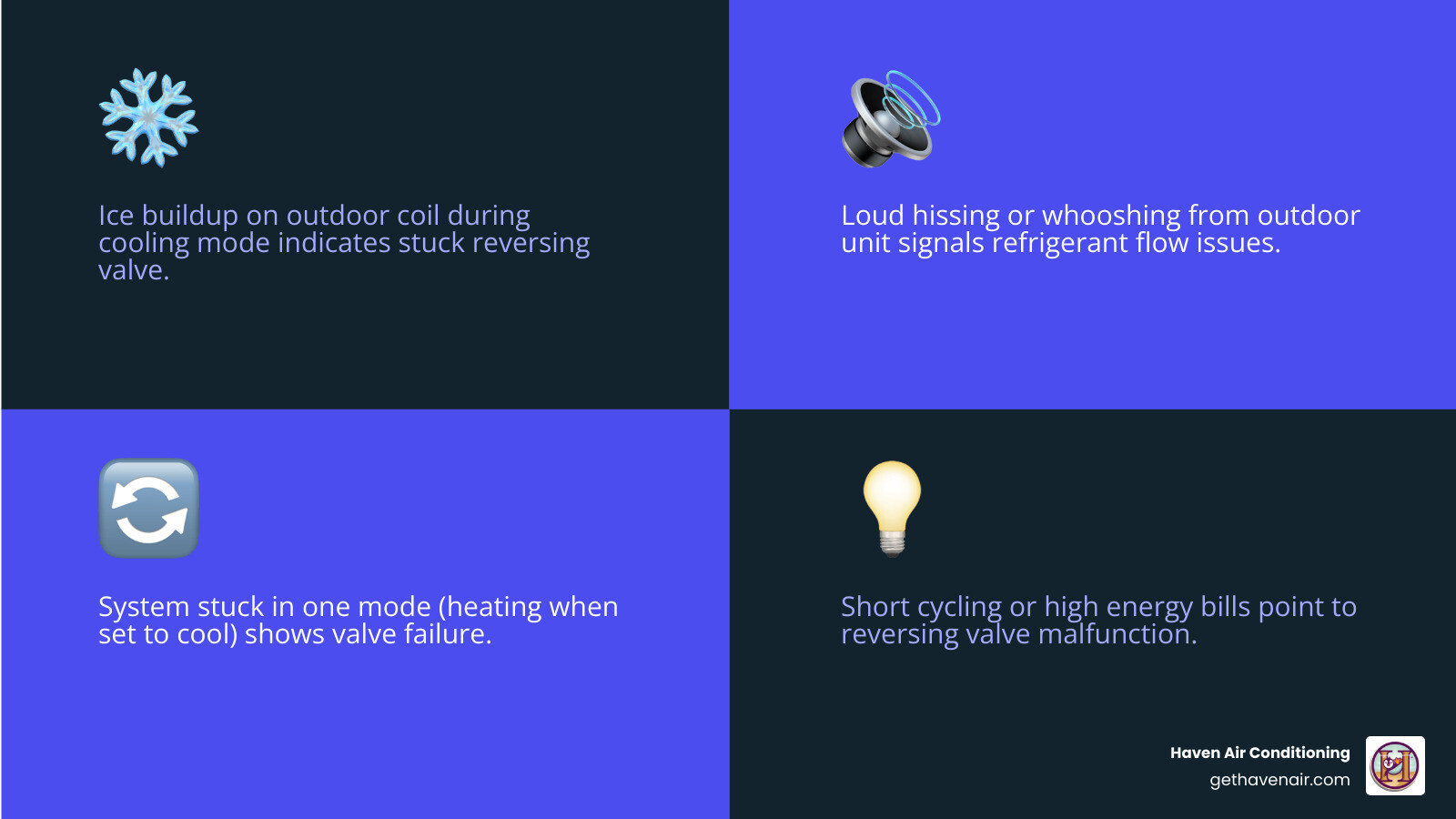
- Heat pump blows warm air when set to cool, or cold air when set to heat
- Loud hissing or whooshing sound coming from the outdoor unit
- System gets stuck in one mode and won’t switch
- Ice buildup on the outdoor coil during summer
- Short cycling or unusually long run times
- Unexplained spikes in your energy bill
What you can do right now:
- Check your thermostat — confirm it’s set to the correct mode and configured for a heat pump (not a conventional system)
- Listen for a faint click from the outdoor unit when you switch modes
- Clear any debris from around the outdoor unit
- Call a certified HVAC technician if the problem persists
Your heat pump is one of the hardest-working systems in your Orange County home. It heats in winter, cools in summer, and does it all through a single outdoor unit. The component that makes that possible — the reversing valve — is a small but critical four-way valve that redirects refrigerant flow depending on the season. When it fails, your heat pump essentially forgets which job it’s supposed to be doing.
For homeowners in Anaheim, Irvine, Fullerton, and across Orange County, that kind of failure rarely happens at a convenient time. It tends to show up on the first genuinely cold morning of the year, or right when summer heat kicks in hard. The good news is that reversing valve issues follow recognizable patterns, and knowing what to look for puts you ahead of the problem.
This guide walks you through how to spot a failing reversing valve, what you can safely check yourself, and when it’s time to call in a professional — like the certified technicians at Haven Air Conditioning, who handle exactly these kinds of heat pump issues every day across the greater Orange County and Riverside areas.
Understanding the Heat Pump Reversing Valve
To understand how to fix a failing valve, we first need to look at what it actually does. Think of the reversing valve as the “traffic cop” or the “brain” of your heat pump. While a standard air conditioner only moves heat in one direction (from inside to outside), a heat pump is designed for two-way travel.
What is a Heat Pump? How Does it Work? It’s a system that moves heat rather than creating it. The reversing valve is a 4-way valve located in the outdoor unit near the compressor. It consists of a few key parts:
- The Solenoid Coil: This is an electrical component that receives a 24V signal from your thermostat. When energized, it creates a magnetic field.
- The Slide Mechanism: Inside the brass body of the valve is a sliding “spool.” When the solenoid activates, it uses a small amount of refrigerant pressure (pilot pressure) to physically push this slide into a new position.
- Four Refrigerant Ports: These ports connect the compressor to the indoor and outdoor coils.
When the slide moves, it reverses the direction of the refrigerant. In the summer, it sends hot gas to the outdoor coil to be cooled. In the winter, it sends that hot gas to your indoor coil to warm your home. You can learn more about this cycle in our Heat Pump 101: How it Heats and Cools Your Home guide.
Identifying Reversing Valve Failure Signs and Solutions
In our experience serving neighbors from Anaheim to San Clemente, we’ve found that reversing valve issues are often misdiagnosed as “dirty coils” or “low refrigerant.” However, there are specific reversing valve failure signs and solutions that point directly to this component.
One of the most common signs is a system that is “stuck in mode.” If it’s May 2026 and your home feels like a sauna even though the AC is on, the valve might be stuck in the heating position. Conversely, if you’re Why is My Heat Pump Blowing Cold Air? during a chilly Riverside night, the valve likely failed to switch to heating.
Another red flag is a loud, persistent hissing noise. This often indicates an internal leak where high-pressure refrigerant is escaping past the internal slide, preventing the system from reaching the right temperature.
Recognizing the Symptoms of Reversing Valve Failure Signs and Solutions
Beyond the obvious “wrong temperature” issues, keep an eye out for these more subtle symptoms:
- Ice Buildup: If you see ice on your outdoor unit during the cooling season, it’s a major red flag. This can happen if the valve is stuck between positions, causing the coil to drop below freezing.
- Spiking Energy Bills: A failing valve makes your compressor work much harder to achieve the same temperature, leading to a sudden jump in your monthly utility costs.
- Short Cycling: If your system turns on and off every few minutes, it might be struggling with pressure imbalances caused by a faulty valve.
- Mode Confusion: If your My Heat Pump is Not Heating, it could be because the solenoid isn’t receiving the right signal to shift.
Homeowner Tips for Reversing Valve Failure Signs and Solutions
Before you assume the worst, there are a few things you can check safely at home:
- Thermostat Settings: Sometimes a “failed” valve is actually just a thermostat set to “conventional” instead of “heat pump.” Double-check your installer settings.
- The O/B Wire: This is the wire that tells the valve when to switch. If this wire is loose at the thermostat or the outdoor unit, the valve won’t move.
- Air Filter Maintenance: Believe it or not, restricted airflow from a dirty filter can cause pressure issues that make it harder for a pilot-operated valve to shift.
- Visual Inspection: Look at the outdoor unit. Is it clear of leaves, debris, and dirt? We recommend at least two feet of clearance around the unit for optimal performance.
Professional Diagnostics and Troubleshooting Steps
When we arrive at a home in Irvine or Fullerton to troubleshoot a suspected reversing valve, we use a systematic approach to confirm the diagnosis. We don’t just guess; we test.
The “Gold Standard” test for an internal valve leak is the 3°F Temperature Differential Rule. We measure the temperature of the refrigerant lines at least 5 inches away from the valve body. If the temperature difference between the suction lines exceeds 3°F, it indicates that hot gas is leaking internally, and the valve must be replaced.
We also perform Multimeter Testing:
- Voltage Check: We ensure the solenoid is receiving a steady 24V AC signal from the control board.
- Resistance Check: A healthy solenoid coil typically shows a resistance between 10 and 50 ohms. If it’s “open” or shows “zero,” the coil has failed electrically.
- Magnetic Field Check: We use a small screwdriver to see if the solenoid creates a magnetic pull when energized. If there’s magnetism but no “click,” the internal slide is likely stuck mechanically.
If you’re tired of DIY guessing games, you can find more help here: Don’t Sweat It: Finding Expert Heat Pump Repair Near You.
Repair vs. Replacement: What to Expect
If the problem is just the solenoid coil, the fix is relatively simple and affordable. We can often swap the coil without ever opening the refrigerant lines. However, if the internal slide is stuck or the valve body is leaking, a full replacement is required.
Replacing a reversing valve is one of the most complex repairs in the HVAC world. It’s not a DIY job for several reasons:
- EPA Section 608: It is illegal to vent refrigerant into the atmosphere. We must use specialized recovery machines to safely remove the refrigerant before starting.
- Brazing: The valve is “brazed” (high-temperature soldering) into the system. This requires a torch and extreme precision to avoid damaging the new valve with too much heat.
- System Vacuum: After the new valve is installed, we must use a vacuum pump to remove all air and moisture from the lines before recharging the system with fresh refrigerant.
For residents needing Heat Pump Repair Riverside CA, it’s important to know that while a solenoid repair might cost a few hundred dollars, a full valve replacement typically ranges from $500 to $1,500 depending on the size of your unit and the type of refrigerant used.
Frequently Asked Questions
How long does a reversing valve typically last?
With regular maintenance, a reversing valve should last as long as the heat pump itself — typically 10 to 15 years. However, in our local climate where we switch between heating and cooling frequently, the mechanical slide can wear out sooner if the system isn’t kept clean.
Can I unstick a reversing valve myself?
There is a common “myth” that you can unstick a valve by tapping it with a hammer. We strongly advise against this. Tapping too hard can dent the brass body, permanently ruining the valve or causing a dangerous refrigerant leak. If the valve is stuck, it’s usually due to internal contamination that requires professional cleaning or replacement.
Why is my heat pump making a loud whooshing sound?
If you hear a “whoosh” followed by steam rising from the outdoor unit in the winter, don’t panic! This is usually the defrost cycle. The reversing valve is temporarily switching to cooling mode to melt ice off the outdoor coils. However, if the hissing is constant and your home isn’t getting comfortable, that’s when you have a problem.
Conclusion
A failing reversing valve can turn your home from a sanctuary into a source of stress. Whether you’re dealing with a system stuck in one mode or strange hissing sounds, addressing reversing valve failure signs and solutions early can prevent total system failure and protect your compressor.
At Haven Air Conditioning, we believe in “Indoor Comfort, In Expert Hands.” We’ve spent years serving Anaheim, Irvine, and the surrounding Orange County communities with transparent, neighborly service. If your heat pump is acting up, don’t settle for “good enough.” Our certified technicians are ready to provide a second opinion or a comprehensive diagnostic to get your system back on track.
To avoid these issues altogether, consider our Maintenance Membership. Our members enjoy priority scheduling and bi-annual tune-ups that catch small valve issues before they become expensive emergencies. For more tips on choosing the right team for the job, check out Heat Pump Havoc: Your Guide to Top Repair Contractors in Irvine CA.
Ready to get your comfort back? Schedule your expert heat pump repair today and let us take care of the rest.