(714) 332-6302

Heat Pump Advantages Over Traditional HVAC: What Orange County Homeowners Need to Know
The heat pump advantages over traditional HVAC systems come down to one simple idea: moving heat is far more efficient than creating it. While a gas furnace burns fuel to generate warmth, a heat pump transfers existing heat from the air outside — using a fraction of the energy. The result? Year-round heating and cooling from a single system, lower energy bills, and a smaller carbon footprint. For homeowners in Irvine, Anaheim, Fullerton, and across Orange County, where mild winters and hot summers are the norm, that combination is especially powerful.
Here’s a quick look at the key advantages:
- Energy efficiency — Heat pumps deliver up to 3x more heat energy than the electricity they consume, something no gas furnace can match
- Dual function — One system heats and cools your home, replacing both a furnace and an AC unit
- Lower operating costs — The average U.S. home saves $370–$1,000 per year switching from natural gas to a heat pump
- Reduced emissions — No combustion means no carbon monoxide risk and up to 40% less CO2 than a gas furnace
- Longer lifespan — Heat pumps typically last 20–25 years, compared to 15–20 years for traditional AC units
- Better comfort — More consistent temperatures, improved dehumidification, and quieter operation
- Financial incentives — Federal tax credits and California rebate programs can significantly offset upfront costs
Whether you’re replacing an aging system or exploring a first-time upgrade, the sections below break down everything you need to make a confident decision.
Understanding the Technology: How Heat Pumps Differ from Traditional HVAC
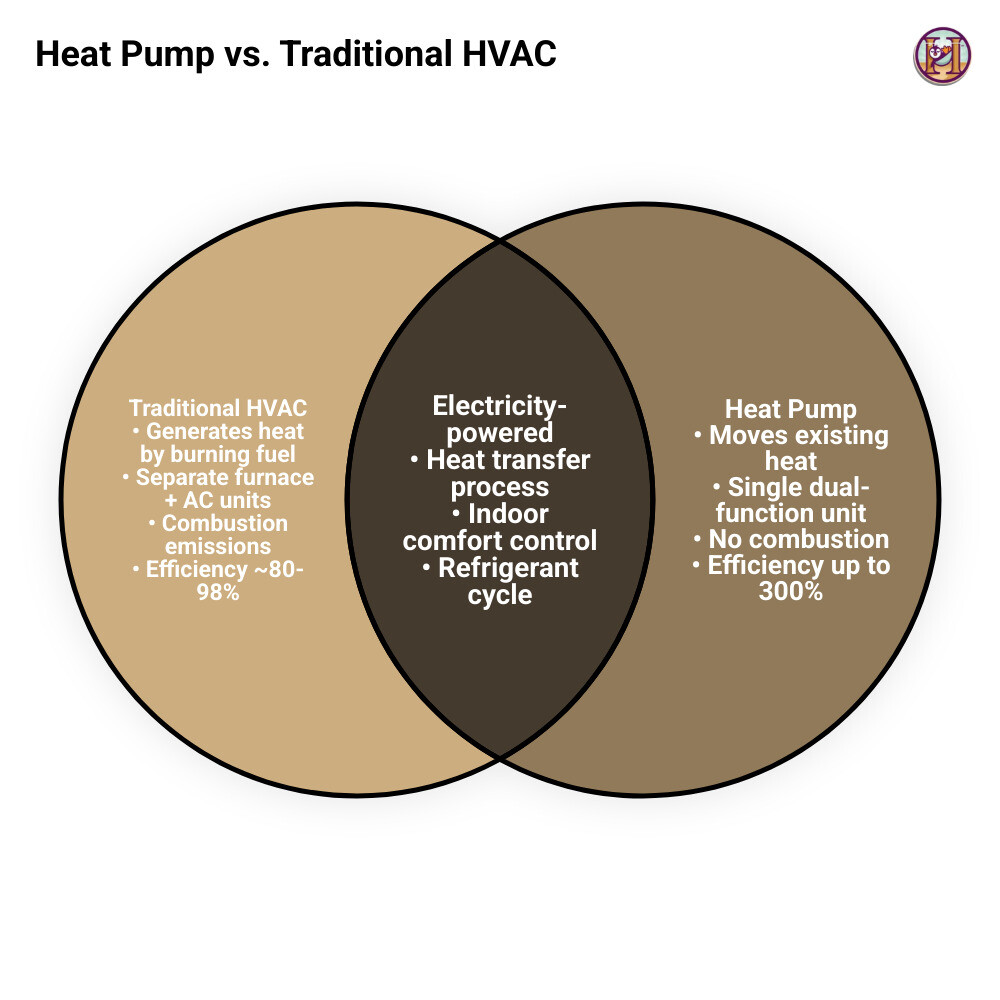
To understand why so many of our neighbors in Anaheim and Fullerton are making the switch, we have to look under the hood. Traditional HVAC usually relies on two separate “brains”: a furnace that burns natural gas or propane to generate heat, and an air conditioner that uses electricity to remove heat from your home.
A heat pump is different. It doesn’t “create” heat; it moves it. What is a Heat Pump? How Does it Work? It works exactly like your refrigerator but in reverse when needed. In the summer, it pulls heat out of your house and dumps it outside. In the winter, it uses a reversing valve to flip the process, extracting thermal energy from the outdoor air (yes, even when it’s chilly out!) and moving it inside.
Because it relies on electricity to power a compressor and fans rather than burning fossil fuels, the energy movement efficiency is staggering. While the most efficient gas furnace can never exceed 100% efficiency (because some heat always escapes through the flue), a heat pump can reach 300% to 400% efficiency. In the ongoing Heat Pumps vs Furnaces: Which is Better? debate, the heat pump wins on pure physics every time.
Top Heat Pump Advantages Over Traditional HVAC Systems
When we sit down with homeowners in Costa Mesa or Huntington Beach, we often compare the two systems side-by-side. The versatility of a heat pump is its “secret sauce.”
| Feature | Traditional HVAC (Furnace + AC) | Modern Heat Pump System |
|---|---|---|
| Primary Function | Two separate units for heat/cool | One unit does both |
| Energy Source | Gas/Propane + Electricity | 100% Electricity |
| Efficiency | 80%–98% (Heating) | 300%+ (Heating) |
| Lifespan | 15–20 years | 20–25 years |
| Safety | Risk of Carbon Monoxide | No combustion risk |
One of the biggest heat pump advantages over traditional hvac is the space-saving design. Instead of maintaining a bulky furnace in the closet and a condenser outside, you have one streamlined system. Furthermore, in the Heat Pumps vs Air Conditioning comparison for cooling, modern heat pumps often outperform standard AC units in dehumidification and variable-speed control.
Environmental and Safety Heat Pump Advantages Over Traditional HVAC
As we move toward April 2026, sustainability is a major priority for California families. Heat pumps are the “greenest” way to stay comfortable. By switching from a gas furnace, you can reduce your home’s carbon footprint by an average of 40%. In fact, 98% of homes in the U.S. would see a carbon reduction by making the switch.
Safety is another huge factor. Because there is no combustion happening inside your home, there is zero risk of carbon monoxide leaks. We also see a massive reduction in electricity use—up to 75% compared to electric resistance heating (like baseboard heaters or old electric furnaces). For our customers in places like Riverside and Corona, this greenhouse gas mitigation goes hand-in-hand with lower monthly bills.
Maximizing Comfort: Indoor Air Quality and Heat Pump Advantages Over Traditional HVAC
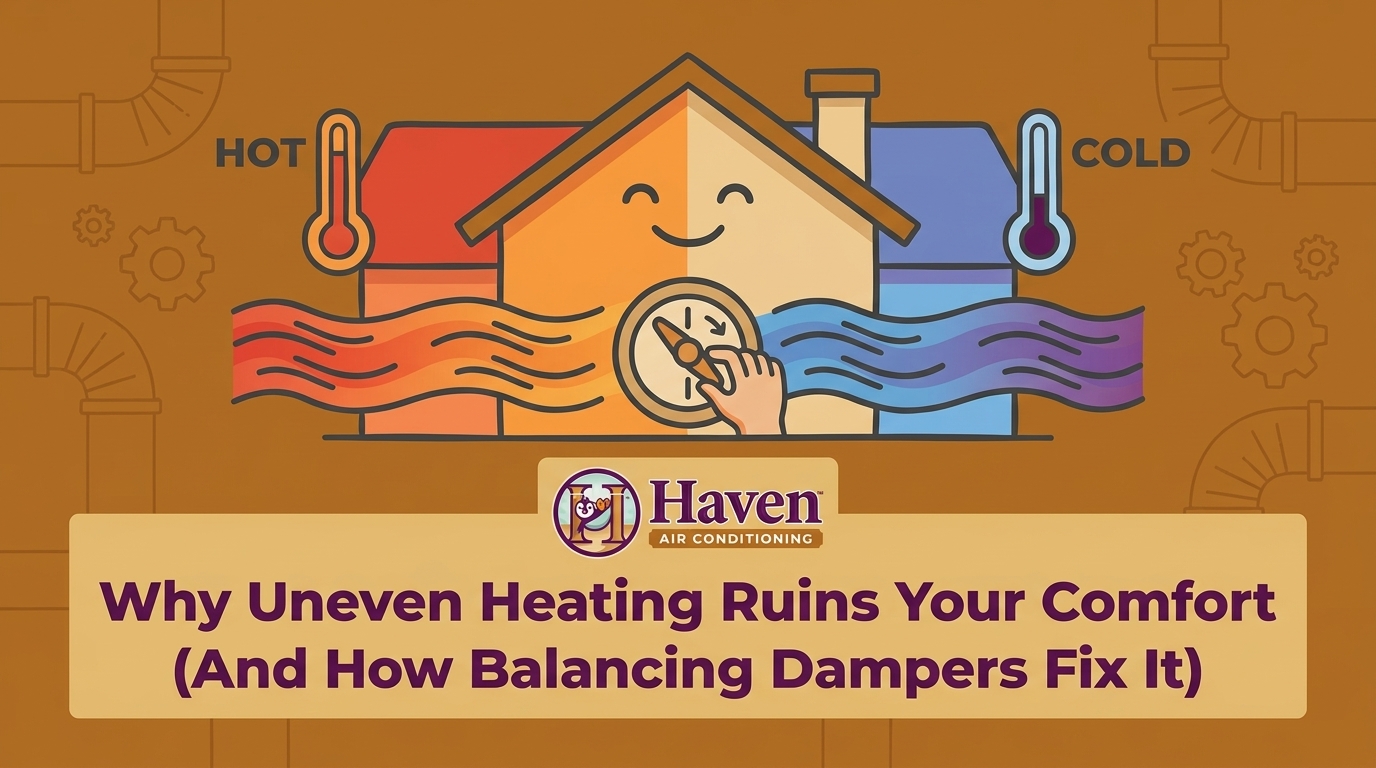
Comfort isn’t just about the number on the thermostat; it’s about how the air feels. Traditional furnaces often create “hot spots” and “cold swings” because they blast hot air and then shut off. Heat pumps, especially those with variable-speed compressors, provide a steady, gentle flow of air that maintains a consistent temperature.
They are also masters of dehumidification, which is a blessing during those humid Orange County summer nights. If you have rooms that are always too hot or too cold, Heat Pump Zoning allows you to control different areas of your home independently. This is often achieved through a 3-Zone Mini Split AC and Heat setup, which provides targeted comfort without the need for extensive ductwork. Plus, they operate much more quietly than traditional “clunky” AC units, ensuring your backyard remains a peaceful oasis.
Efficiency and Cost: Is a Heat Pump Worth the Investment in Orange County?
We get it—upfront cost is always a concern. While a heat pump can sometimes have a higher initial price tag than a basic central AC unit, the long-term ROI is where the magic happens. According to our research, an average home can save between $370 and $1,000 annually by switching from natural gas. If you’re currently using propane or fuel oil, those savings can be even higher.
When you follow a professional Heat Pump Installation Guide, you ensure the system is sized perfectly for your home’s square footage. An Energy Star certified air-source heat pump can provide heating for about 1/3 the cost of traditional electric heating. To get the full picture of the process, we recommend checking out our AC Heat Pump Installation Complete Guide.

Incentives and Rebates for California Homeowners
The financial news gets even better for those of us in the Golden State. Thanks to the Inflation Reduction Act, federal tax credits are available through 2032, covering 30% of the cost of a heat pump up to $2,000 per year.
Locally, there are numerous Heat Pump Rebates in California that can stack with federal incentives. Whether you are in Anaheim looking for municipal utility incentives or in Santa Ana checking for state-level programs, these “free money” opportunities can bring the net cost of a heat pump down to—or even below—the cost of a traditional furnace and AC combo.
Performance in Every Season: Cold Climates and Modern Innovations
A common myth we hear is that heat pumps don’t work when it gets cold. While that may have been true in the 1980s, modern technology has changed the game. Today’s cold-climate heat pumps are designed to perform efficiently even when temperatures drop to 5°F.
In our region, from Whittier to Norco, we rarely see those extremes, but it’s nice to know the power is there. For those who want the ultimate peace of mind, a hybrid or “dual-fuel” system pairs an AC-Heat Pump with a gas furnace backup. This setup automatically switches to gas only on the rarest, coldest nights, ensuring you are never without heat. If you’re looking for a local expert for Heat Pump Installation in Whittier CA, we can help you decide if a standard or cold-climate model is best for your specific property.
Potential Drawbacks and Maintenance Needs
No system is perfect, and we believe in being 100% transparent with our neighbors. In extremely cold climates (colder than what we usually see in Orange County), a heat pump might struggle without a backup. You might occasionally ask, Why is My Heat Pump Blowing Cold Air? Usually, this is just the “defrost mode” working to melt ice off the outdoor coils—a normal part of operation.
If My Heat Pump is Not Heating, it often comes down to a simple maintenance issue like a dirty filter. Because heat pumps work year-round, they do require bi-annual service—once before the cooling season and once before the heating season. This is slightly more frequent than a furnace, but because you only have one system to maintain instead of two, the costs often even out.
Regular maintenance is the key to answering How Long Does a Heat Pump Last? (Spoiler: with care, it’s 20+ years!). Whether you need Heat Pump Repair or a routine Heat Pump Repair Riverside CA check-up, our certified technicians are always ready to help.
Frequently Asked Questions about Heat Pumps
Do heat pumps really work in cold weather?
Yes! Modern advancements allow air-source heat pumps to extract heat even in sub-freezing temperatures. In the Greater Orange County and Riverside areas, our winters are mild enough that a heat pump is actually in its “sweet spot” for maximum efficiency.
How much can I save by switching from a gas furnace?
The average U.S. homeowner saves between $370 and $1,000 a year. In California, where electricity can be paired with solar panels, the savings can be even more dramatic. You also save on the monthly “connection fee” for natural gas if you go fully electric.
Is a heat pump more expensive to install than a central AC?
The upfront cost of a heat pump is often slightly higher than a central AC unit, but you have to remember that a heat pump replaces both the AC and the furnace. When you factor in the $2,000 federal tax credit and local rebates, the net cost is often very similar to traditional systems.
Conclusion
The debate between heat pumps and traditional HVAC is quickly leaning in one direction. With the heat pump advantages over traditional hvac—ranging from 300% efficiency and dual-season functionality to massive tax credits and a safer, combustion-free home—it’s easy to see why they are the future of home comfort.
At Haven Air Conditioning, we’ve spent years serving our neighbors in Anaheim, Irvine, Fullerton, and the surrounding Riverside areas. Our certified technicians aren’t just experts in the latest technology; they’re your neighbors who care about your comfort and your energy bills. We offer a comprehensive membership maintenance plan to give you priority scheduling and peace of mind, ensuring your system runs perfectly for its entire 20-25 year lifespan.
If you’re curious about making the switch or just need a second opinion on your current system, we’d love to chat. We’ll take care of your comfort so you can relax in your home.
Ready to experience the Haven Air difference? Explore our Residential HVAC Services or give us a call today for a transparent, expert evaluation of your home’s needs. Your indoor comfort is in expert hands!