(714) 332-6302

Why EPA Indoor Air Matters to Your Orange County Home
EPA indoor air guidance addresses a critical health concern: Americans spend about 90% of their time indoors, where pollutant levels can be 2 to 5 times higher than outdoors. For homeowners in Orange County and Riverside, understanding the EPA’s advice on indoor air quality (IAQ) is key to protecting your family from invisible threats like radon, carbon monoxide, mold, and volatile organic compounds (VOCs).
Quick Answer: What Does the EPA Say About Indoor Air?
- Primary Concern: Indoor air is often more polluted than outdoor air.
- Key Pollutants: Radon, carbon monoxide, secondhand smoke, mold, VOCs, and particulate matter.
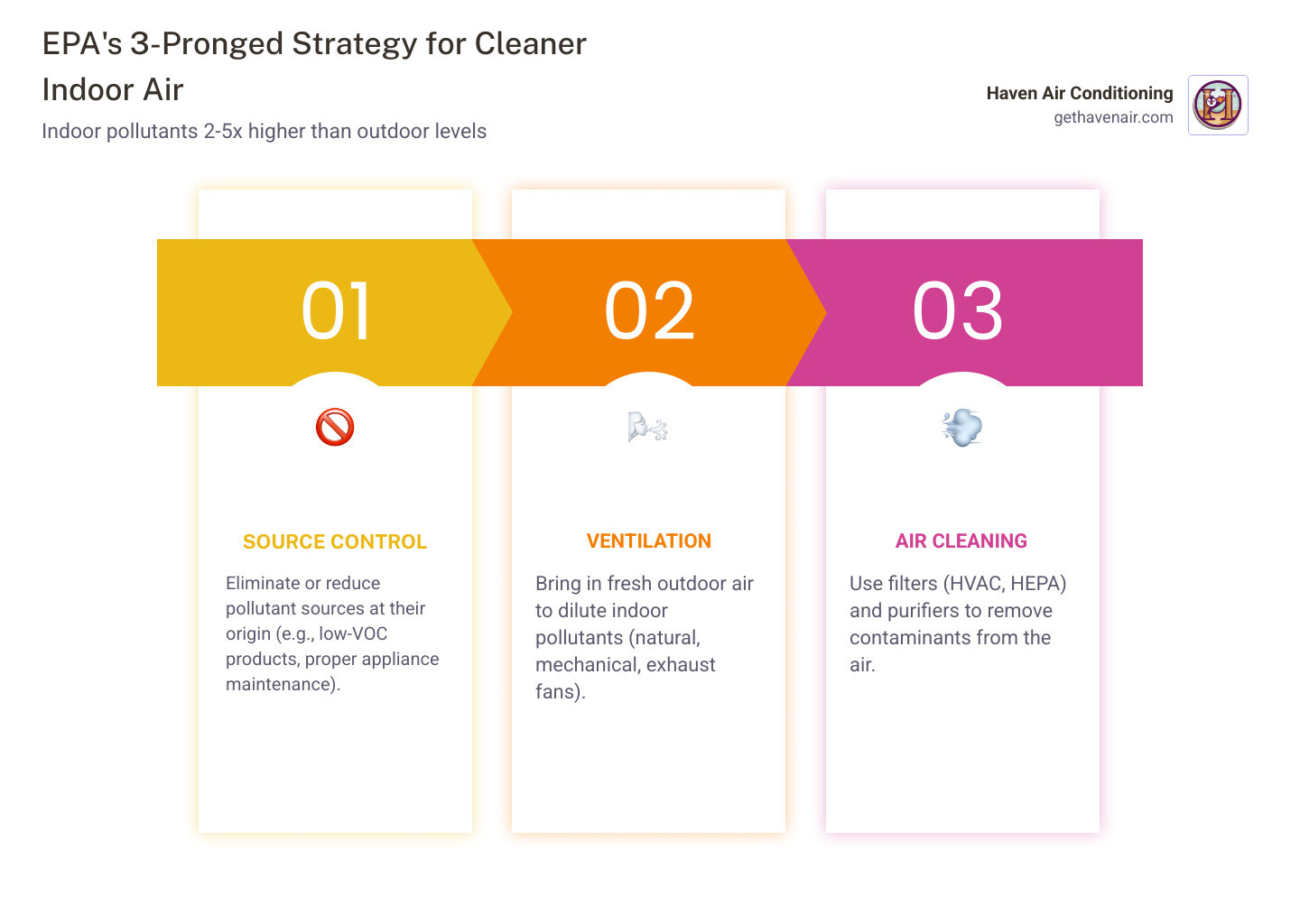
- Three Core Strategies: Source control, ventilation, and air cleaning.
- Key Recommendations: Test homes for radon and install CO detectors.
- Action Level: Fix radon problems at or above 4 pCi/L.
- Health Risks: Range from short-term headaches and fatigue to long-term respiratory disease, heart disease, and cancer.
If you’re concerned about your home’s air, understanding what HVAC systems do is the first step. Professional indoor air quality services can provide testing and solutions for your Orange County home.
The EPA ranks indoor air pollution as a top five environmental health risk. This is especially true in our region, where energy-efficient homes in Anaheim, Fullerton, and Irvine can trap pollutants from gas stoves, new furniture, cleaning products, and pets. Your HVAC system is vital for managing these risks through proper ventilation and filtration.
Similar topics to epa indoor air:
The Invisible Threats: Common Indoor Pollutants & Sources
Your home should be a sanctuary, but hidden dangers may lurk in the air. When the EPA discusses epa indoor air quality, they’re highlighting how our modern, well-sealed homes in Orange County can trap pollutants inside. The air in your Anaheim or Irvine home can be more contaminated than the air outside, with pollutants coming from everyday sources like your kitchen stove, new furniture, and even pets.
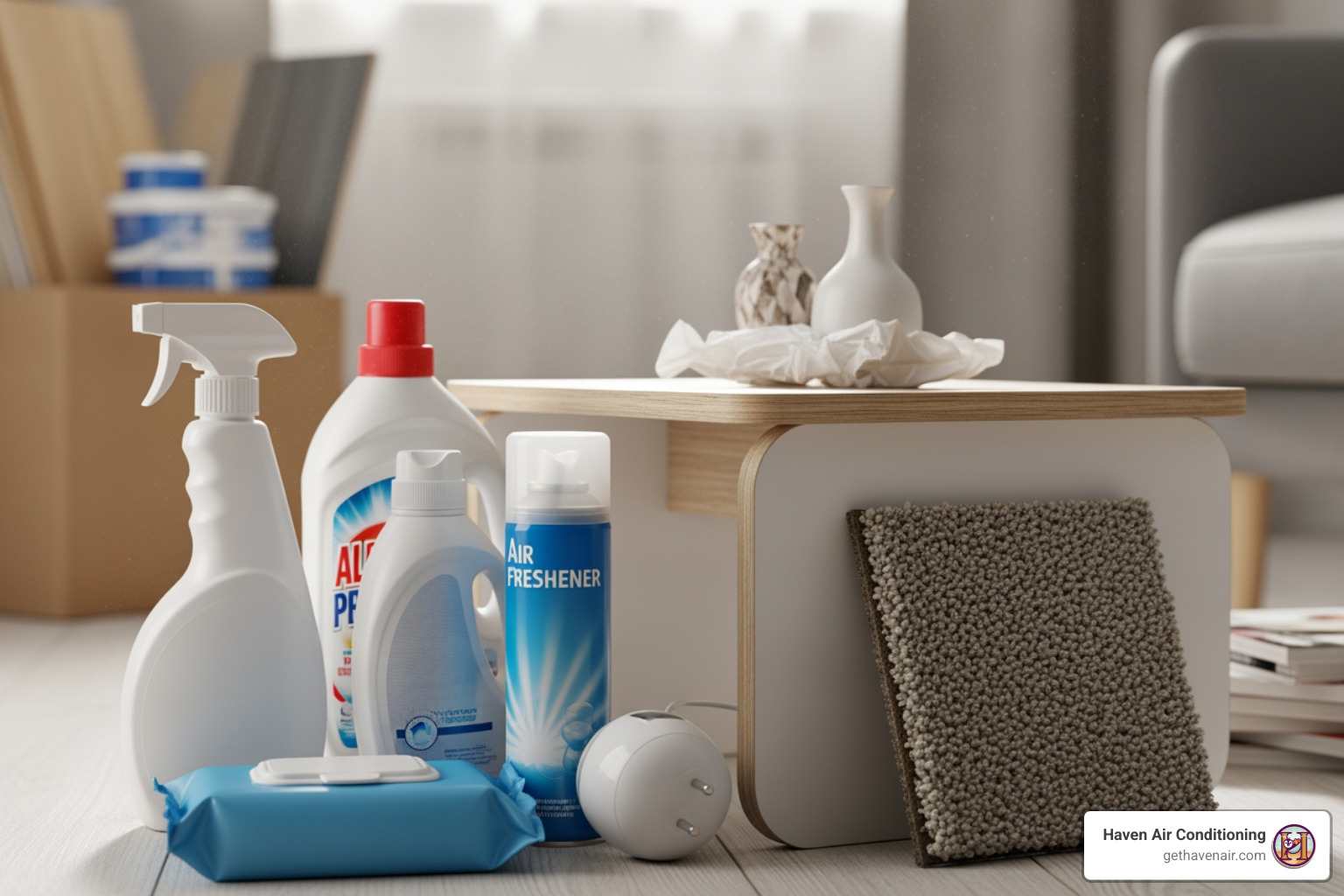
According to the EPA’s guide, The Inside Story: A Guide to Indoor Air Quality, pollutants come from three main sources: building materials (pressed wood, insulation), household products (cleaners, paints), and occupant behavior (cooking, smoking). Some release pollutants continuously, like formaldehyde from new furniture, while others are intermittent, like aerosol sprays.
Combustion Pollutants
Gas stoves, furnaces, and fireplaces all create combustion byproducts that can harm your indoor air quality.
- Carbon monoxide (CO) is the most dangerous—an odorless, colorless gas produced by the incomplete burning of fuel. Symptoms of CO poisoning start with headaches and dizziness but can quickly become fatal. Proper appliance maintenance and CO detectors are essential.
- Gas stoves and furnaces also release nitrogen dioxide (NO2) and fine particles that irritate the lungs, especially when ventilation is poor.
- Secondhand smoke is a known human carcinogen that is especially harmful to children, increasing their risk of respiratory problems, ear infections, and severe asthma. The EPA’s Care for Your Air: A Guide to Indoor Air Quality offers guidance on managing these risks.
- E-cigarettes and hookah smoking are not safe alternatives. A single hookah session can expose you to as much smoke as 100 cigarettes.
Biological Contaminants
Microscopic guests can thrive in your home and make your family sick.
- Mold and mildew grow in damp areas, releasing spores that trigger allergies and asthma. As we discuss in Can You Get Sick From Air Conditioning, a poorly maintained HVAC system can be a breeding ground.
- Dust mites live in carpets and bedding, and their waste particles are powerful allergens.
- Animal dander from pets (or carried in on visitors’ clothing) is another common allergen. For local strategies, see our guide on Allergy Relief Air Quality Mission Viejo.
- Pests like cockroaches and mice leave behind allergenic droppings and body parts.
- Bacteria like Legionella can grow in stagnant water in HVAC systems, causing a severe form of pneumonia.
The key to controlling biologicals is moisture management. Keep indoor humidity between 30-50%, fix leaks, and use ventilation fans.
Chemical & Particulate Pollutants
Modern homes are filled with chemicals that release into the air.
- Volatile Organic Compounds (VOCs) are gases from paints, cleaning products, pesticides, and new furniture. They can cause headaches, nausea, and long-term organ damage. Formaldehyde is a common VOC found in pressed wood products that irritates the eyes and nose and is linked to cancer. The EPA provides detailed information on formaldehyde.
- Asbestos may be present in homes built before 1980. If disturbed, its fibers can cause lung cancer and other diseases years later.
- Lead from deteriorating paint in homes built before 1978 is a serious risk, especially for children’s development.
- Pesticides used indoors can linger long after application, contributing to a significant portion of our total exposure.
- Particulate matter (PM2.5) are microscopic particles from cooking, candles, and fireplaces that can penetrate deep into the lungs, worsening respiratory and heart conditions.
The Silent Intruder: Radon
Radon is a radioactive gas that is naturally occurring but deadly. It is created when uranium in soil and rock decays, and it seeps into homes through cracks in the foundation. You can’t see, smell, or taste it.
Radon is the second leading cause of lung cancer in the U.S. and the number one cause for non-smokers. The EPA’s action level is 4 picocuries per liter (pCi/L). If testing shows your home is at or above this level, you need to take steps to reduce it. Testing is simple and the only way to know if your family is at risk. The EPA’s A Citizen’s Guide to Radon is an essential resource for more information.
Fortunately, you can take action against all these threats. Proper ventilation, source control, and air filtration can dramatically improve your home’s air quality.
Understanding EPA Indoor Air Standards and Health Risks
Poor epa indoor air quality isn’t just about comfort—it’s about health. For homeowners in Orange County and Riverside, understanding the risks is the first step toward creating a healthier home.
Health effects from indoor air pollution fall into two categories. Short-term effects appear quickly and can include eye, nose, or throat irritation, headaches, dizziness, and fatigue. These symptoms are often your home’s way of signaling a problem. Long-term effects develop over years and can be severely debilitating or fatal, including respiratory diseases like asthma, heart disease, and cancer from pollutants like radon and formaldehyde.
You may have also heard of Sick Building Syndrome, where people experience acute symptoms related to time spent in a building, but no specific cause can be found. If your family consistently feels better after leaving home, it’s worth investigating your indoor air quality. Our Better Indoor Air Quality Ultimate Guide explores these health connections.
Key EPA Indoor Air Pollutant Guidelines
The EPA provides important benchmarks to help protect public health. While not always legally enforceable for private homes, these action levels are critical guidelines:
- Radon: The EPA recommends taking action if levels are at or above 4 pCi/L. This gas is the leading cause of lung cancer among non-smokers.
- Carbon Monoxide (CO): Guidelines suggest keeping levels below 9 ppm (8-hour average) and 35 ppm (1-hour). High concentrations are fatal, making CO detectors essential.
- Particulate Matter (PM2.5): These tiny particles should stay below 25 µg/m³ (24-hour average). They can penetrate deep into the lungs, worsening heart and lung disease.
- Formaldehyde: The occupational guideline is 0.1 ppm. This common VOC is a probable carcinogen and irritant.
- Nitrogen Dioxide (NO2): The EPA standard is 100 ppb (1-hour). Produced by gas stoves, it impairs lung function, especially in children and asthmatics.
Health Risks of Specific Pollutants
- Radon and lung cancer: This radioactive gas is a confirmed carcinogen. Because you can’t see, smell, or taste it, testing is the only way to know your risk. The EPA provides data on homes at or above the action level at Radon: Homes At or Above EPA’s Action Level.
- Carbon monoxide poisoning: CO is undetectable by human senses and can be lethal. Initial flu-like symptoms can lead people to misdiagnose the problem, which is why CO detectors are crucial.
- Secondhand smoke and childhood asthma: The EPA has linked secondhand smoke to an increased number and severity of asthma attacks in children.
- Mold exposure and respiratory issues: Inhaling mold spores can cause allergy symptoms and trigger severe asthma attacks. The solution is to control moisture by fixing leaks and managing humidity.
How the EPA Indoor Air Framework Applies to Schools
With millions of children and staff spending their days in schools, epa indoor air quality in these buildings is vital for our communities in Anaheim, Fullerton, and Irvine. Poor IAQ is linked to lower concentration, attendance, and academic achievement, while asthma is a leading cause of missed school days.
The EPA’s IAQ Tools for Schools Program is a voluntary framework that helps schools identify and resolve air quality problems. Schools often face challenges like aging infrastructure, poor ventilation, and diverse pollutant sources. If you’re concerned about your child’s school, you can find resources through the EPA’s Find Local Indoor Air Quality Champions program.
Understanding these standards and risks empowers you to take action. Testing for radon, installing CO detectors, and ensuring proper ventilation and filtration are all steps toward a healthier home.
The EPA’s 3-Pronged Strategy for Cleaner Indoor Air
Improving epa indoor air quality is achievable. The EPA recommends a practical, three-part approach for any homeowner in Orange County or Riverside: source control, ventilation, and air cleaning. When these three strategies work together, they create a powerful defense against indoor pollutants. Our Air Quality Improvement guide explores how these work in real-world settings.
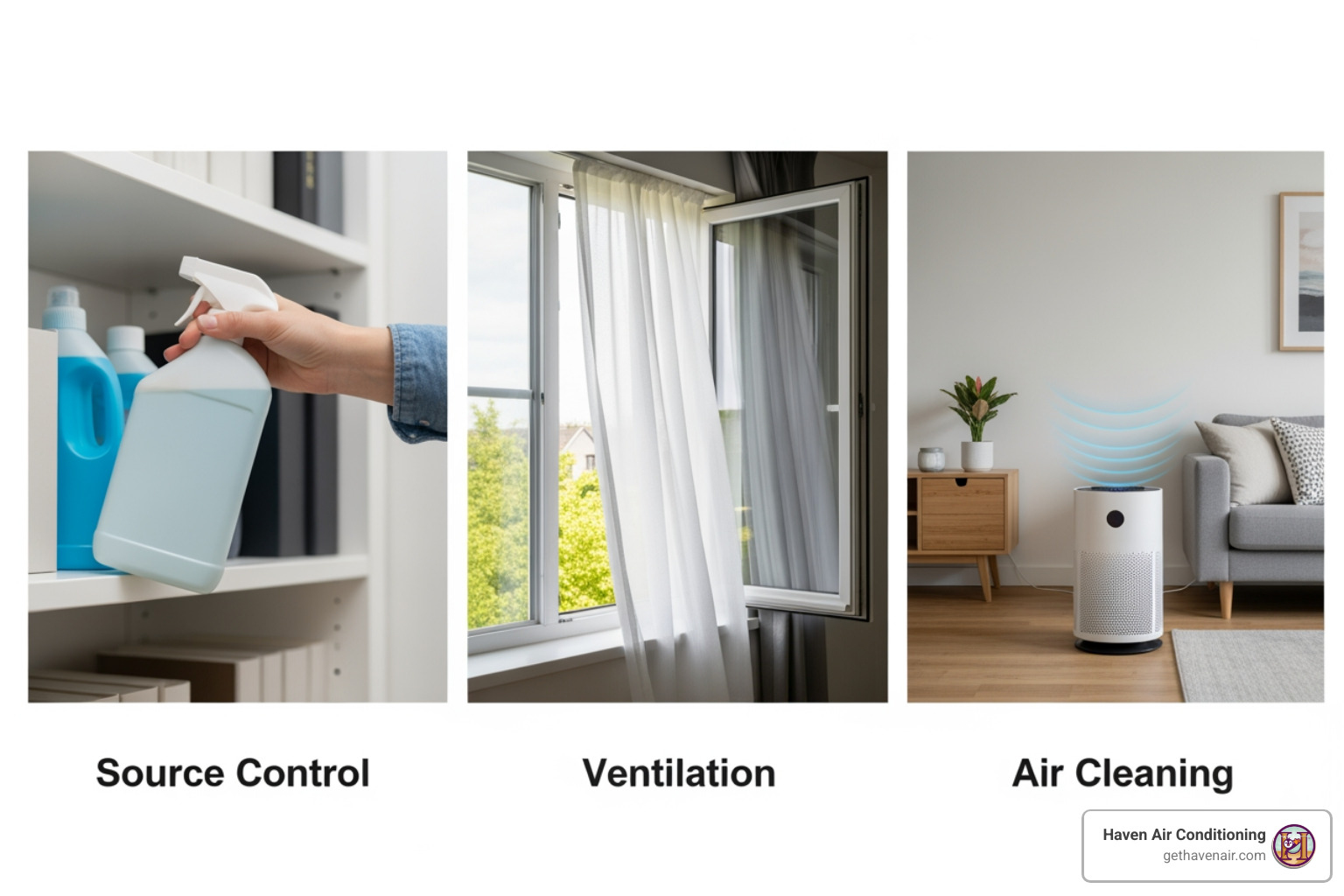
Source Control: The First Line of Defense
The most effective way to improve air quality is to stop pollutants at their source. This means removing them or reducing their emissions.
- Remove Pollutants: Replace old, unvented appliances with safer, properly vented models.
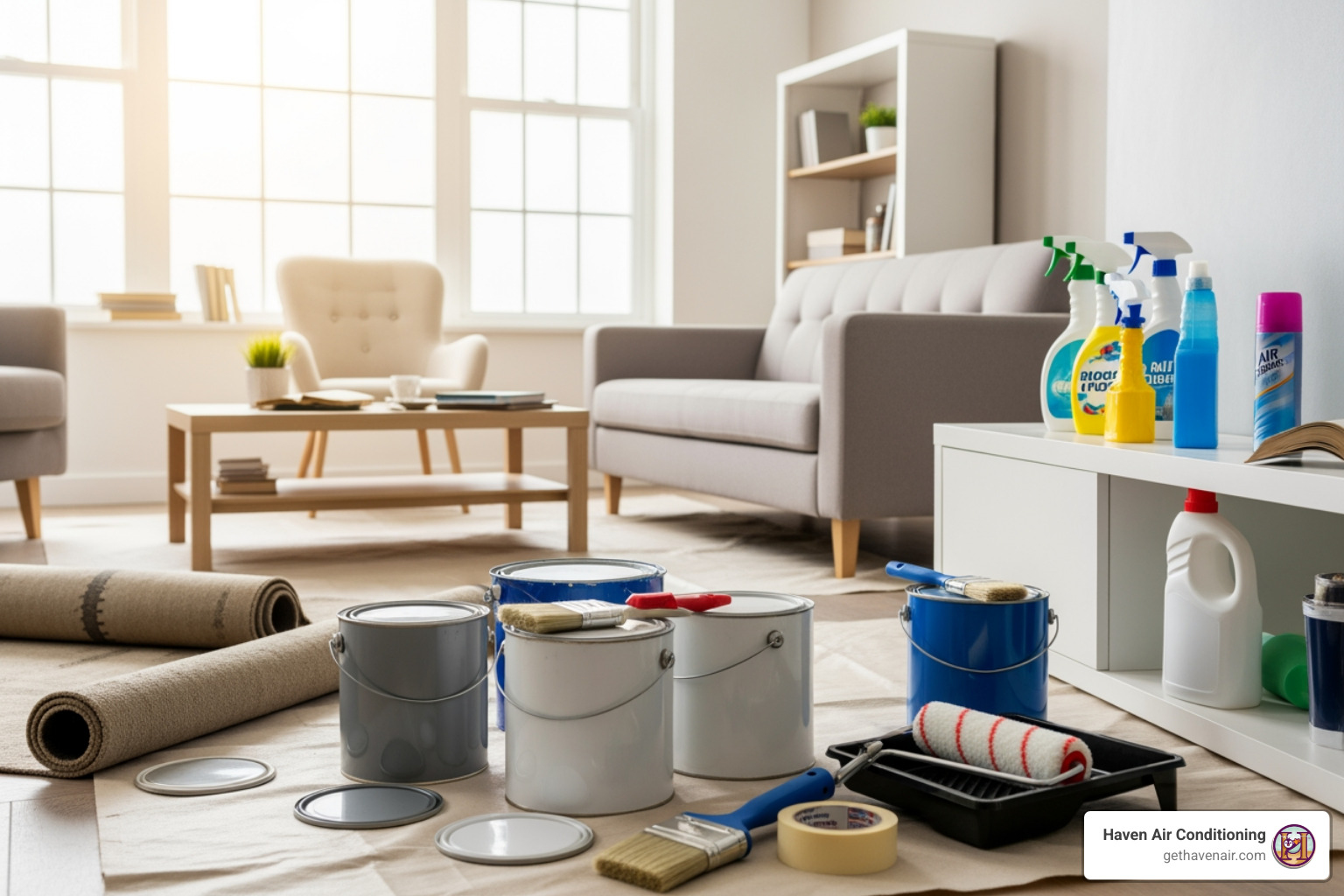
- Choose Low-VOC Products: When buying paint, furniture, or cleaners, look for low- or no-VOC options.
- Maintain Appliances: Regular checkups for your gas stove, furnace, and water heater ensure they burn fuel efficiently and vent properly. A poorly maintained furnace can be a source of dangerous combustion byproducts.
- Store Chemicals Safely: Keep paints, pesticides, and solvents in tightly sealed containers, preferably in a garage or well-ventilated storage area.
- Make Your Home Smoke-Free: Eliminating all forms of smoking indoors is the single most impactful change you can make.
Ventilation: Letting Your Home Breathe
Your home needs fresh air to dilute and remove pollutants generated by everyday activities. That’s where ventilation comes in.
- Natural Ventilation: Opening windows and doors is a simple, effective way to bring in fresh air on days when outdoor air quality is good.
- Mechanical Ventilation: Modern, energy-efficient homes in Irvine and Anaheim are sealed tight, which can trap pollutants. Mechanical ventilation, often part of your HVAC system, is essential for exchanging stale indoor air with fresh outdoor air. Understanding what HVAC systems do is key to appreciating this function.
- Use Exhaust Fans: Run your kitchen and bathroom exhaust fans when cooking or showering to remove moisture and fumes at the source.
Without adequate ventilation, energy-efficient homes can inadvertently harm your health by trapping pollutants. A well-designed system balances energy savings with healthy air exchange.
Air Cleaning and Filtration
Air cleaning and filtration provide a final layer of protection, capturing particles like dust, pollen, and mold spores.
- HVAC Filters: Your system’s filter is your first line of defense. A filter with a MERV rating of 8-13 is excellent for most homes, capturing a high percentage of airborne particles without straining your system.
- HEPA Filters: High-efficiency particulate air (HEPA) filters capture 99.97% of particles as small as 0.3 microns. They are available in some HVAC systems or as portable room units.
- Portable Air Cleaners: These are great for targeting specific rooms, like bedrooms for allergy sufferers. Look for models with true HEPA filters. The EPA warns against using ozone generators, which can be harmful.
- Air Duct Cleaning: Professional duct cleaning removes accumulated dust, dander, and other contaminants from your ductwork, preventing them from being recirculated into your home. For more on managing humidity and purification, see our guide on Air Purifier Humidity Control.
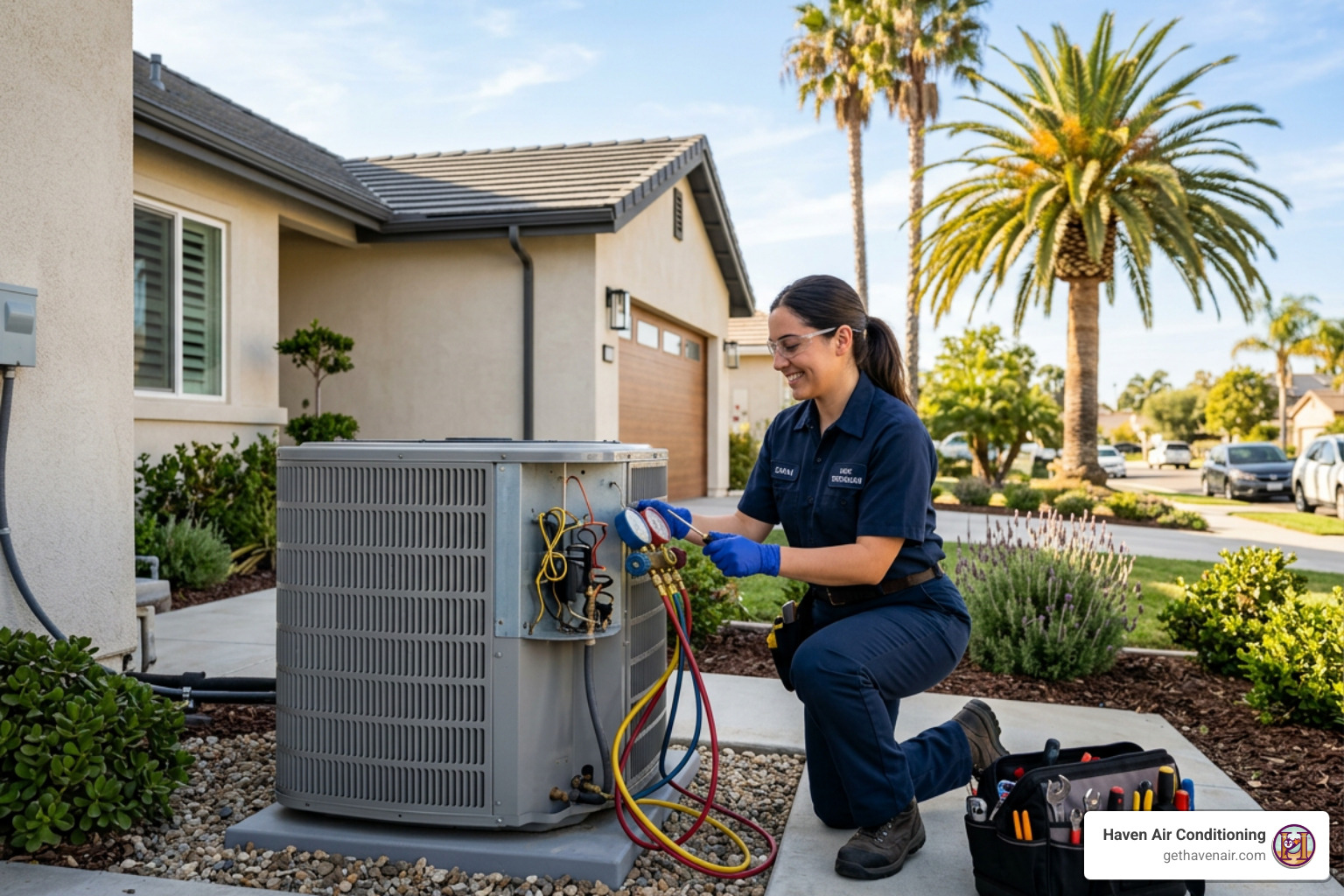
When you schedule a professional air duct cleaning with Haven Air Conditioning, our certified technicians will inspect your system, use powerful vacuums and agitation tools to dislodge and remove debris, and ensure your system is left clean and operating efficiently.
Frequently Asked Questions about EPA Indoor Air Guidance
Homeowners in Orange County and Riverside often have questions about epa indoor air quality. Here are answers to some of the most common ones.
How do I test my home for radon?
Testing for radon is simple, and the EPA encourages every homeowner to do it. Since radon is invisible and odorless, a test is the only way to know your risk.
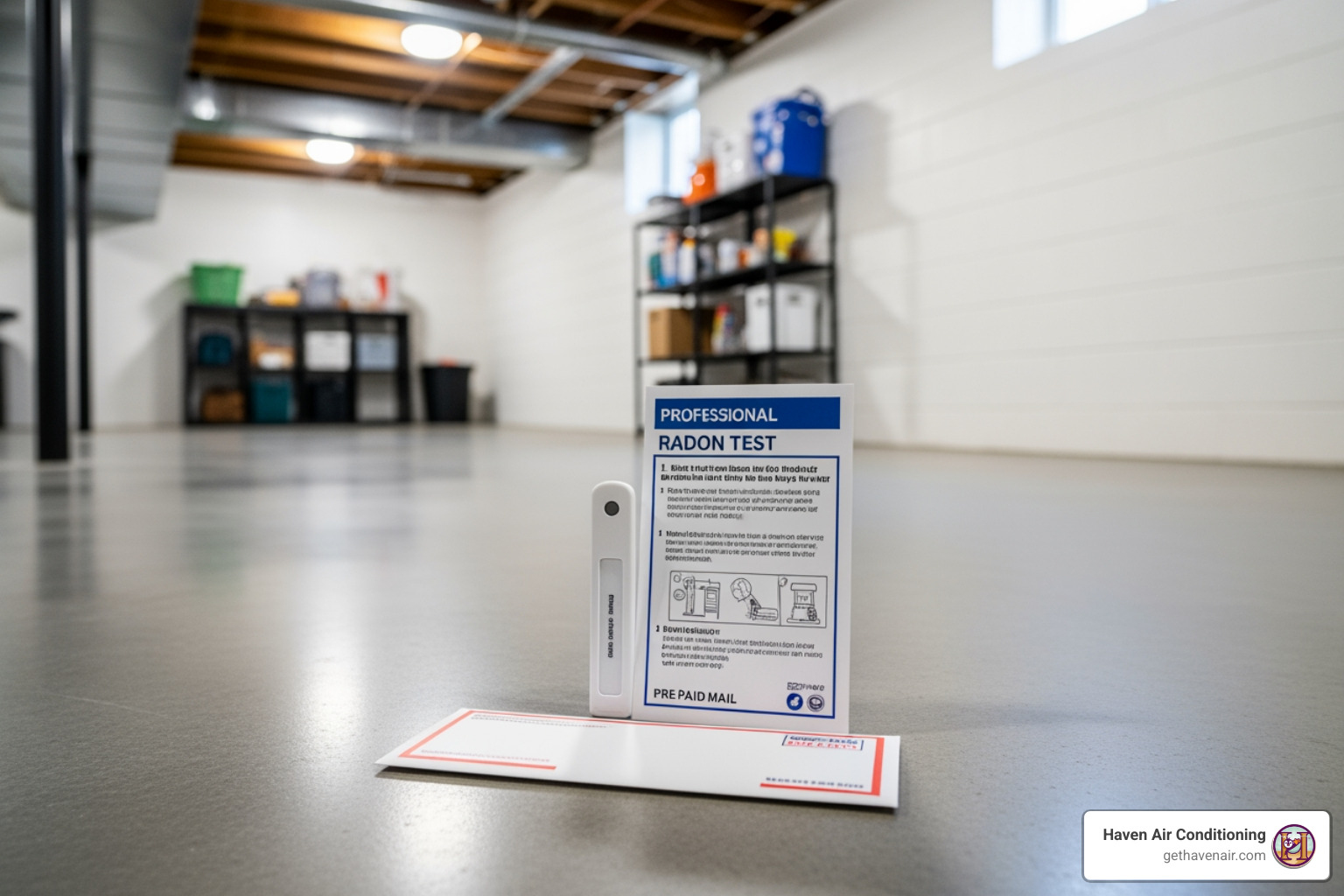
You can use a do-it-yourself test kit from a hardware store or online; just ensure it’s state-certified or meets EPA requirements. Short-term kits (2-90 days) give quick results, while long-term kits (over 90 days) provide a more accurate annual average.
Place the test in the lowest lived-in level of your home, away from drafts, heat, or high humidity. Follow the kit’s instructions for placement and mailing it to the lab.
If your results are at or above 4 pCi/L, the EPA’s action level, contact a qualified radon mitigation professional to install a system that vents the gas safely outside.
Does the EPA regulate all indoor air pollutants?
This is a common misconception. The EPA’s role in epa indoor air quality is primarily advisory for private homes.
The EPA sets legally enforceable standards for some outdoor pollutants that also affect indoor air (like carbon monoxide and particulate matter). However, for many pollutants that originate indoors—such as radon, formaldehyde, and mold—the EPA provides guidance, health advisories, and recommended action levels rather than regulations.
Instead of regulation, the EPA focuses on research, public education, and voluntary programs like “IAQ Tools for Schools.” This means homeowners have the responsibility to proactively protect their indoor air quality.
Can I rely on house plants to clean my indoor air?
While houseplants are a great addition to any home, their air-purifying abilities are often overstated.
Some lab studies have shown that plants can remove small amounts of VOCs from a sealed chamber. However, in a typical home with constant air exchange and numerous pollutant sources, the effect is minimal. You would need an unrealistic number of plants—a dense jungle in every room—to make a significant impact on your air quality.
Houseplants are not a substitute for the EPA’s core strategies: source control, ventilation, and mechanical air filtration. Think of plants as a beautiful supplement, but rely on your HVAC system and proper ventilation for true air quality improvement in your Orange County home.
Conclusion: Taking Control of Your Home’s Air
We’ve seen that our homes, where we spend 90% of our time, can have air that is 2 to 5 times more polluted than the outdoors. From radon and carbon monoxide to mold and VOCs, these invisible threats require our attention. The good news is that you can take control.
The EPA’s three-pronged strategy provides a clear path: source control to eliminate pollutants, ventilation to bring in fresh air, and air cleaning to filter out what remains. Your HVAC system is central to this effort, doing more than just heating and cooling—it’s vital for creating a healthy environment where your family can thrive.
For residents throughout Orange County and Riverside—from Anaheim to Irvine and Corona—Haven Air Conditioning is ready to help you take control of your home’s air quality. Our certified technicians are committed to your family’s comfort and health, offering expert inspections, upgraded filtration, professional duct cleaning, and complete HVAC services.
Don’t wait for symptoms to signal a problem. Take proactive steps to protect what matters most. Visit our Indoor Air Quality page to learn more about our services, or contact our friendly team for a consultation. Let’s work together to make your home a true haven filled with the clean, healthy air your family deserves.