(714) 332-6302

Your Guide to Indoor Air Comfort
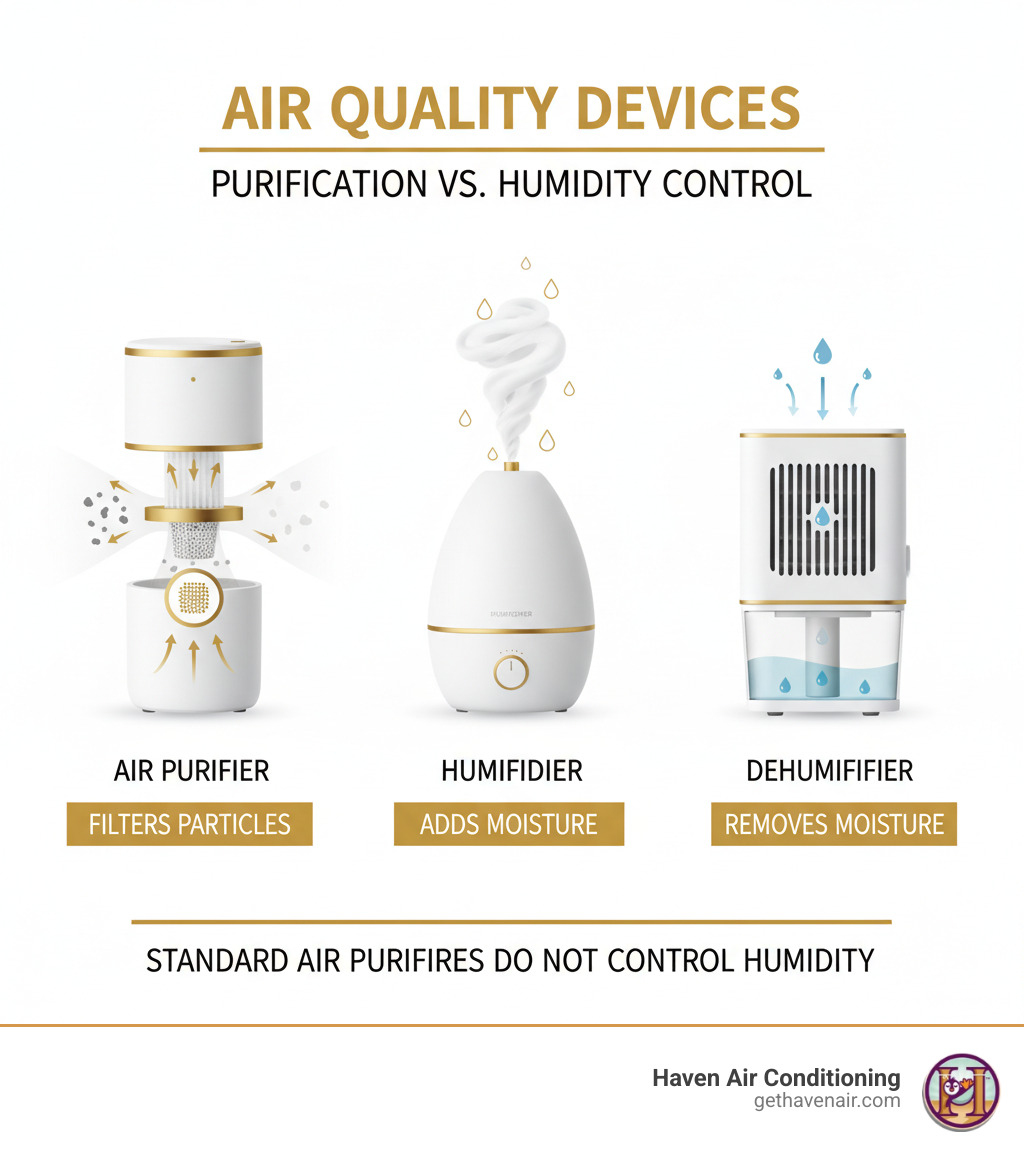
Many homeowners wonder about air purifier humidity control. The truth is, standard air purifiers do not control humidity levels. They filter particles, allergens, and odors, but they don’t add or remove moisture. For that, you need a separate humidifier or dehumidifier. While some 2-in-1 units exist, traditional purifiers work independently of humidity.
If you’re a homeowner in Orange County dealing with dry air, stuffiness, or allergens, understanding this distinction is key. You might feel your air purifier makes the room “drier,” but this is just the sensation of air movement, not a change in moisture. True comfort comes from knowing how to use these devices together to create a healthier home environment.
For expert guidance on improving your indoor air quality, check out our heating services in Orange County, or contact us today for a consultation.
Air Purifiers vs. Humidity Modifiers: Understanding the Difference
Navigating air quality devices can be confusing. Air purifiers, humidifiers, and dehumidifiers all improve indoor air but serve different purposes. The key distinction is simple: air purifiers clean your air, while humidifiers and dehumidifiers adjust its moisture level. They are not interchangeable. Standard purifiers offer no air purifier humidity control; their sole job is removing contaminants.
What Does an Air Purifier Actually Do?
An air purifier’s job is to remove unwanted contaminants from your air. It filters out airborne particles like dust, allergens like pollen and pet dander, and even microorganisms like bacteria and some viruses. Many also address odors and harmful VOCs (volatile organic compounds) from paint, furniture, and cleaning products.
The technology relies on two main filter types. HEPA filters are the standard for particle removal, capturing 99.97% of particles as small as 0.3 microns, including allergens and mold spores. For gases, odors, and VOCs, activated carbon filters adsorb these pollutants.
Improving indoor air quality is crucial, as indoor air can be full of contaminants that worsen respiratory conditions. Research shows a clear link between clean air and better respiratory health.
How Do Humidifiers and Dehumidifiers Work?
Humidifiers and dehumidifiers manage moisture levels. They don’t clean the air of particles. Humidifiers add moisture to dry air, which is common in Orange County during winter or when heating systems are in use. Common types include evaporative (using a fan and wick), ultrasonic (creating a fine mist), and warm mist (boiling water to create steam).
Dehumidifiers do the opposite, removing excess moisture. They draw humid air over cold evaporator coils, causing moisture condensation. The collected water is drained, and drier air is circulated back into the room, which is ideal for humid summer months.
Here’s how these three devices stack up:
| Feature | Air Purifier | Humidifier | Dehumidifier |
|---|---|---|---|
| Function | Cleans air by removing pollutants | Adds moisture to the air | Removes moisture from the air |
| Purpose | Reduce allergens, dust, odors, VOCs, germs | Alleviate dry skin, congestion, protect wood | Prevent mold, mildew, musty odors, reduce stickiness |
| Mechanism | Filters (HEPA, activated carbon) | Evaporation, ultrasonic vibrations, boiling water | Cold coils condense moisture |
The bottom line? Air purifiers make your air cleaner, while humidifiers and dehumidifiers make it more comfortable by adjusting moisture levels. For complete indoor air comfort, you often need more than one type of device working together.
The Myth of Air Purifier Humidity Control: Why Your Purifier Feels ‘Dry’
Many homeowners notice their room feels drier after running an air purifier. While the feeling is real, the cause is surprising: your purifier isn’t actually removing moisture from the air.
The Science Behind Perceived Dryness
The dry feeling comes from air circulation, not moisture removal. An air purifier moves a large volume of air, which passes over your skin and speeds up the evaporation of sweat. This evaporative cooling effect is the same principle that makes a fan feel cool. The airflow creates a wind chill effect that your body perceives as dryness.
However, the actual moisture levels in the room do not change. Air purifier filters are designed to trap particles measured in microns, like dust and dander. Water molecules are thousands of times smaller and pass right through. Water molecules are too small to be captured by air purifiers. The sensation is due to body temperature regulation, not actual moisture removal.

Can Any Air Purifier Type Influence Humidity?
Standard air purifiers cannot change humidity levels. The exception is combination units or 2-in-1 devices. These hybrid technology appliances are designed with separate systems for both air purification and humidity control. They can provide true air purifier humidity control because they include components like water tanks and humidification mechanisms.
Unless an air purifier is explicitly sold as a combo unit with humidifying features, it will not affect your room’s moisture levels. If you’re concerned about both air quality and humidity in your Orange County home, our team at Haven Air Conditioning can help. Check out our indoor air quality services to learn more.
Creating the Perfect Indoor Climate: A Team-Based Approach
Creating a truly comfortable indoor climate often requires more than one device. Since standard air purifiers don’t control humidity, the best approach is to use them as part of a team. An air purifier cleans the air of pollutants, while a humidifier or dehumidifier manages moisture levels. This synergy of devices creates clean air and balanced humidity for year-round comfort. Instead of searching for a single miracle device, a team-based approach delivers air that is both clean and comfortable.
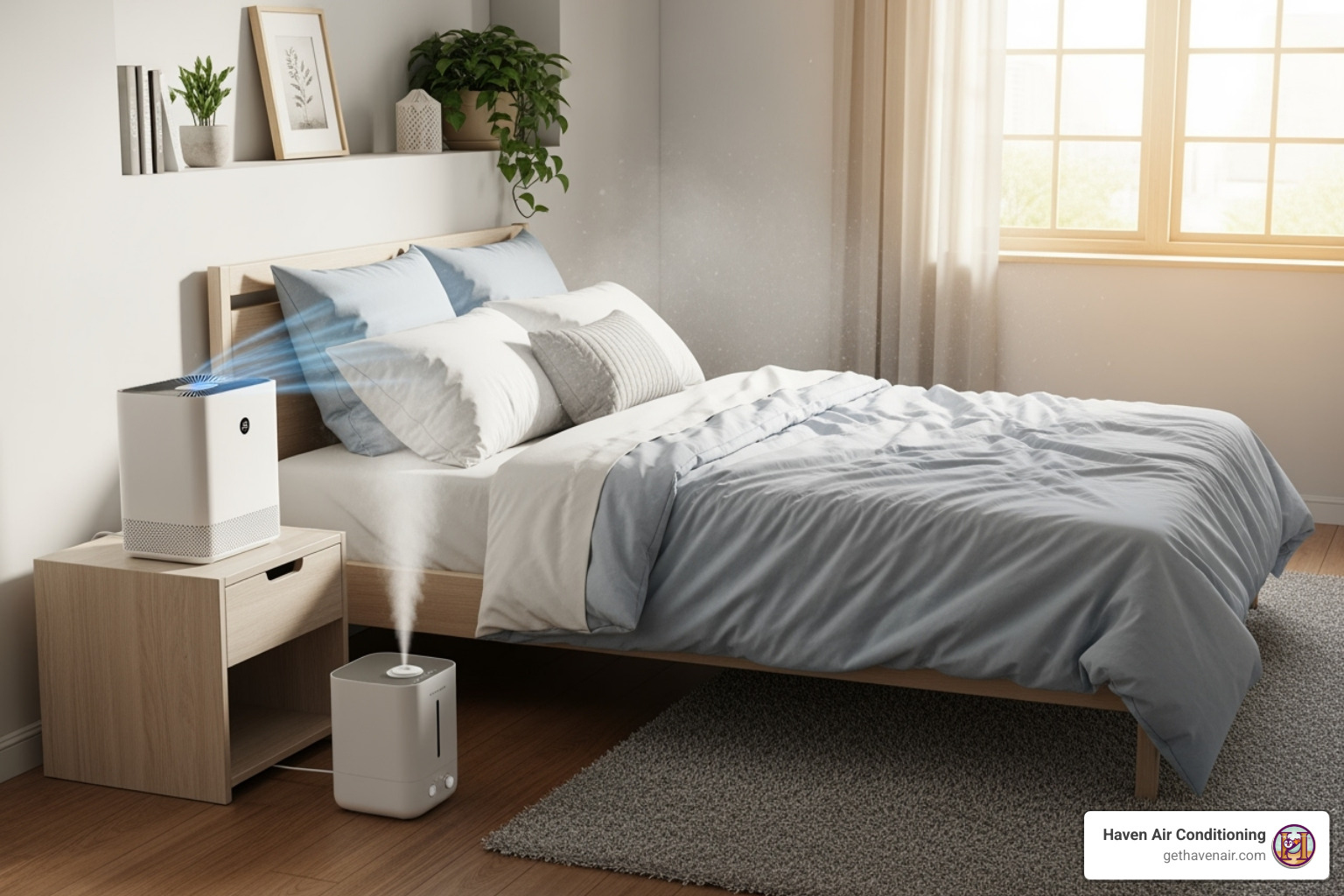
Pairing an Air Purifier with a Humidifier
In Orange County, heating systems can create very dry climates and winter air. Pairing an air purifier with a humidifier is the perfect solution. The purifier removes allergens while the humidifier adds necessary moisture. This combination helps with soothing sinuses, hydrating skin, and preventing scratchy throats. Proper humidity also has other benefits, like protecting wood furniture from cracking and preventing static electricity. Running both devices at the same time creates an environment that is both clean and comfortably moist.
Achieving Total Air Purifier Humidity Control with a Dehumidifier
During Orange County’s high humidity climates and summer months, the air can feel sticky and damp. Pairing an air purifier with a dehumidifier provides total air purifier humidity control. The dehumidifier removes excess moisture, while the air purifier captures airborne mold spores. This combination tackles both the cause (dampness) and the symptom (spores). A dehumidifier also helps with eliminating musty odors and can make your home feel cooler, potentially saving on AC costs. By using both devices, you manage air purity and moisture levels effectively.
If you need help creating this balance, our team at Haven Air Conditioning can design a solution for you. Check out our indoor air quality services or contact us.
The Health and Comfort Benefits of Optimal Humidity
The humidity level in your home significantly impacts your health and comfort. Maintaining indoor humidity between 35% and 50% is the ideal range. Below 30%, the air is too dry; above 50%, it’s too damp. Both extremes can cause problems, but they are straightforward to fix.
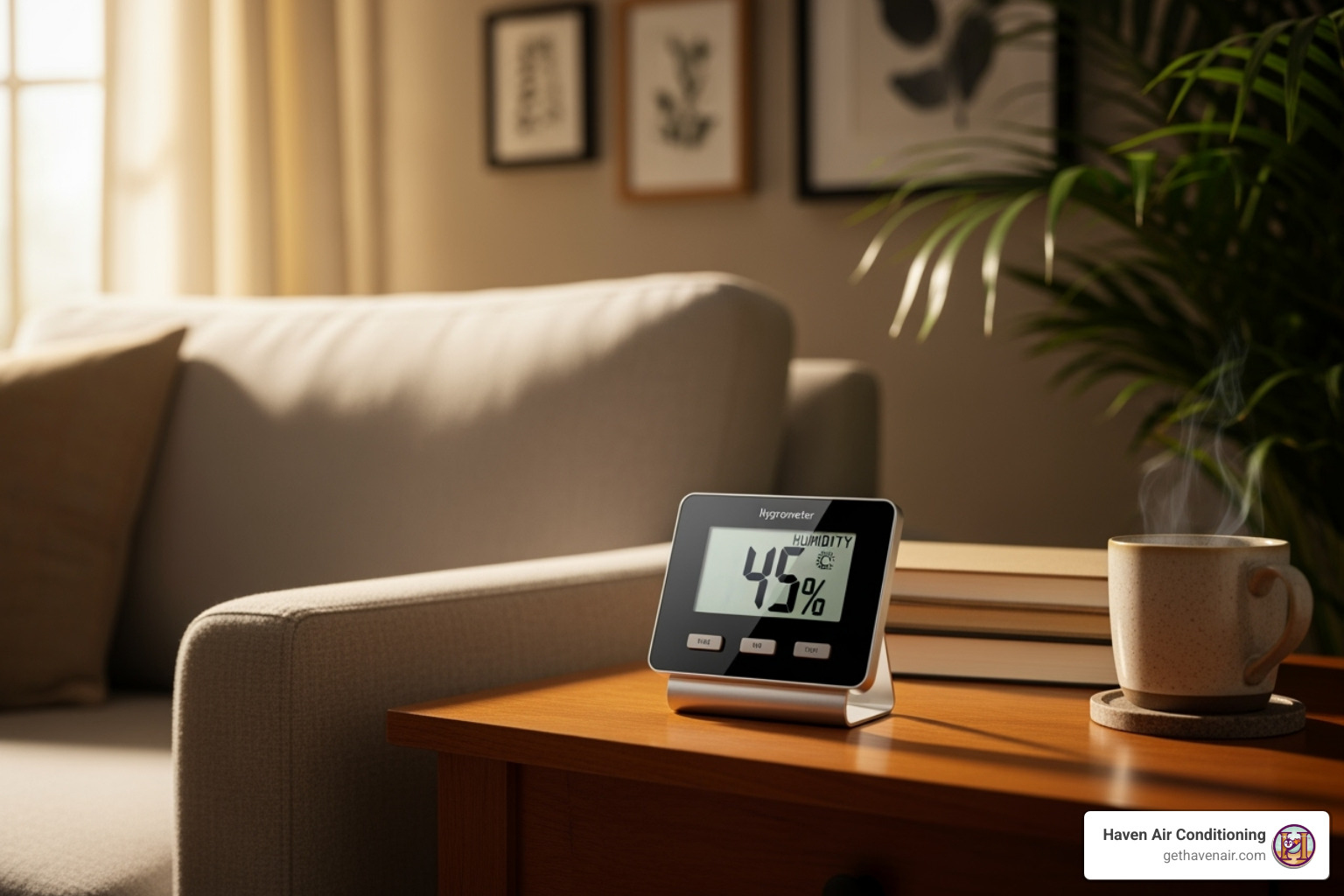
Fighting Dryness: The Case for More Moisture
Low humidity causes noticeable discomfort like itchy skin, chapped lips, and a scratchy throat. Dry air harms your respiratory system, worsening congestion and coughs by irritating nasal passages. It can also trigger asthma symptoms. Furthermore, dry air helps viruses survive longer, increasing the risk of illness. Research links poor air quality to numerous respiratory conditions. Dryness also damages wood furniture and floors and increases static electricity.
Preventing Dampness: The Dangers of High Humidity
High humidity (above 50%) creates its own set of serious problems. Mold and mildew thrive in damp environments, releasing spores that trigger allergies and worsen respiratory issues. While an air purifier traps spores, a dehumidifier is needed for true air purifier humidity control by removing the moisture mold needs to grow. Dust mites, a common allergy trigger, also flourish in high humidity. Beyond health concerns, damp air feels sticky and uncomfortable, creates musty odors, and can cause structural damage to your home, such as peeling paint and warped wood. Maintaining the ideal humidity range is key to a healthy and comfortable home.
Choosing Your Solution: Standalone vs. Combo Units
When choosing your solution, you can opt for separate, standalone devices or an all-in-one combo unit. The right choice depends on your needs, space, and budget. 2-in-1 air purifier and humidifier combo units offer space-saving design and convenience, often with integrated smart sensors that automate adjustments. However, they can have performance trade-offs compared to high-end standalone units. Maintenance can be more complex, and you lose flexibility, as you can’t use the functions in separate rooms. Standalone devices offer specialized performance and flexibility but take up more space.
What to Look for in a Standalone Device
For standalone units, prioritize features based on performance. For an air purifier, check the room size rating (CADR) to ensure it’s powerful enough for your space. Insist on True HEPA filter quality to capture 99.97% of fine particles, and look for a substantial activated carbon filter for odors and VOCs. Also, consider the noise level, especially for bedrooms.
For humidifiers or dehumidifiers, capacity (tank size or removal rate) is key. The humidification method is also important; evaporative models are often preferred. Finally, ensure the device is easy to clean and has useful smart features like an auto-shutoff or built-in humidistat.
Key Features for Air Purifier Humidity Control in a Combo Unit
If you opt for a 2-in-1 unit for air purifier humidity control, look for these key features. Ensure it has True HEPA filtration for effective particle capture. The humidification method is crucial; evaporative technology is often best as it prevents white dust and distributes moisture evenly. Check for adequate water tank capacity to minimize refills and a design that’s easy to clean.
The biggest advantage of combo units is their smart sensors and controls. Look for models with built-in hygrometers and air quality sensors that automatically adjust settings to maintain optimal conditions. Some units also feature color-coded displays to show air quality and humidity at a glance. Advanced features like UVC light technology can offer an extra layer of disinfection by neutralizing bacteria and viruses in the filter.
Frequently Asked Questions about Air Purifiers and Humidity
We hear these questions all the time from homeowners in Orange County, and we’re glad you’re asking! Understanding how air purifiers and humidity control work together can really transform your indoor comfort. Let’s clear up some common confusion.
Can an air purifier remove mold?
An air purifier with a HEPA filter is excellent at capturing airborne mold spores, preventing them from spreading and being inhaled. However, an air purifier cannot kill existing mold on surfaces or fix the underlying cause: excess moisture. It only treats the symptom (spores), not the problem (dampness). For true mold prevention and effective air purifier humidity control, you need to pair your purifier with a dehumidifier to create an environment where mold cannot grow.
Should I run a humidifier and air purifier at the same time?
Yes, you should. Running a humidifier and air purifier at the same time is not only safe but recommended. They perform separate, complementary functions. The air purifier cleans the air of pollutants, while the humidifier adds moisture. Together, they provide a comprehensive solution for indoor air quality, which is especially useful during Orange County’s dry seasons to achieve both clean air and comfortable humidity.
How far apart should an air purifier and humidifier be?
As a general rule, place them on opposite sides of the room, or at least 6-10 feet apart. If they are too close, the air purifier may draw in the moisture from the humidifier before it can circulate throughout the room. Spacing them out allows both devices to work effectively, creating a balance of clean, properly humidified air. If you have more questions about optimizing your indoor air quality, reach out to our team at Haven Air Conditioning—we’re always happy to help!
Achieve Total Home Comfort and Clean Air
The key takeaway regarding air purifier humidity control is that standard purifiers only clean the air; they don’t manage moisture. True home comfort comes from a holistic approach to indoor air quality that balances air purity with ideal humidity levels. This often means using an air purifier in tandem with a humidifier or dehumidifier. Whether you opt for standalone units or a 2-in-1 combo device, the goal is to create a healthy, comfortable environment year-round.
At Haven Air Conditioning, our certified professionals specialize in creating custom indoor air quality solutions for Orange County homeowners. We understand our local climate, from dry Santa Ana winds to coastal humidity, and serve communities from Anaheim and Fullerton to Costa Mesa and Laguna Beach. Our full service area includes Buena Park, La Palma, Rossmoor, Cypress, Norwalk, Stanton, Rowland Heights, Whittier, La Habra, Santa Ana, Midway City, Westminster, Garden Grove, Fountain Valley, Los Alamitos, Riverside, Chino, Eastvale, Coronita, Home Gardens, Ontario, Norco, Corona, Aliso Viejo, Laguna Niguel, Laguna Woods, and Laguna Hills.
Ready to breathe cleaner, more comfortable air? Explore our indoor air quality services or contact us today for a personalized consultation. Your sanctuary of clean, balanced air is just a conversation away.