(714) 332-6302

Why Professional AC Heat Pump Installation Matters for Your Home Comfort
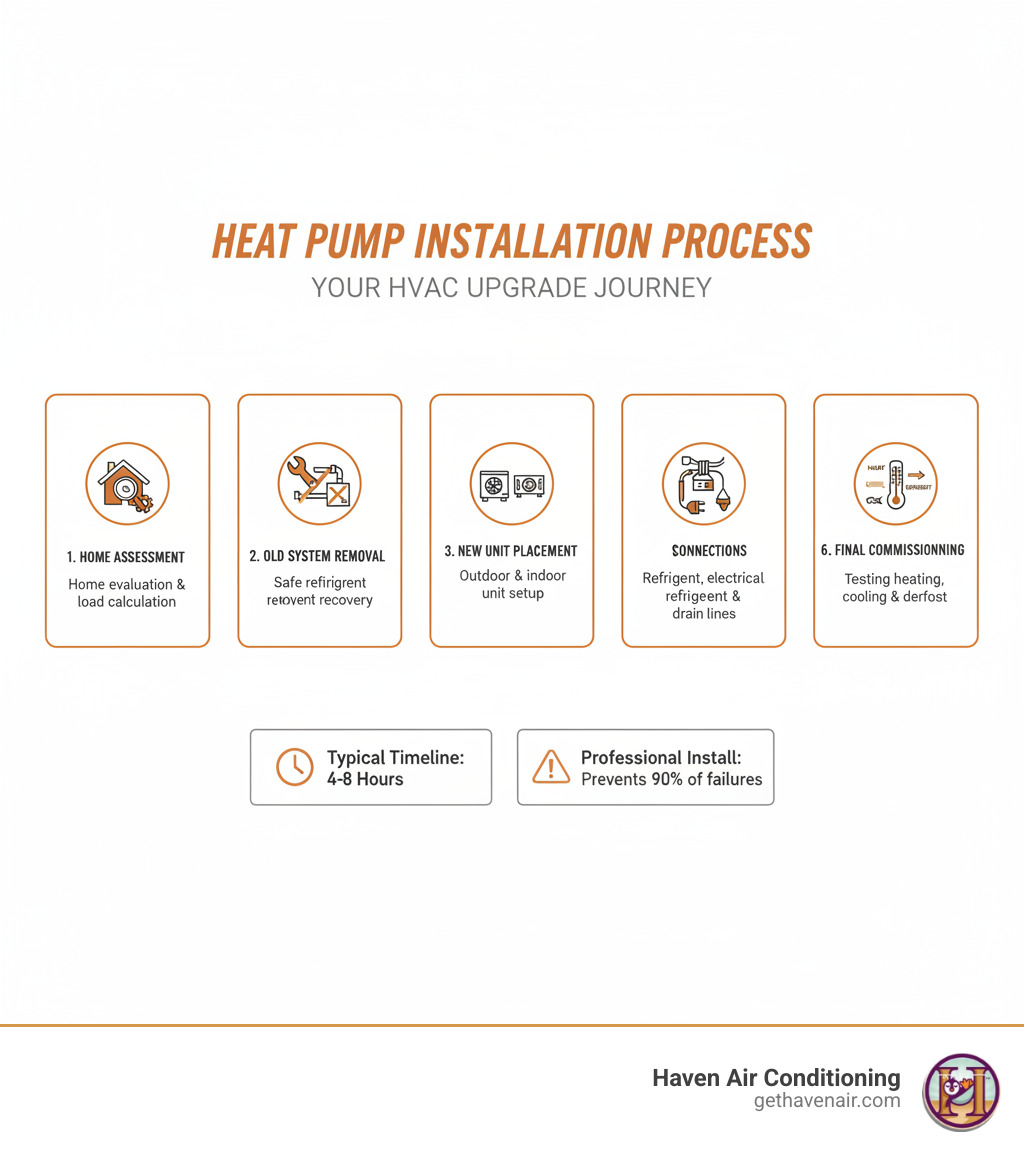
An AC heat pump installation is a complex process that transforms how you heat and cool your home. Here’s what you need to know:
Key Installation Steps:
- Pre-installation assessment – Home evaluation, load calculation, and system sizing
- Old system removal – Safe refrigerant recovery and equipment disconnection
- New unit installation – Outdoor condenser and indoor air handler placement
- Connections – Refrigerant lines, electrical wiring, and drainage setup
- Testing and commissioning – System startup, leak checks, and calibration
Typical Timeline: 4-8 hours for experienced technicians (varies by complexity)
Why Professional Installation Is Critical: Improper installation accounts for 90% of HVAC system failures, leading to energy waste, comfort issues, and shortened equipment life.
Upgrading to a heat pump in Orange County is a smart choice for year-round comfort and energy efficiency. Unlike separate heating and cooling equipment, a heat pump handles both jobs by transferring heat rather than generating it, making it more eco-friendly and cost-effective.
However, even the best heat pump will underperform if not installed correctly. The process requires specialized knowledge for refrigerant handling, electrical connections, system sizing, and testing. A professional installation ensures your system operates at peak efficiency from day one.
For expert guidance on heating system options, check out our comprehensive heating services. When you’re ready to move forward, schedule your free consultation with Haven Air Conditioning’s certified technicians.
Key Considerations Before Your Heat Pump Installation
Before an ac heat pump installation, we evaluate several factors to ensure your new system delivers years of efficient performance.
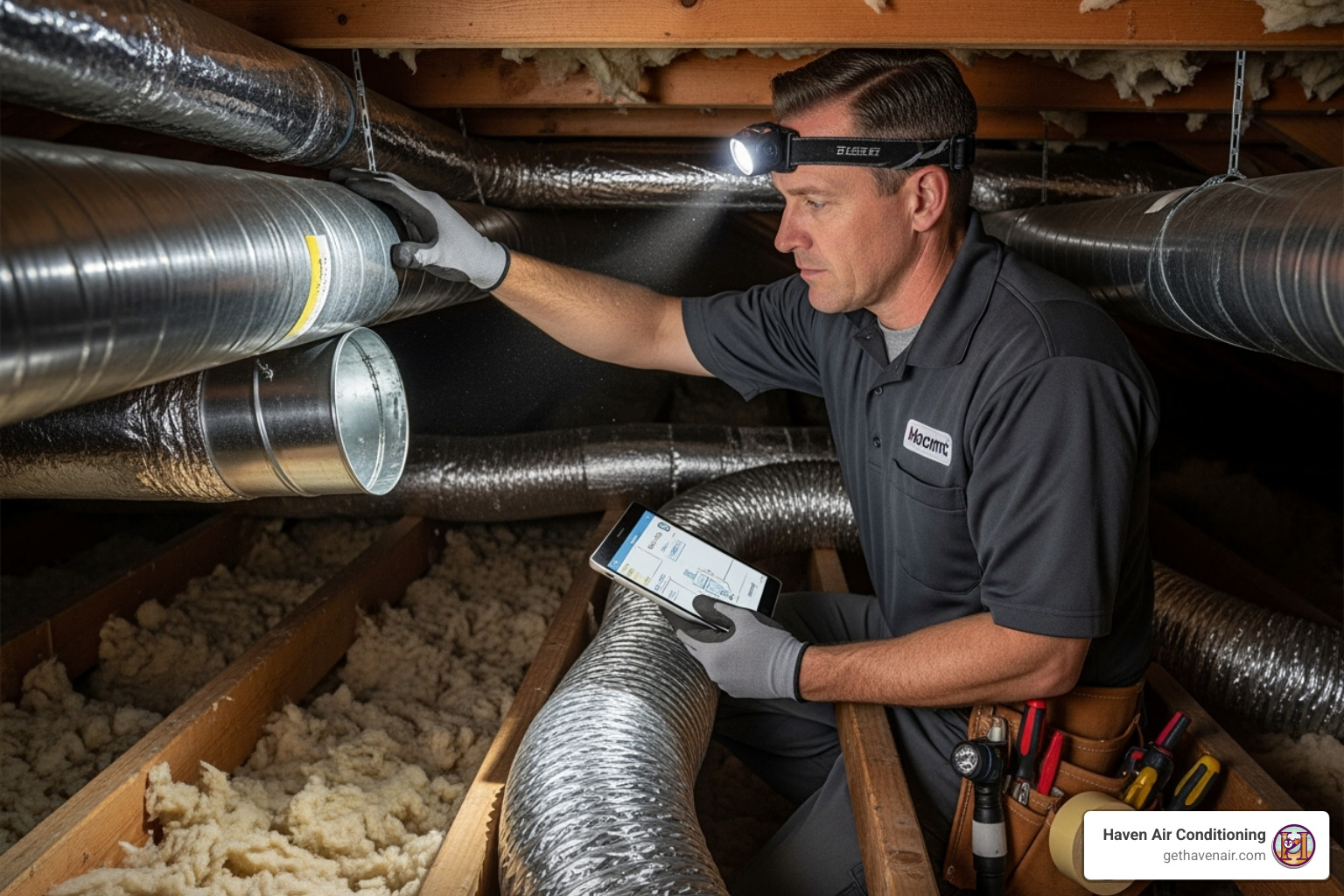
First, we assess your home’s efficiency. A heat pump needs a well-sealed home to work effectively. Poor insulation or air leaks force your system to work harder, so we’ll recommend improvements if needed. Next, an existing ductwork inspection is critical. Leaky or undersized ducts will prevent even the best heat pump from performing well, so we inspect them to ensure proper airflow.
Climate suitability is another factor, and Orange County’s moderate climate is ideal for heat pump operation. Modern heat pumps are a natural fit for our mild winters and warm summers.
Sizing your system correctly is the most critical step. We use a Manual J Load Calculation to assess your home’s specific heating and cooling needs. This comprehensive analysis considers insulation, windows, layout, and more to determine the perfect size. An oversized unit wastes energy by short-cycling, while an undersized unit runs constantly without providing comfort. We also help you steer government rebates and incentives to reduce your investment. For more technical details, the Department of Energy offers a guide to air-source heat pumps.
Understanding the Main Types of Heat Pumps
- Air-source heat pumps: The most popular choice, these systems move heat between your home and the outside air, providing both heating and cooling.
- Ground-source (geothermal) heat pumps: These use stable underground temperatures for highly efficient heating and cooling, though installation is more complex.
- Ductless mini-split systems: Ideal for homes without existing ducts, these systems provide zoned heating and cooling for specific rooms.
- Central ducted systems: These connect to your home’s existing ductwork to provide whole-home heating and cooling through one unified system.
- Hybrid or dual-fuel systems: This setup pairs an electric heat pump with a gas furnace, using the furnace as a backup in extreme cold for maximum efficiency and reliability.
The Role of Indoor and Outdoor Units
A heat pump system has two main parts: an indoor and an outdoor unit, connected by refrigerant lines. The outdoor unit contains the compressor and a coil that exchanges heat with the outside air. The indoor unit (air handler) connects to your ductwork and contains a coil and a fan to circulate conditioned air through your home.
The heat transfer process is what makes these systems so efficient. Instead of creating heat, they move it. In winter, they pull heat from the cold outdoor air and move it inside. In summer, they do the reverse. A component called the reversing valve changes the direction of refrigerant flow, allowing the system to switch seamlessly between heating and cooling modes.
The Professional AC Heat Pump Installation Process Step-by-Step
A professional ac heat pump installation is not a DIY project. Improper installation causes up to 90% of HVAC system failures, leading to energy waste and premature equipment failure. That’s why we follow a methodical, professional process, starting with site preparation and safety protocols to protect your home.
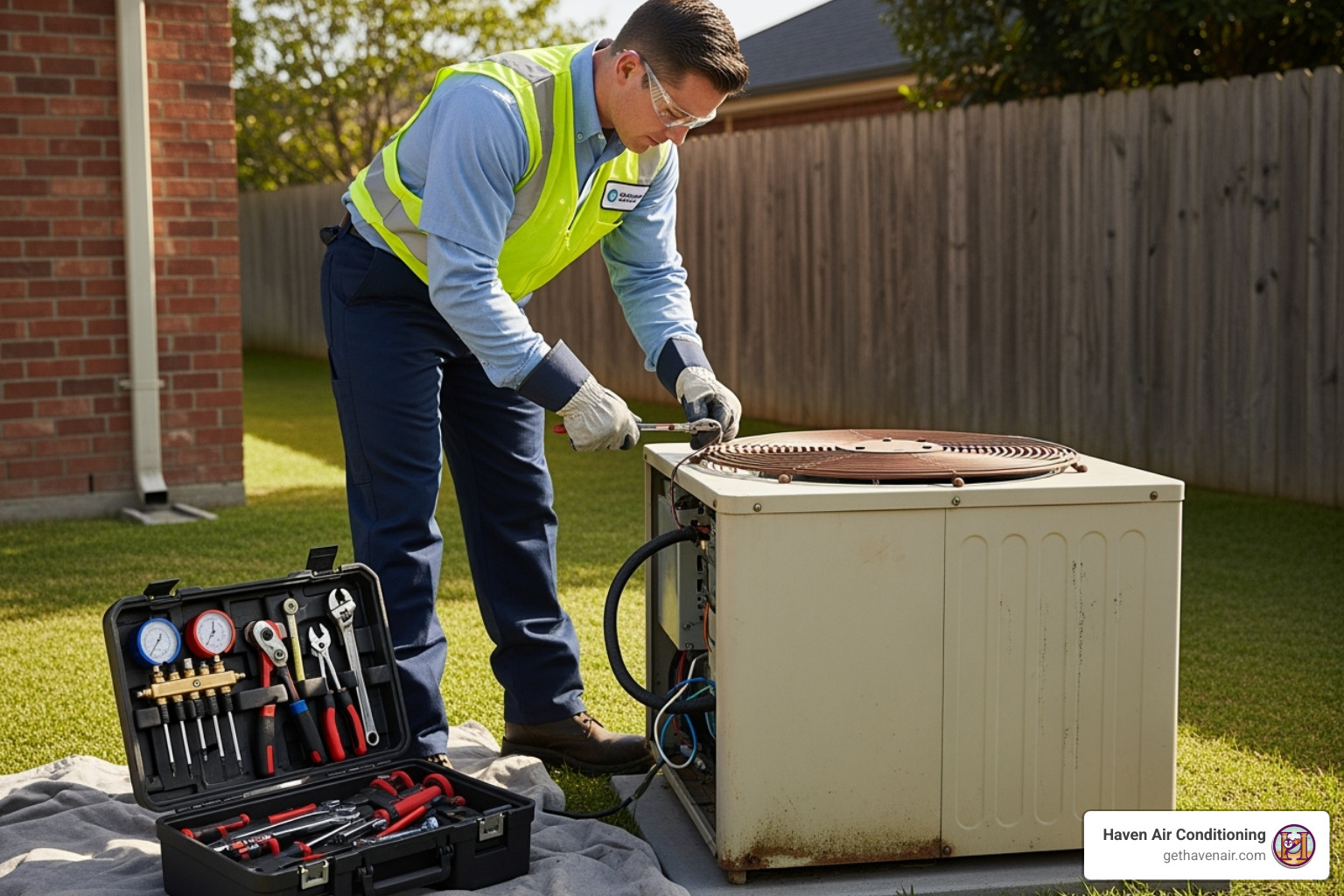
The professional installation process unfolds in four main stages:
- Removing the Old System and Preparing the Site
- Installing the Outdoor and Indoor Units
- Electrical and Drainage Connections
- Finalizing the Installation: Commissioning and Testing
Let’s walk through what happens at each stage.
Step 1: Removing the Old System and Preparing the Site
This process begins with disconnecting power to the existing unit. The most critical step is safe refrigerant removal. It is illegal and unsafe to vent refrigerant into the atmosphere. We follow EPA standards by using specialized recovery equipment to capture all refrigerant from your old system.
With the refrigerant recovered, we remove the old outdoor and indoor units. We also replace the electrical disconnect box and whip to meet current safety codes. Finally, we prepare a level pad for the new outdoor unit. A stable, liftd foundation is essential for vibration-free operation and ensures proper clearance and airflow around the unit.
Step 2: Installing the Outdoor and Indoor Units
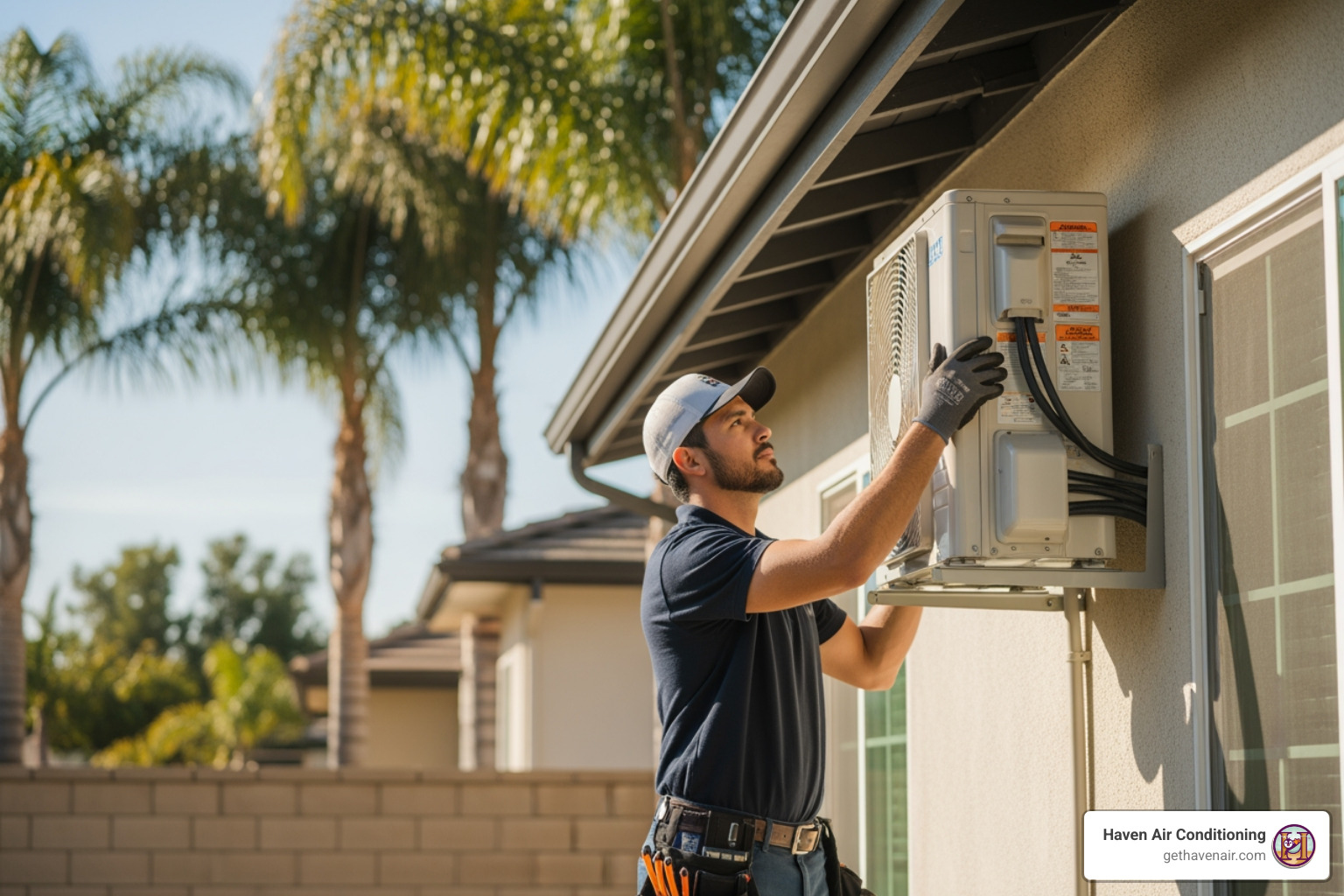
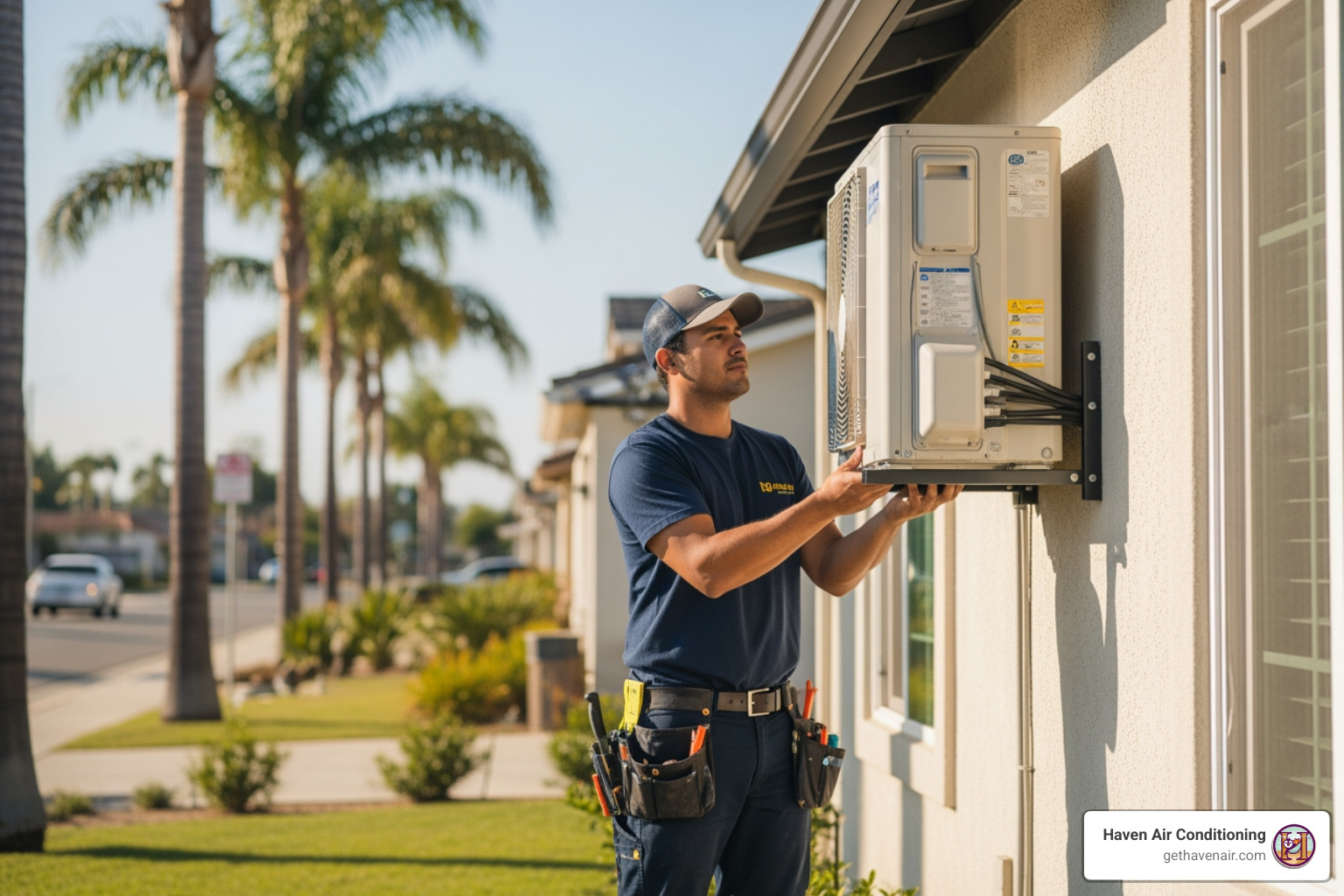
First, we place the outdoor condenser unit on its prepared pad, ensuring it is perfectly level and has adequate clearance for airflow. Next, we mount the indoor air handler, positioning it for optimal air distribution and easy maintenance access.
The most technical step is connecting the units with refrigerant lines. We carefully route the copper lines and use a specialized brazing technique to create a molecular bond at each connection. While brazing, we flow nitrogen through the lines to prevent internal contamination that could harm the system. This meticulous process is key to ensuring a leak-free seal for your ac heat pump installation.
Step 3: Electrical and Drainage Connections
With the units in place, we focus on the electrical and drainage systems. We handle all high and low-voltage wiring, ensuring your home’s electrical panel can safely handle the load and that everything complies with local codes. We then complete the thermostat wiring and setup, configuring it to communicate perfectly with your new heat pump.
Proper condensate drain line installation is also crucial to prevent water damage and mold. When your heat pump cools, it removes humidity from the air, and that water must drain properly. We install the drain line with the correct slope for gravity-fed drainage, protecting your home and ensuring reliable operation during your ac heat pump installation.
Finalizing the Installation: Commissioning and Testing
Once the physical components are connected, we begin the most critical phase: commissioning. This is where we bring your new heat pump to life and verify it operates flawlessly. Commissioning a heat pump is more complex than for a standard AC, often taking up to two hours to verify heating, cooling, and specialized defrost cycles.
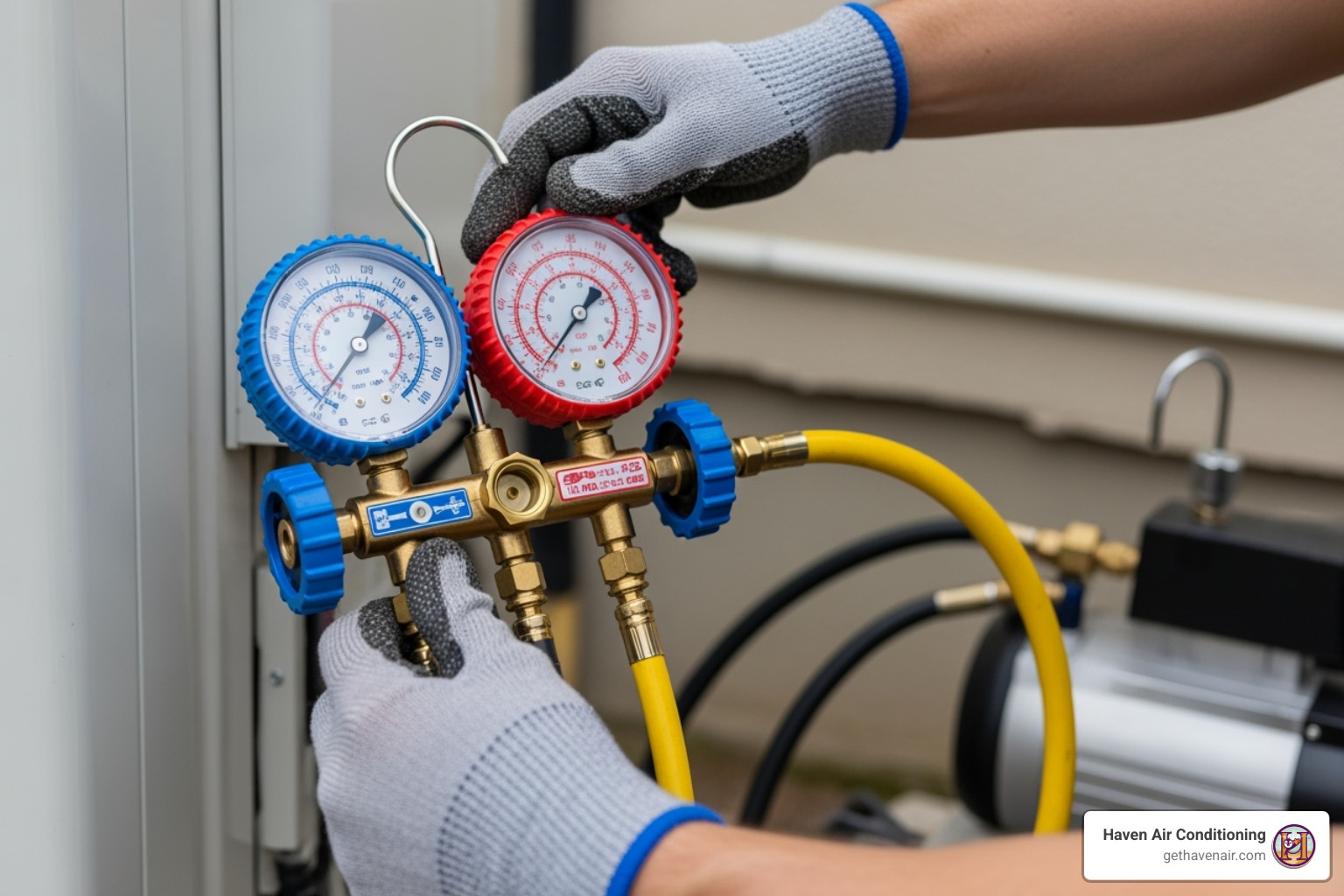
As the HVAC industry saying goes, “commissioning is the only way to know for sure how a system is operating.” This is not a quick check; it’s a methodical process to guarantee performance for your ac heat pump installation.
The process begins with a careful system startup. We then conduct a multi-point inspection:
- Verifying the refrigerant charge to the manufacturer’s exact specifications to ensure peak efficiency and prevent compressor damage.
- Performing final leak checks with electronic detectors to confirm every joint is perfectly sealed.
- Testing airflow and balancing the system to ensure consistent comfort in every room.
- Calibrating the thermostat to ensure it communicates accurately with the heat pump.
- Verifying all operational modes by running the system through heating, cooling, and defrost cycles to confirm smooth, quiet, and efficient performance.
Before we leave, we provide a detailed walkthrough of your new system. We’ll show you how to operate the thermostat, explain normal sounds, discuss maintenance, and review your warranty. Our goal is for you to feel completely confident with your new heat pump from day one.
Life With Your New Heat Pump: Maintenance and Care
Congratulations on your new heat pump! Proper maintenance will ensure it stays in peak condition for years to come. Before leaving after your ac heat pump installation, we provide a complete system operation walkthrough.
We’ll explain how your system works, including its unique operational characteristics. Heat pumps tend to have longer, quieter runtimes and deliver air at a more moderate temperature than traditional furnaces; this is normal and is key to their efficiency. We’ll also help with thermostat programming, recommending you set it and forget it, as heat pumps work best maintaining a steady temperature.
To keep your system running smoothly, follow these simple tasks:
- Clean or replace filters regularly. Checking your air filters monthly is the easiest and most effective DIY task. A clogged filter restricts airflow, wastes energy, and strains your system.
- Keep the outdoor unit clear of debris. Every few weeks, clear away leaves, grass clippings, and other debris from around your outdoor unit to maintain proper airflow.
While DIY tasks help, nothing replaces a professional inspection. Scheduling annual professional tune-ups is a smart investment in your system’s longevity. Our technicians will perform a comprehensive check, including cleaning coils, inspecting electrical connections, and testing refrigerant levels. This preventative care maintains peak efficiency, keeps energy bills low, and helps your system reach its full 15-20 year lifespan.
Frequently Asked Questions about Heat Pump Installation
Investing in a new heat pump is a big decision. Here are answers to the questions we hear most often from homeowners in Orange County:
How long does a typical heat pump installation take?
Most residential ac heat pump installation projects take between four to eight hours. The exact timeline depends on factors like the complexity of the system, whether ductwork modifications are needed, or if your home requires electrical upgrades. During your consultation, we will provide a clear timeline so you know exactly what to expect.
Can a heat pump be added to my existing HVAC system?
Yes, in many cases. If you have a furnace and an air conditioner, we can often replace the AC unit with a new heat pump to create a dual-fuel or hybrid system. This setup uses the heat pump’s efficiency for most of the year and your existing furnace as a reliable backup in extreme cold. A professional assessment is key to determine if your current indoor components and ductwork are compatible and properly sized for a new heat pump.
What are the signs of an incorrectly installed heat pump?
An improperly installed heat pump will not perform efficiently or keep you comfortable. Since many HVAC systems suffer from installation issues, it’s important to recognize the warning signs. Look out for these red flags with your ac heat pump installation:
- Uneven temperatures between rooms
- Higher-than-expected energy bills
- Frequent cycling (the system turns on and off too often)
- Strange noises like rattling, banging, or grinding
- Ice buildup on the outdoor unit during mild weather
- Weak or inconsistent airflow from vents
If you experience any of these issues, don’t just live with it. Call Haven Air Conditioning. We can inspect your system, diagnose the problem, and make the necessary corrections to ensure your comfort.
Your Partner for a Perfect Installation
Choosing to install a heat pump is a major home upgrade, and professional installation is the key to its performance, efficiency, and longevity. Even the most advanced heat pump will fail to deliver if it’s not installed correctly.
A professional ac heat pump installation is an investment in precision, expertise, and accountability. It ensures your system operates at peak efficiency from day one, helping you avoid common pitfalls like high energy bills and premature equipment failure. Most importantly, it provides peace of mind, knowing your system was installed to manufacturer specifications and is backed by a reliable warranty.
At Haven Air Conditioning, we’ve built our reputation on exceptional customer service, meticulous attention to detail, and a team of certified, friendly professionals who treat your home with respect. We’re not just technicians—we’re your neighbors, serving the entire Greater Orange County Area.
We are here to guide you through every step, from the initial consultation to installation and ongoing maintenance. Our goal is to ensure lasting comfort and reliability for you and your family.
Ready to experience the difference true craftsmanship can make? Learn more about our heating installation services and find how Haven Air Conditioning can transform your home comfort today.