(714) 332-6302

When Your Home’s Warmth Starts to Fade
Heating system problems can quickly turn a cozy Orange County or Riverside home into an uncomfortable space. Even with our mild winters, cold nights require a reliable furnace or heat pump to keep your family comfortable.
Common heating system problems include:
- Furnace won’t turn on: Check the thermostat, circuit breakers, and power switches.
- Blowing cold air: Often caused by dirty filters, fan settings, or fuel supply issues.
- Strange noises: Banging or grinding may indicate worn parts or ignition problems.
- Short cycling: The system turns on and off too frequently.
- High energy bills: Can be caused by leaky ducts, poor maintenance, or an aging system.
- Burning smell: Could be dust burn-off or a serious electrical issue.
- Water pooling: Usually from a clogged condensate drain.
- Carbon monoxide alarm: Evacuate immediately and call 911.
Many issues are simple DIY fixes, while others need professional attention. Knowing the difference saves time and money. This guide will help you identify common heating problems in Anaheim, Fullerton, and Irvine, learn what to check first, and know when to call for help. For immediate assistance, contact our emergency repair team 24/7.
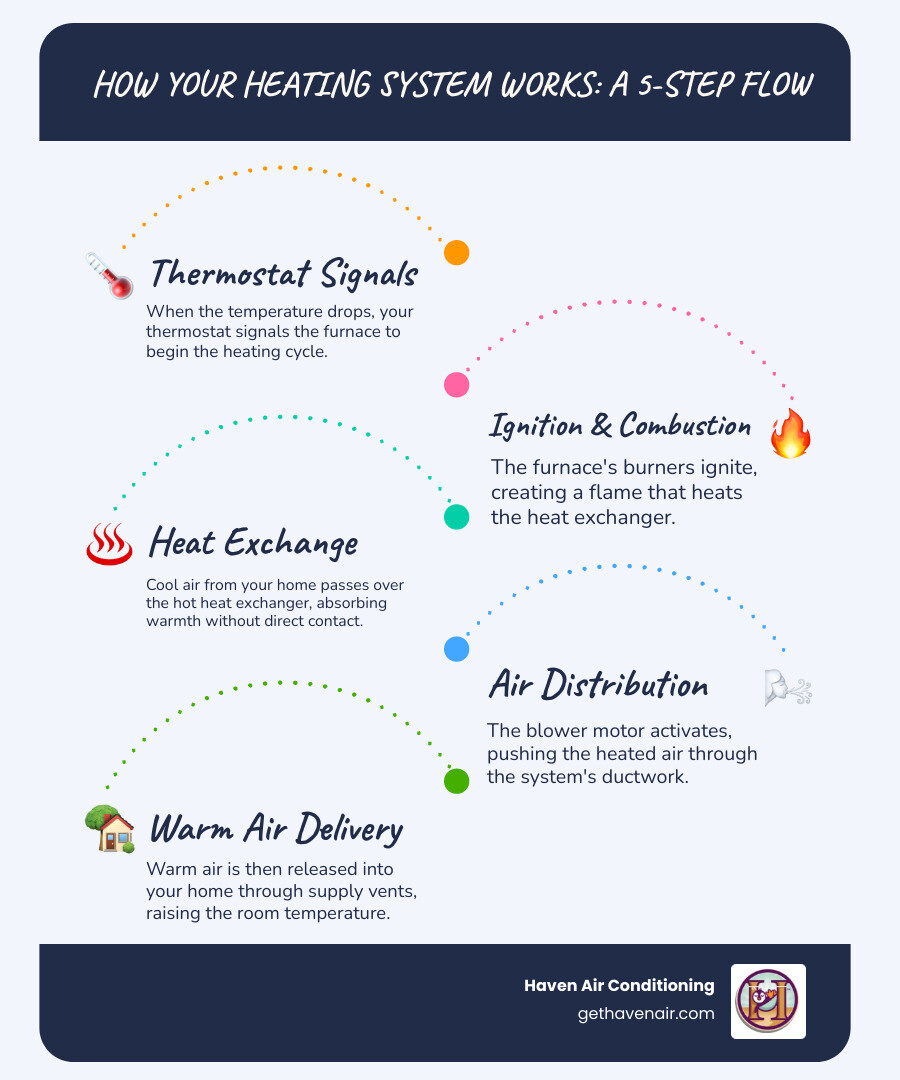
Heating system problems terms made easy:
Simple DIY Checks Before You Call for Help
Before searching for “heating repair near me,” try these simple checks. Many common heating system problems can be resolved in minutes without special tools, saving you a service call.
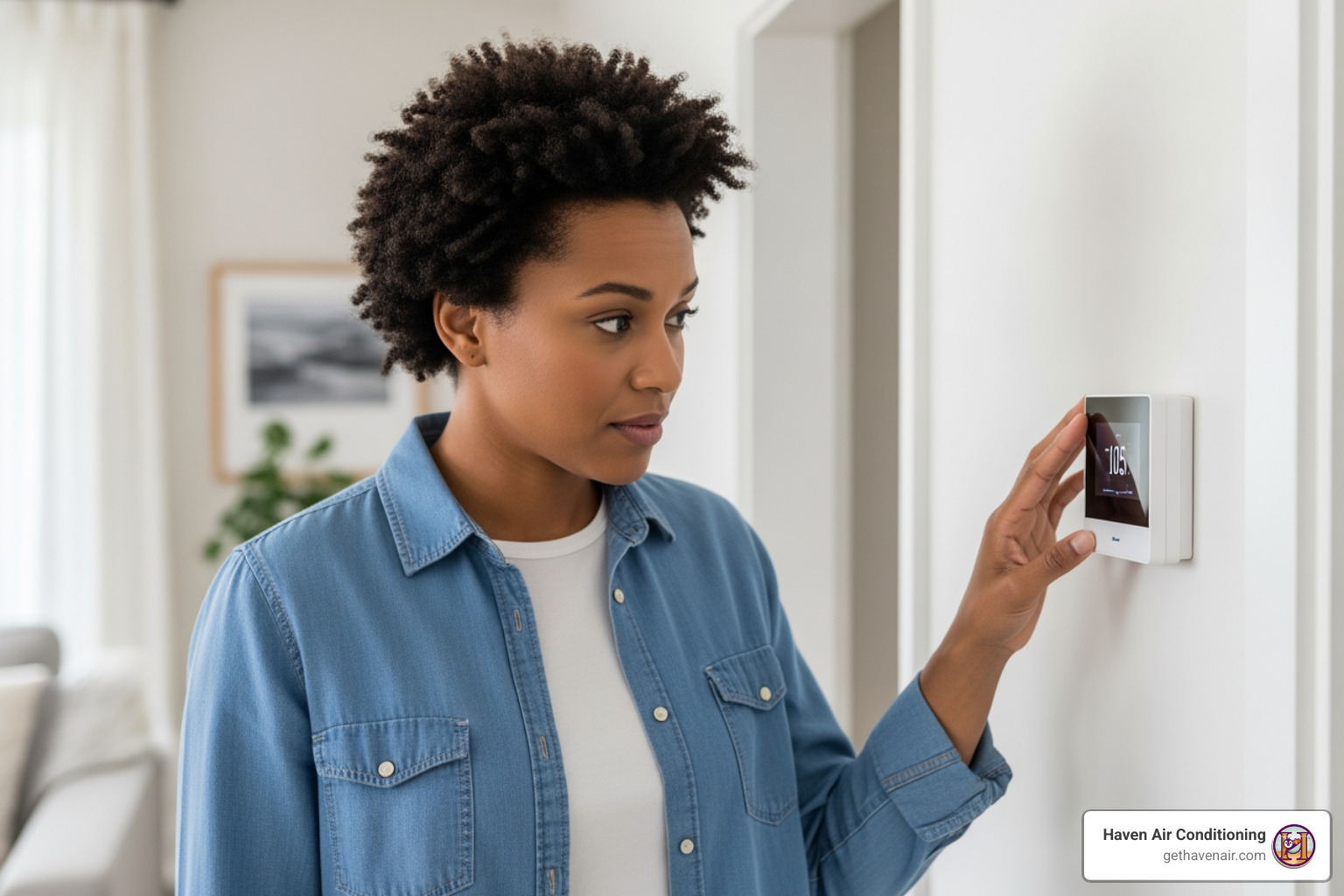
Troubleshooting Your Thermostat
Your thermostat is the brain of your heating system. If it’s not sending the right signals, you’ll be left in the cold.
- Check the batteries: A blank screen or unresponsive controls often just means the thermostat needs fresh batteries.
- Verify settings: Make sure the system is set to “HEAT” and the desired temperature is higher than the current room temperature.
- Check the fan: The fan should be on “AUTO,” not “ON.” The “ON” setting circulates air constantly, even when it’s not being heated.
- Check for power: For hardwired models, check your home’s circuit breaker panel for a tripped switch.
- Consider its age: Thermostats last about 10 years. Older units, including smart thermostats with power issues, can become unreliable.
Power, Switches, and Pilot Lights
If your furnace won’t turn on at all, a power issue is the likely culprit.
- Check the circuit breaker: Find the breaker labeled “FURNACE” or “HVAC.” Flip it completely off, then back on. If it trips again, call a professional.
- Find the power switch: Most furnaces have a standard power switch on or near the unit. Ensure it hasn’t been accidentally turned off.
- Secure the blower door: For safety, furnaces won’t run if the blower compartment door isn’t securely latched. Check that all panels are flush.
- Check the pilot light: Older gas furnaces have a pilot light that can go out. Follow the manufacturer’s instructions to relight it. Modern furnaces use electronic ignition; if this fails, a dirty flame sensor is a common cause that may require professional cleaning.
Clogged Filters and Blocked Vents
A dirty filter is one of the most common causes of heating system problems.
A clogged furnace filter restricts airflow, forcing your furnace to work harder and reducing its ability to heat your home. If you can’t see light through your filter, it’s time to replace it. We recommend checking your filter monthly and replacing it every 1-3 months, or more often if you have pets or allergies.
Also, walk through your home and ensure all supply and return air vents are open and not blocked by furniture or rugs. Obstructed vents lead to uneven heating and poor system performance. For more advanced solutions, consider our indoor air quality services.
Common Heating System Problems and Their Causes
After ruling out simple DIY fixes, you may be facing more complex heating system problems. These issues often require a trained technician to diagnose, especially in Orange County and Riverside where systems sit idle for months.
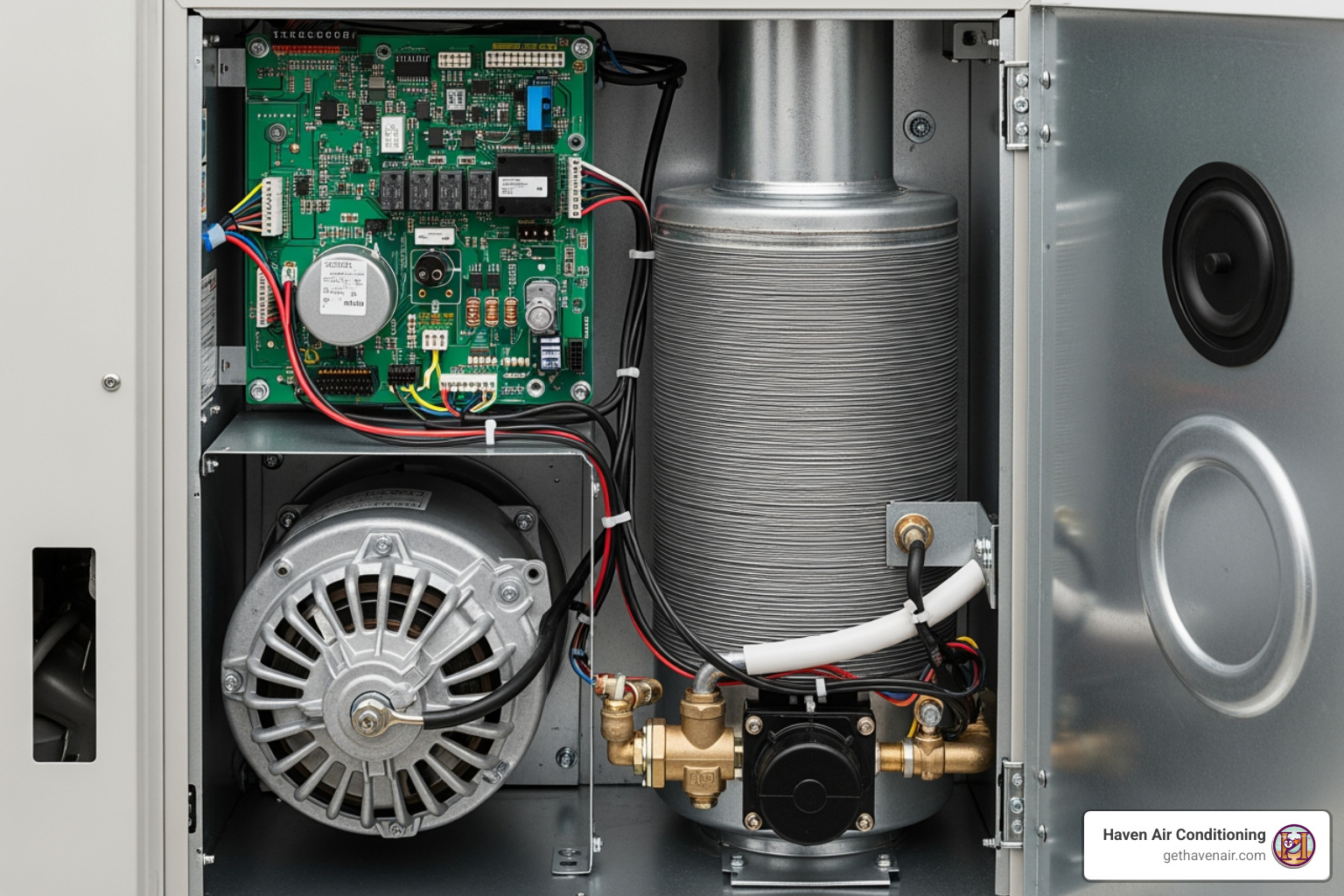
Why Is My Furnace Blowing Cold Air?
Feeling cold air from your vents is a common complaint with several possible causes:
- Thermostat Fan Setting: If the fan is set to “ON” instead of “AUTO,” it will blow air even when the furnace isn’t heating.
- Overheating: A dirty air filter can cause the furnace to overheat, triggering a safety switch that shuts off the burners but leaves the fan running.
- Leaky Ductwork: Gaps in your ducts can let warm air escape into attics or crawl spaces before it reaches your rooms.
- Fuel Supply Issue: A closed gas valve or other supply problem can prevent gas furnace burners from igniting. For heat pumps, a refrigerant leak can be the cause.
- Clogged Condensate Line: In high-efficiency furnaces, a clogged drain line will trigger a safety switch that shuts down the burners to prevent water damage.
What Do These Strange Furnace Noises Mean?
Unusual sounds are often the first sign of heating system problems. Here’s what they might mean:
- Banging or Popping: Often signals “delayed ignition,” where gas builds up before igniting. This can damage the heat exchanger and requires professional attention.
- Whistling or Whooshing: Typically points to restricted airflow from a dirty filter, blocked vents, or leaky ductwork.
- Grinding: This metallic sound usually means worn bearings in the blower motor. If ignored, the motor will fail.
- Squealing: A high-pitched squeal often comes from a worn or loose fan belt.
- Rattling: Can be as simple as a loose access panel, but could also indicate debris in the blower assembly.
Identifying and Solving Common Heating System Problems
Other issues can impact your comfort and wallet, especially for homeowners in Westminster and Garden Grove.
- Short Cycling: This is when your furnace turns on and off in short, frequent bursts instead of completing a full 10-15 minute cycle. It’s often caused by a clogged air filter, an oversized furnace, or a faulty flame sensor.
- Furnace Runs Constantly: If your furnace never shuts off, check that the fan isn’t set to “ON.” Other causes include a miscalibrated thermostat or a stuck limit switch.
- Water Pooling: For high-efficiency furnaces, this usually indicates a clogged condensate drain line. It can also be caused by a leaking humidifier or, in serious cases, a cracked secondary heat exchanger.
Serious Safety Hazards and When to Act Fast
Some heating system problems are more than just an inconvenience—they’re a safety risk. Homeowners in Aliso Viejo, Laguna Niguel, and across our service area should know these critical warning signs.
The Dangers of a Burning Smell
A faint dusty smell is normal when you first turn on your furnace for the season and should fade quickly. However, a persistent or different smell signals a problem.
- Electrical Smell: A sharp, acrid smell like melting plastic indicates overheating wires or components—a serious fire hazard.
- Mechanical Smell: An overheating blower motor can also produce a burning odor.
What to do: If you notice a strong, persistent, or electrical burning smell, shut down your heating system immediately at the thermostat and the furnace power switch. For safety, also flip the circuit breaker. Do not restart the system until it has been inspected by a certified technician.
Signs of a Cracked Heat Exchanger
A cracked heat exchanger is one of the most dangerous heating system problems because it can leak carbon monoxide—a deadly, odorless gas—into your home. Signs include:
- Soot marks around the furnace burners.
- A strong, unpleasant chemical odor.
- Water pooling near the unit (in high-efficiency furnaces).
- Burner flames that are yellow or flickering instead of a steady blue.
- Unexplained headaches, nausea, or flu-like symptoms that improve when you leave the house.
If you suspect a cracked heat exchanger, evacuate your home and call for emergency service. We are available 24/7 for these exact situations.
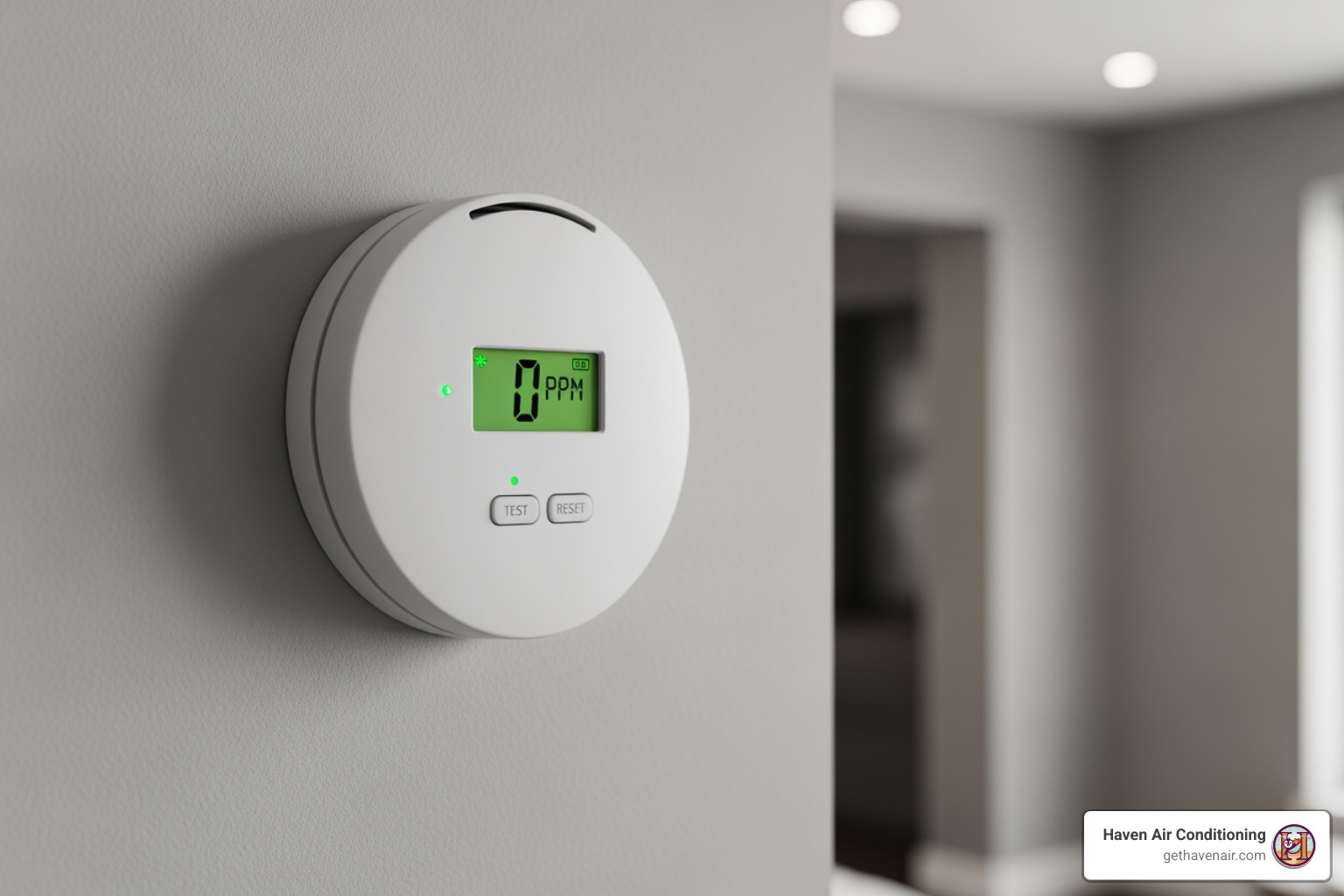
What to Do if Your Carbon Monoxide Detector Goes Off
Treat a CO detector alarm as a life-threatening emergency. It is not a low-battery chirp.
- Evacuate immediately. Get everyone, including pets, out of the house and into fresh air.
- Call 911 from a safe location outside.
- Do not re-enter your home until emergency responders have declared it safe.
Common causes of CO leaks include a cracked heat exchanger, a blocked flue pipe, or backdrafting, where exhaust is pulled back into the home. For any heating emergency, including suspected CO leaks, our emergency heating repair team is available 24/7.
Maintenance, Efficiency, and Knowing When to Replace
Proactive care is the best way to prevent heating system problems, manage energy bills, and ensure comfort in your Corona, Chino, or Eastvale home.
The Importance of Regular Maintenance and Filter Changes
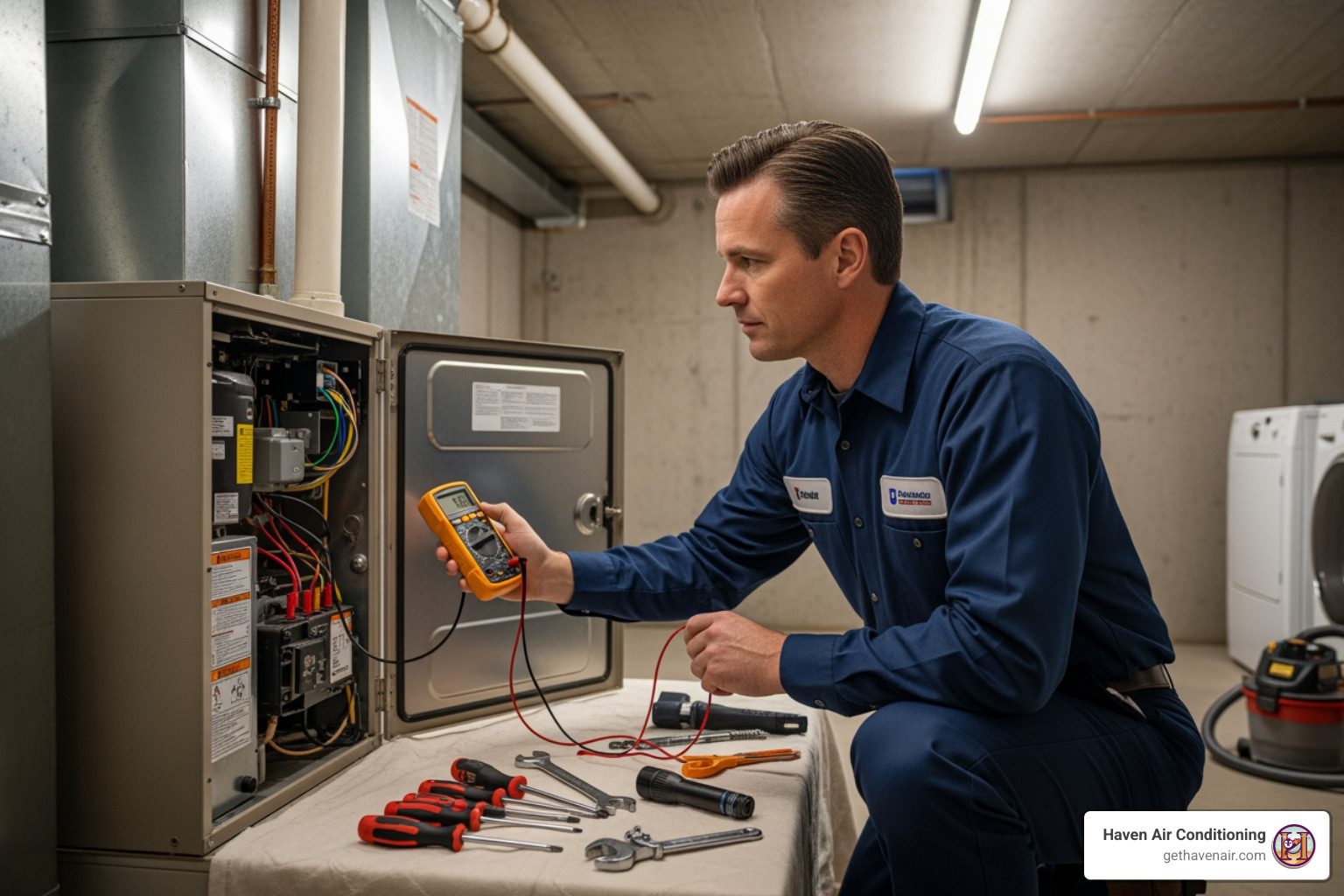
Think of your heating system like a car—it needs regular tune-ups. Annual professional maintenance is your best defense against expensive breakdowns. During a tune-up, our technicians clean components, inspect connections, lubricate parts, and test safety controls, catching minor issues before they become major problems.
Changing your furnace filter is also critical. Check it monthly and replace it every 1-3 months. A dirty filter restricts airflow, forcing your system to work harder, increasing energy use, and leading to overheating. Neglecting maintenance leads to higher bills, frequent repairs, and a shorter equipment lifespan. Our furnace maintenance plans are designed to keep your system running efficiently year-round.
Why Are My Energy Bills So High?
If your heating bills are climbing, your heating system is a likely culprit. Here’s why:
- Age and Inefficiency: Furnaces over 15 years old can be highly inefficient (56-70% AFUE), wasting up to 44% of the fuel they consume. Modern systems approach 100% AFUE.
- Leaky Ductwork: The average home loses 20-30% of its heated air through duct leaks, forcing your system to work harder.
- Poor Insulation: Inadequate insulation in walls and attics allows heat to escape, making your furnace run more often.
- System Issues: Dirty filters, short cycling, and a constantly running blower all reduce efficiency and increase costs.
Repair or Replace? Deciding Your Furnace’s Future
Deciding whether to repair or replace an aging furnace is a tough question for homeowners in Ontario and Norco. Consider these factors:
- Age: Gas furnaces last 15-20 years. If your system is in or beyond this range, replacement is often the wiser choice.
- Repair Cost: If a repair costs more than 50% of a new system’s price, replacement is usually the better long-term investment.
- Repair Frequency: If you’re calling for repairs multiple times a season, your furnace is likely at the end of its life.
- Energy Bills: Steadily rising bills indicate declining efficiency. A new system can offer significant savings.
- Comfort: Uneven heating and cold spots suggest your current system can no longer meet your home’s needs.
| Factor | Lean Toward Repair | Lean Toward Replace |
|---|---|---|
| Age | Under 15 years | Over 15 years |
| Repair Cost | Less than 50% of new system cost | More than 50% of new system cost |
| Repair Frequency | Infrequent, minor issues | Multiple repairs per season |
| Energy Bills | Stable or manageable | Steadily increasing |
| Efficiency | Acceptable for age | Very low (56-70% AFUE or less) |
| Comfort | Consistent heating throughout home | Uneven heating, cold spots |
| Long-term Value | Good if system is young | Better with new, efficient system |
Our team can provide an honest assessment of your situation, explaining the pros and cons of both options without pressure, so you can make a confident choice.
Frequently Asked Questions about Heating Issues
Here are answers to some of the most common questions we hear from homeowners across Orange County and Riverside.
Why are some rooms in my house colder than others?
Uneven heating is a frustrating but common issue. The most frequent causes of these heating system problems are:
- Blocked Vents: Furniture, rugs, or curtains covering supply or return vents.
- Leaky Ductwork: Unsealed ducts in attics or crawl spaces losing heated air.
- Poor Insulation: Rooms with exterior walls or large windows lose heat faster.
- System Imbalance: Ductwork may not be distributing air evenly throughout the house.
- Thermostat Placement: If the thermostat is in a warm spot, it will shut the system off before colder rooms are heated.
What is furnace short cycling and what causes it?
Furnace short cycling is when your system turns on and off in short, frequent bursts (e.g., every 3-5 minutes). This increases wear and tear and wastes energy. Common causes include:
- A Clogged Air Filter: This is the most common cause. It restricts airflow and causes the furnace to overheat, triggering a safety shutoff.
- An Oversized Furnace: A system that is too powerful for your home will heat the space too quickly and shut down prematurely.
- A Faulty Thermostat: Incorrect readings or poor placement can cause the system to cycle improperly.
- A Dirty Flame Sensor: This safety device can shut the furnace down if it can’t detect the burner flame.
How can I prevent common heating problems in my Orange County home?
Most heating system problems are preventable. Follow these simple steps:
- Schedule Regular Professional Maintenance: An annual tune-up is the best way to catch issues early and keep your system running efficiently.
- Change Your Filters Regularly: Replace your filter every 1-3 months to ensure proper airflow and prevent overheating.
- Keep Vents Clear: Make sure all supply and return vents are open and unobstructed by furniture or rugs.
- Seal Duct Leaks: Use mastic sealant or foil tape to seal gaps in accessible ductwork.
- Test Carbon Monoxide Detectors: Test your CO detectors monthly and replace them according to the manufacturer’s guidelines (typically every 5-7 years).
Get Your Heat Back with Professional Help
When DIY checks don’t solve the problem, or if you notice serious safety warnings, it’s time to call the professionals. While simple fixes are great, issues like a faulty flame sensor, a cracked heat exchanger, or complex electrical problems require the expertise of a certified HVAC technician.
At Haven Air Conditioning, our friendly, certified team has been restoring warmth to homes in Anaheim, Fullerton, Irvine, and across Orange County and Riverside for years. We diagnose the issue, explain your options clearly, and perform reliable repairs to get your system running safely.
We offer comprehensive heating solutions, including emergency repairs, system replacements, preventative maintenance plans, and indoor air quality services.
Heating emergencies don’t wait for business hours, which is why we offer 24/7 emergency service. If your heat fails or a CO alarm sounds, we’ll be there fast. Your family’s comfort and safety are our top priorities.
Don’t let heating system problems disrupt your peace of mind. For expert diagnosis and reliable repairs, get expert heating repair in Riverside and Orange County today! We’re ready to make your home cozy again.