(714) 332-6302

Why Geothermal HVAC is Gaining Attention Among Homeowners
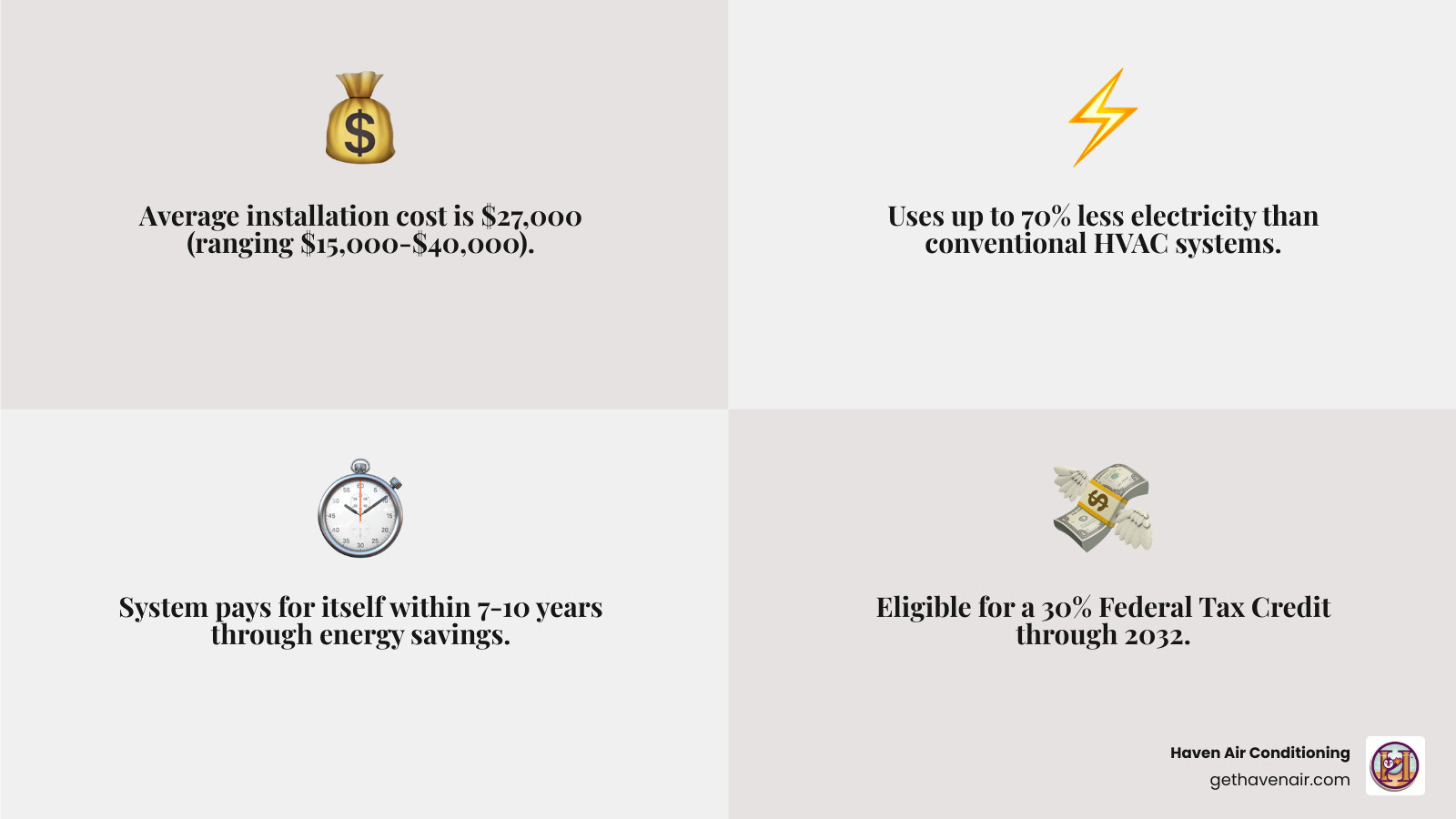
The cost to install geothermal hvac systems typically ranges from $15,000 to $40,000, with an average around $27,000. While this upfront investment is significant—often double that of traditional HVAC—the long-term benefits are making geothermal increasingly attractive to Orange County homeowners.
Quick Cost Breakdown:
- Equipment: $7,000 – $15,000
- Ground loop installation: $8,000 – $20,000
- Labor and permits: $2,000 – $5,000
- Federal tax credit: 30% of total cost (through 2032)
Geothermal systems tap into the earth’s consistent underground temperature (around 55°F year-round) to heat and cool your home with remarkable efficiency, using up to 70% less electricity than conventional systems.
Though the technology dates back to the 1940s, recent advances, generous federal tax incentives, and rising energy costs have created a “perfect storm” for its adoption.
Most homeowners see a payback period of 7-10 years from energy savings alone. When you add the 30% federal tax credit, increased home value, and a 25-50 year lifespan, the financial picture becomes even more compelling.
But is this substantial investment right for you? This guide will explore the key factors to consider.
Breaking Down the Cost to Install Geothermal HVAC
When you first hear the cost to install geothermal hvac, it can feel overwhelming. Understanding what goes into that price tag helps you see why it’s a smart investment rather than just a big expense. A geothermal installation is complex, with costs varying widely based on your specific situation. Because each system is customized, pricing varies significantly from one home to the next.
What is the average cost to install a geothermal hvac?
The cost to install geothermal hvac systems varies because every home’s size, soil conditions, and existing infrastructure are different.
System capacity is measured in “tons” of cooling capacity, not weight. Most homes need about one ton of capacity for every 500 square feet of living space. A 2,000-square-foot home, for example, would likely need a 3-4 ton system.
Each ton of capacity adds to the total investment, affecting both equipment costs and the size of the ground loop installation. Larger homes require more capacity, which increases the cost of both the equipment and the underground loop.
Properly sizing the system capacity is crucial for long-term comfort and efficiency, highlighting the importance of working with experienced professionals to get it just right.
What’s Included in a Geothermal Installation Quote?
When you receive a geothermal quote, you’re investing in a complete energy system. Here’s what’s typically included:
- The heat pump unit: This indoor unit is the heart of the system, designed to work with the ground loop for highly efficient heating and cooling.
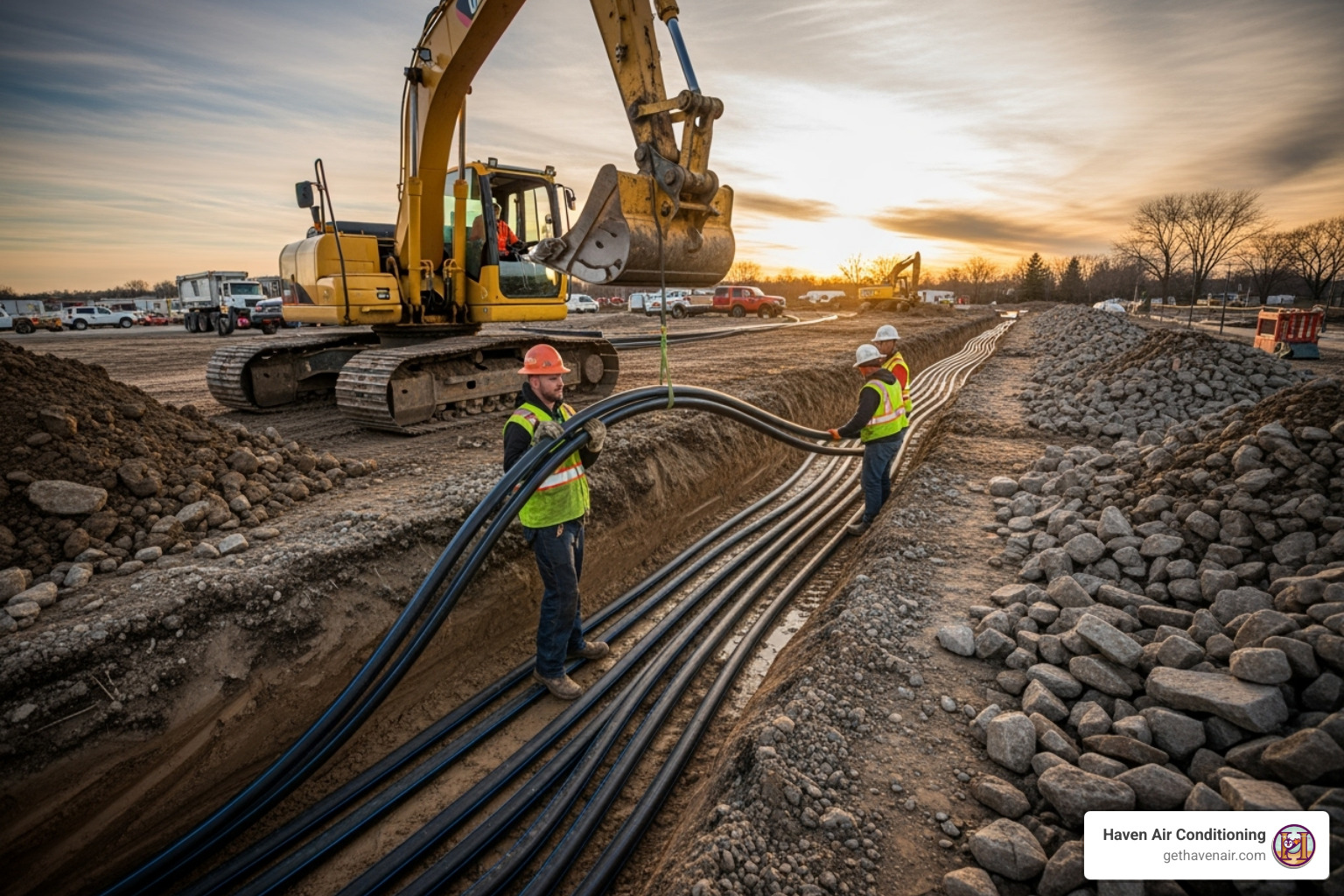
- Ground loop piping: This is a network of specialized pipes buried in your yard. The required excavation and drilling represent a substantial part of the cost due to the specialized equipment and expertise needed.
- Labor costs: Labor is a significant portion of the investment, often 50-70% of the total. This covers the site assessment, installation by certified technicians, and final system testing.
- Ductwork modifications: Most homes need some ductwork adjustments to optimize airflow and ensure the new system operates at peak efficiency.
- Permits and inspections: These are included to ensure the system meets local safety and efficiency standards, which protects your investment.
- System commissioning: This final step involves testing and optimizing all components to ensure your system operates at peak efficiency from day one.
To get a better sense of what the installation process looks like, check out our guide on What to Expect During HVAC Installation. And if you’re new to HVAC systems in general, our article What is HVAC? provides a helpful foundation.
Key Factors That Influence Your Total Cost
When considering the cost to install geothermal hvac, every installation is unique. The final price depends on factors like your system type, home size, site conditions, and whether it’s a new build or retrofit. At Haven Air Conditioning, our Custom HVAC System Design approach ensures we account for these variables to find the best solution for your budget and comfort.
Geothermal System Types and Their Costs
The type of ground loop system is the biggest factor in your total installation cost. The right choice depends on your property’s characteristics.
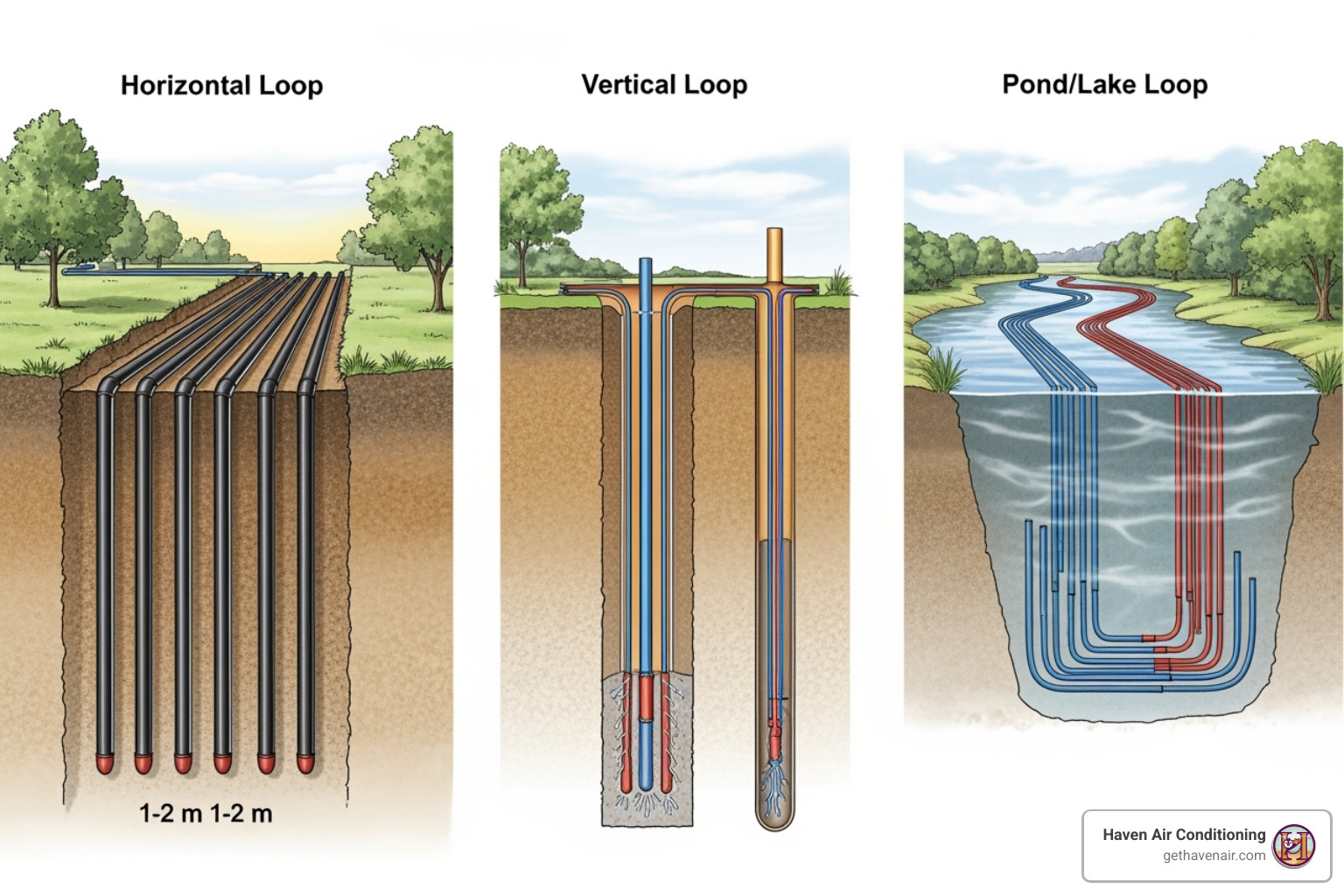
- Horizontal loops are often the most budget-friendly option if you have ample land. They require long, shallow trenches (4-6 feet deep) and are ideal for properties with large, open yards.
- Vertical loops are the go-to solution for smaller lots where space is limited. They involve drilling deep boreholes (sometimes 500 feet down), which is more complex and costly but requires a much smaller footprint. This makes them perfect for many Orange County properties.
- Pond or lake loops are a cost-effective option if you have a suitable body of water nearby. Pipes are submerged, using the water’s stable temperature with minimal land disruption.
- Open-loop systems use groundwater directly from a well. This can be highly cost-effective but requires a reliable water source and compliance with local water regulations.
How Site Conditions and Home Characteristics Impact Price
Your property’s specific characteristics directly affect installation costs.
- Your lot size and layout determine which loop system is feasible. Large lots may accommodate less expensive horizontal loops, while smaller Orange County lots often require vertical drilling.
- Soil conditions are a major factor. Easy-to-excavate sandy soil keeps costs down, while rocky terrain requires specialized equipment and more labor, increasing the price.
- Your home’s insulation quality and windows are crucial. A well-insulated, airtight home requires a smaller, less expensive geothermal system to maintain comfort.
- Existing ductwork condition is key for retrofits. If your current ducts are properly sized and in good condition, costs are lower. If they are leaky or undersized, they will need to be modified or replaced. Our Duct Services team can assess your needs.
How new construction vs. retrofitting affects the cost to install geothermal hvac
The timing of your installation—during new construction versus retrofitting an existing home—significantly impacts the cost to install geothermal hvac.
New construction offers significant cost savings. Planning the system from the ground up allows for easy site access for excavation, optimized ductwork design, and better integration with the home’s layout.
Retrofitting existing homes is more complex. Installers must work around established landscaping and driveways, which may necessitate vertical drilling over horizontal trenching. Existing ductwork often requires modification for optimal airflow and efficiency.
Disruption is minimal in new construction. Retrofitting involves temporary disruption to your home and yard, often requiring landscape restoration afterward. Despite these challenges, retrofitting is often an excellent investment, with long-term savings justifying the complexity. If you’re considering replacing an old system, our guide on HVAC Replacement can help. The key is working with experienced professionals to manage the project efficiently.
Calculating Your Return on Investment (ROI)
While the initial cost to install geothermal hvac is high, a closer look at the long-term financials reveals it’s one of the smartest investments for your home. You’re not just buying an HVAC system; you’re investing in decades of energy savings, increased home value, and a highly reliable system. This is an HVAC System Upgrade that transforms your home’s efficiency for generations.

Long-Term Energy Savings and Payback Period
Geothermal systems truly shine in long-term savings. The U.S. Environmental Protection Agency recognizes them as the most efficient heating and cooling solutions available. This is because geothermal systems don’t create heat; they move it. By tapping into the earth’s stable temperature, they work far less hard than conventional systems.
Most homeowners see their electricity use for heating and cooling drop by 40-60%. These significant monthly savings can be even higher in areas with extreme weather. The typical payback period is 7-10 years, depending on local utility rates and your initial investment. After this point, the system continues to generate savings for decades.
Government Incentives, Tax Credits, and Rebates
Government incentives can dramatically reduce your net cost to install geothermal hvac.
The federal tax credit is a huge benefit, covering 30% of the total system cost (including installation) for systems installed through 2032. This is a dollar-for-dollar credit against your tax liability, potentially saving you thousands.
Many states and local utilities offer additional rebates and incentives. These can further lower your cost, as geothermal systems reduce strain on the electrical grid. To find every incentive available, check the Database of State Incentives for Renewables & Efficiency (DSIRE). Also, explore our current HVAC Promotions Anaheim CA for local deals.
Lifespan and Maintenance Costs
Geothermal systems are set apart by their long lifespan and low maintenance needs. Indoor components last 25+ years, and the underground loop can last 50+ years—significantly longer than traditional HVAC systems (15-20 years).
Maintenance is simple because the main components are protected. The ground loop is buried, and the indoor unit isn’t exposed to weather, meaning fewer potential problems. Annual inspections are recommended to maintain peak efficiency, typically costing $75 to $300. Our HVAC Maintenance services can help protect your investment.
Repairs are rare and usually straightforward. While a major component replacement can be costly, most service calls are for minor issues. Crucially, these repairs are far less frequent than with traditional systems.
Geothermal vs. Traditional HVAC Systems
When upgrading your HVAC, it’s useful to compare geothermal with traditional options. The differences are eye-opening, especially when looking beyond the initial cost to install geothermal hvac.
| Feature | Geothermal HVAC | Traditional HVAC (Furnace + AC) | Air-Source Heat Pump |
|---|---|---|---|
| Upfront Cost | Higher (typically $15,000 – $40,000+) | Lower (typically $5,000 – $15,000) | Moderate (typically $4,000 – $10,000) |
| Operating Cost | Very Low (40-70% energy savings) | Moderate to High (dependent on fuel prices) | Moderate (dependent on outdoor temperatures) |
| Lifespan | Very Long (Indoor: 25+ yrs, Ground Loop: 50+ yrs) | Moderate (15-20 yrs) | Moderate (10-15 yrs) |
| Efficiency | Extremely High (300%-600% COP/EER) | Moderate (80-95% AFUE/SEER) | Moderate to High (17-21 SEER, 8-11 HSPF) |
| Environmental | Very Low Carbon Footprint, No On-Site Combustion | Higher Carbon Footprint (fossil fuels) | Lower Carbon Footprint than fossil fuels |
| Noise Level | Very Quiet (most components underground) | Moderate to Loud (outdoor condenser, furnace fan) | Moderate (outdoor compressor/fan) |
| Maintenance | Low | Moderate to High | Moderate |
Cost and Performance Comparison
The most obvious difference is the upfront investment. Geothermal systems cost two to three times more than a traditional furnace and AC combo. However, your monthly utility bills will be drastically lower. Geothermal can cut heating and cooling energy use by 60-70%, making a significant impact on your budget.
The efficiency numbers are remarkable. While traditional systems operate at 80-95% efficiency (AFUE/SEER), geothermal systems reach 300% to 600% efficiency (measured as COP/EER). This means for every unit of electricity used, they deliver 3 to 6 units of heating or cooling.
Comfort and quiet operation are key benefits. Geothermal provides consistent temperatures without the hot and cold spots of traditional systems. They also run almost silently, with most components indoors or underground. Air-source heat pumps are a middle ground, but their efficiency drops in extreme temperatures—a problem geothermal systems don’t have.
Environmental and Home Value Impact
Geothermal benefits extend beyond savings. The environmental impact is substantial, with no on-site greenhouse gas emissions since no fuel is burned. This also eliminates combustion risks like carbon monoxide leaks, making it a safer, cleaner system for your home.
From a property value perspective, a geothermal system can increase your home’s value. In a competitive market like Orange County, this sustainable technology makes your home stand out to buyers. The appeal to environmentally conscious buyers is growing, and a geothermal system future-proofs your home as a forward-thinking, energy-efficient property.
For homeowners in Orange County considering this upgrade, our Residential HVAC services can help you explore whether geothermal is the right fit for your specific situation and home.
Frequently Asked Questions about Geothermal Installation
When considering the cost to install geothermal hvac, homeowners have many questions. Here are answers to the most common ones we hear.
Does a geothermal system work in any climate?
Yes, geothermal systems work effectively in any climate, from hot summers to cold winters. The secret is the stable ground temperature (typically 45°F-75°F) just a few feet down. Unlike air-source heat pumps, geothermal performance isn’t affected by extreme air temperatures.
The system uses the earth as a heat sink in summer and a heat source in winter. Proper system sizing is crucial to meet peak demand in your specific climate. In very cold regions, a small backup heat source may be included for rare, extreme cold snaps, but the geothermal system handles the load almost all the time.
How disruptive is the installation process?
A common concern is installation disruption. The level of disruption varies significantly based on the system type chosen for your property.
- Horizontal trenching requires digging long, shallow trenches, causing more temporary landscape disruption. We work carefully to minimize the impact on your yard.
- Vertical drilling is far less invasive, using deep, narrow boreholes that have a small surface footprint. While drilling equipment is on-site, the disturbed area is minimal.
The installation timeline is typically one to six weeks, depending on system complexity, soil, and weather. Landscape restoration is part of the process, and our team will reseed or replace sod to leave your property looking its best.
Can a geothermal system also heat my water?
Yes, and this is a significant bonus. A geothermal system can help reduce your water heating costs using a device called a desuperheater. It captures waste heat from the system’s cooling cycle to preheat your water, providing “free” hot water from energy that would otherwise be discarded.
Homeowners can save up to 40% on water heating costs, which is often the second-largest home energy expense. The desuperheater supplements your existing water heater, ensuring a reliable hot water supply. The modest upfront cost is quickly offset by long-term savings, making it a smart addition for most families.
Is a Geothermal System Right for Your Orange County Home?
Considering the cost to install geothermal hvac is about more than just an appliance; it’s a strategic investment in your home’s future, your family’s comfort, and the environment.
While the initial investment is substantial, most Orange County homeowners see a payback in 7-10 years from energy savings alone. After that, the system provides savings for the rest of its 25-50 year lifespan. The financial case is compelling: energy savings of 60-70%, a 30% federal tax credit (through 2032), and potential local rebates make the net cost much more manageable.
Beyond savings, you gain energy independence from fluctuating fuel prices. You also get a whisper-quiet system that provides consistent comfort with minimal maintenance. Environmentally, it’s a powerful choice. With no on-site combustion and a reduced carbon footprint, you contribute to cleaner air in Orange County and enjoy better indoor air quality.
A geothermal system also increases your home’s value, making it stand out to eco-conscious buyers in our competitive real estate market.
Of course, geothermal isn’t for everyone. The payback period may not suit those planning to move soon, and challenging properties can face higher installation costs that affect the ROI. However, for long-term Orange County homeowners who value savings and sustainability, geothermal offers superior comfort and a chance to make a positive impact.
The decision ultimately comes down to your priorities. If you’re intrigued by dramatically lower energy bills, increased home value, and one of the most sustainable technologies available, it’s worth exploring further.
For expert guidance on Geothermal HVAC Installation in the Greater Orange County area, trust the certified professionals at Haven Air Conditioning to design a system that maximizes your comfort and savings. We’re here to help you determine if this smart, sustainable upgrade is the right fit for your unique situation.