(714) 332-6302

The Fall Transition: Confronting Dormant Heaters and Heavy Dust
A widely held myth is that autumn requires nothing more than a quick wipe-down of your vents, but when it comes to comprehensive home maintenance tips and troubleshooting, October is actually the most critical time to evaluate your failing HVAC system. Homeowners often wait until the dead of winter to test their heating equipment. By then, minor issues have escalated into complete system failures. In our years serving Anaheim and the surrounding areas, we’ve noticed that the transition period between cooling and heating seasons consistently exposes the hidden vulnerabilities in older equipment.
If you are deciding between nursing an aging unit through another season or upgrading your home’s comfort entirely, exploring your options for Anaheim AC repair and cooling services or consulting with a professional AC installation company in Anaheim can provide the clarity you need to make an informed decision.
The burning dust phenomenon: One of the most common issues our technicians at Haven Air Conditioning face during this transition is a distinct burning odor when the heater kicks on for the first time. Heating systems in Southern California often sit completely dormant for six to eight months. During this extended downtime, a thick layer of dust and household particles settles directly onto the heat exchanger. When the unit finally fires up, that accumulated debris literally burns off, sending a strong, unpleasant smell through your vents. While a brief odor is a normal part of the seasonal startup, a smell that lingers for hours—or triggers smoke alarms—points to a severe accumulation of debris or a failing component.
The environmental factor: The challenge of dormant heaters is heavily compounded by local weather patterns. Our team knows firsthand how the October Santa Ana winds bring extreme dry heat and intense dust storms to the region. In our experience, these high-wind events force homeowners to keep their windows tightly closed, sealing the home off from fresh outdoor air. When you are trapped indoors to escape the dust, a reliable, clean HVAC system becomes your only defense against poor indoor air quality. The forced air system must filter out the microscopic particles infiltrating the house while simultaneously managing the sudden evening temperature drops typical of Southern California autumns.
The decision point: This seasonal shift forces a critical evaluation. You must decide whether it is safe to prep and run an older, dust-filled system—risking a breakdown on the first genuinely chilly night—or if it is time to invest in a full professional system upgrade. We consistently see that nursing an inefficient unit through another season results in higher utility bills and compromised air quality, making a proactive replacement the smarter long-term strategy.
Repair vs. Replace: Evaluating Your HVAC System Before Winter
Deciding whether your current equipment can survive another season requires an objective look at its performance, efficiency, and age. As a meticulous, local family-owned business, we believe in evaluating systems honestly without cutting corners. In our experience, not every rattling noise means you need a new unit, but ignoring chronic issues will eventually lead to a costly mid-season failure. Understanding the baseline condition of your equipment is the first step in knowing when to call a professional for AC problems.
When our team inspects older ductwork and aging air handlers in Orange County homes, we often find they fail to filter out environmental allergens effectively. When seals degrade and insulation wears thin, your system pulls unfiltered attic or crawlspace air directly into your living areas. Upgrading to modern equipment ensures that your home is pressurized correctly, keeping outdoor contaminants outside. Furthermore, new high-efficiency systems are designed to lower utility costs significantly, providing a strong return on investment over the lifespan of the unit.
Comparing your options:
| Factor | Nursing an Older System (Repair) | Professional Upgrade (Replace) |
|---|---|---|
| Efficiency & Utility Costs | Continues to operate at a lower SEER rating, leading to progressively higher monthly energy bills. | Utilizes modern technology to optimize energy consumption, significantly reducing monthly utility usage. |
| Indoor Air Quality | Aging ductwork and weak blower motors struggle to filter out heavy dust and regional allergens. | Sealed systems with advanced filtration capture microscopic particles before they enter your living space. |
| Reliability | High risk of sudden breakdowns during extreme weather events or sudden temperature shifts. | Provides consistent, dependable comfort backed by comprehensive manufacturer warranties. |
| Long-Term Value | Sinks funds into temporary fixes that do not increase the overall lifespan of the equipment. | Adds tangible value to the home while preventing the stress of emergency mid-season repairs. |
Signs Your System is Beyond a Simple Tune-Up
Even with diligent maintenance, every mechanical system eventually reaches the end of its usable life. In Anaheim and surrounding Orange County, the continuous demand placed on HVAC equipment accelerates wear and tear. A pattern we see often is that a basic tune-up will no longer suffice when you notice these definitive signs:
- Frequent short-cycling: If your system turns on and off rapidly during late-season heatwaves, the compressor is likely failing or the unit is severely improperly sized for your home’s current thermal load.
- Persistent odors: While a brief burning dust smell is normal upon initial startup, an inability to clear that odor after the first day indicates that the heat exchanger may be compromised or the blower is caked in permanent grime.
- Rising utility bills: If your energy costs are climbing aggressively despite regular filter changes and consistent thermostat settings, the internal components are working twice as hard to produce the same amount of conditioned air.

What Happens During a Full System AC Installation?
The prospect of replacing an entire HVAC system can feel overwhelming. Many homeowners worry about the time commitment, the potential mess, and the disruption to their daily routines. However, a professional installation follows a strict, streamlined protocol designed to minimize stress and maximize efficiency. From protecting your floors to ensuring perfectly balanced airflow, every step is carefully managed.
Our team at Haven Air Conditioning recently handled a total remodel of an aging HVAC setup for an Anaheim family. The project involved gutting the old, inefficient system and installing a new, modern, multi-zone configuration. Because the process was handled with strict adherence to our professional standards, the transition was smooth, and the new system immediately began operating more efficiently, saving energy month after month. This level of precision is the standard you should expect.
At Haven Air Conditioning, our installation standards focus heavily on ensuring long-term comfort. This includes keeping the work area impeccably clean throughout the project and helping homeowners secure available, generally applicable energy rebates or tax credits by installing qualifying high-efficiency equipment. Here is exactly what our technicians do during the process:
- Site Preparation and Safe Removal: Technicians begin by laying down protective floor coverings and securing the work area. The old refrigerant is safely recovered according to environmental regulations, and the aging equipment is carefully dismantled and removed from the property.
- Ductwork Assessment and Code Compliance: Before new units are set in place, the existing ductwork is thoroughly inspected. Aging ducts are often upgraded or resealed to meet modern building codes, ensuring that the new system will not lose conditioned air into the attic.
- Equipment Integration: The new air conditioner is installed and seamlessly integrated with the heating components, whether that is a traditional furnace or a modern heat pump. Electrical connections are upgraded, and the refrigerant lines are meticulously brazed and pressure-tested for leaks.
- Final Testing and Airflow Balancing: Once the hardware is in place, the system is powered on. Technicians measure static pressure, balance the airflow across all rooms, and calibrate the thermostat to ensure the unit delivers perfectly even comfort throughout the home.
Upgrading Ductwork and Filtration to Combat Heavy Dust
Installing a state-of-the-art air conditioner or furnace is only half the battle; the distribution network matters just as much. Matching new HVAC equipment with upgraded ductwork is non-negotiable for system longevity. If you attach a high-efficiency blower to leaky, undersized ducts, the system will choke. It will struggle to push air through the home, leading to premature motor failure and uneven temperatures. Understanding this relationship is a core part of what separates a good AC installation from a bad one.
The filtration advantage: When completing a new installation, integrating advanced filtration is crucial. Standard one-inch fiberglass filters do very little to improve indoor air quality; they merely protect the equipment from large debris. Upgrading to a media cabinet that accommodates thicker, high-efficiency filters allows the system to capture microscopic allergens, pet dander, and fine particulate matter. This is especially vital during the October Santa Ana winds, when high-wind events force heavy debris into poorly sealed older systems.
A properly sealed and insulated duct system prevents outdoor allergens from bypassing the filter entirely. When we inspect Anaheim attics, we often find that if your return ducts have leaks, the system will suck in dusty, contaminated air and blow it directly into your living room. Sealing these gaps ensures that 100% of the air circulating through your home passes through your upgraded filtration system first.
Customized comfort solutions: Sometimes, standard central air isn’t enough for homes with unique architectural challenges. For example, during a late-season heatwave last fall, our installation team helped a local homeowner who needed a complete system replacement after going five years without reliable air conditioning. Because the property had narrow exterior pathways, the installation required specialized slimline units. Our crew managed the complex city permitting and completed the full installation in a single day. This kind of customized approach—often utilizing multi-zone systems or ductless mini-splits—provides targeted comfort and cleaner air in specific areas of the home, like home offices or newly added bedrooms.
Sizing Matters: Why Proper Tonnage Prevents Short-Cycling
When discussing HVAC replacement, the conversation inevitably turns to system size. In the world of heating and cooling, “size” does not refer to the physical dimensions of the metal cabinet; it refers to the system’s cooling and heating capacity, measured in tonnage or BTUs. A critical rule of thumb we always stress to our customers is that bigger is absolutely not better.
The Problem: Many homes our technicians visit in Anaheim and surrounding Orange County suffer from chronic short-cycling. This occurs when the system blasts the house with cold or hot air, satisfies the thermostat in a matter of minutes, and shuts down abruptly. A few minutes later, the cycle repeats. This constant starting and stopping is incredibly taxing on the mechanical components.
The Cause: In our experience, short-cycling is almost always the result of an oversized system. When a unit is too large for the home’s square footage and thermal load, it cools or heats the space far too quickly. Because it doesn’t run long enough during each cycle, it fails to pull humidity out of the air and doesn’t circulate the air through the filter adequately. Conversely, an undersized system will run continuously, struggling to keep up with the extreme dry heat of a Southern California autumn, which drives up utility bills and wears out the compressor prematurely.
The Solution: At Haven Air Conditioning, we insist that the only way to determine the correct equipment size is through a professional Manual J load calculation. This detailed assessment accounts for the home’s precise layout, the quality of the insulation, the number of windows, the direction the house faces, and the regional climate. Refusing to cut corners on sizing and static pressure ensures lower utility bills, consistent temperatures, and a system that lasts for its full intended lifespan.
Pre-Winter Heating Startup Steps for Southern California Homes
Before the coolest evenings arrive, taking a few proactive steps can prevent unexpected breakdowns and improve your indoor air quality. If you are focused on getting your cooling system ready for warm weather, the same diligence applies to preparing your heater for the winter months. Because the October Santa Ana winds introduce heavy dust into the environment, your startup routine must address both mechanical function and filtration.
Our team highly recommends following this checklist to safely transition your system for the heating season:
- Upgrade your filtration: Replace standard, thin air filters with high-efficiency pleated options designed specifically for dusty conditions. Ensure the MERV rating is compatible with your system’s blower capacity.
- Clear outdoor debris: Following heavy wind events, inspect your outdoor heat pump or AC condenser. Remove accumulated leaves, branches, and heavy dirt from the exterior coils to ensure proper airflow.
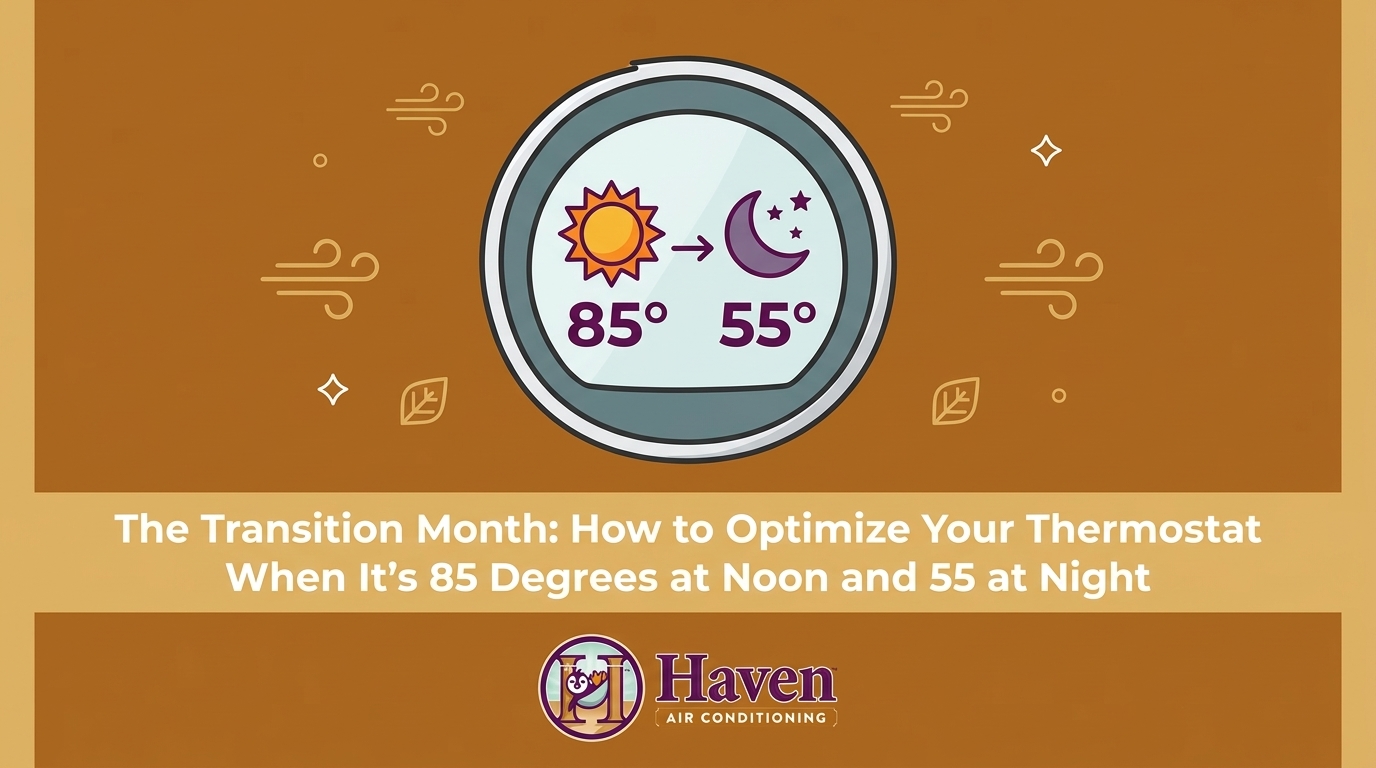
- Test the thermostat early: Switch your thermostat from cooling to heating early in the day when the house is still relatively warm. This allows you to verify that the furnace ignites properly without waiting for a freezing night.
- Monitor for unusual symptoms: Pay close attention to the system during the first few cycles. While a brief burning dust smell is expected, monitor the unit for unusual grinding noises, rattling, or odors that linger beyond the initial startup phase.
- Schedule a professional inspection: Book a comprehensive evaluation with a licensed technician to verify safe operation, check electrical connections, and ensure all safety switches are functioning before heavy winter use.
Frequently Asked Questions About Fall HVAC Upgrades
Why does my heater smell like burning dust when I turn it on?
The short answer is that dust settles on the heat exchanger during the months the system sits unused. When the furnace ignites for the first time in the fall, this accumulated dust burns off, creating a distinct odor. This smell is perfectly normal and should dissipate within a few hours of operation. If the smell persists for more than a day, or smells like melting plastic or electrical burning, we advise shutting the system down and contacting a professional immediately.
How do I protect my HVAC system during high winds?
The most effective protection against high winds is ensuring your system’s outer panels are secure and the surrounding area is clear of loose debris. In our experience serving Anaheim and surrounding Orange County, heavy winds can blow patio furniture or large branches into the outdoor unit, damaging the delicate aluminum fins. Keep a two-foot clearance around the condenser and check your indoor air filters frequently during wind events, as the system will pull in more dust than usual.
What should I check before turning on my heater for the first time?
Always start by installing a brand-new air filter to ensure maximum airflow. Next, check all the indoor supply and return vents to confirm they are open and unobstructed by furniture or rugs. Finally, visually inspect the outdoor unit to ensure it is free of yard waste. Running a quick test cycle during the daytime is a trick we always share to help you confirm the system is operational before you actually need it on a cold night.
How often should I change my air filter during dusty seasons?
Our team suggests inspecting your air filter every 30 days during peak wind and dust seasons. While standard manufacturer guidelines often suggest replacing filters every 90 days, extreme dry heat and heavy environmental dust can clog a filter much faster. If the filter material appears dark gray or you cannot see light through it, it is time for a replacement to protect your indoor air quality and system efficiency.
How long does a professional AC installation typically take?
Most standard residential HVAC replacements we perform are completed within a single day. The process typically begins in the morning with the removal of the old equipment and concludes by late afternoon with the new system fully operational. However, if your project requires extensive ductwork modifications, the addition of new zones, or complex structural adjustments, the timeline may extend to several days to ensure the highest quality standards are met.
Does upgrading my AC also improve my home’s heating efficiency?
Yes, especially if you are having us replace the entire HVAC system or upgrade to a heat pump. Modern air handlers and blower motors are infinitely more efficient at distributing conditioned air, whether it is heated or cooled. By upgrading the system as a matched pair, you ensure that both the heating and cooling cycles benefit from advanced technology, variable-speed airflow, and improved energy consumption.
Securing Your Home’s Comfort Before the Cold Settles In
Navigating the transition from cooling to heating doesn’t have to be a stressful experience. At Haven Air Conditioning, we know that upgrading an aging, inefficient unit to a properly sized, modern HVAC system provides immense peace of mind, ensuring your home remains a comfortable sanctuary regardless of the weather outside. By acting proactively before the October Santa Ana winds give way to the coldest winter evenings, you protect your family’s indoor air quality and avoid the panic of an unexpected breakdown. Secure your home’s comfort today by scheduling a professional evaluation or installation estimate.