(714) 332-6302

The Silent Threat Inside Aging Heating Systems
According to the Centers for Disease Control and Prevention, accidental carbon monoxide poisoning sends tens of thousands of people to the emergency room every year. If you are focused on understanding carbon monoxide risks in aging gas furnaces, the most critical factor is often completely invisible to the naked eye. Here in Anaheim CA, our team at Haven Air Conditioning regularly helps homeowners navigate a serious decision point as the early fall weather cools down: do you trust a furnace that is over a decade old to run safely for another winter, or do you bring in a professional to evaluate its internal integrity before turning up the thermostat?
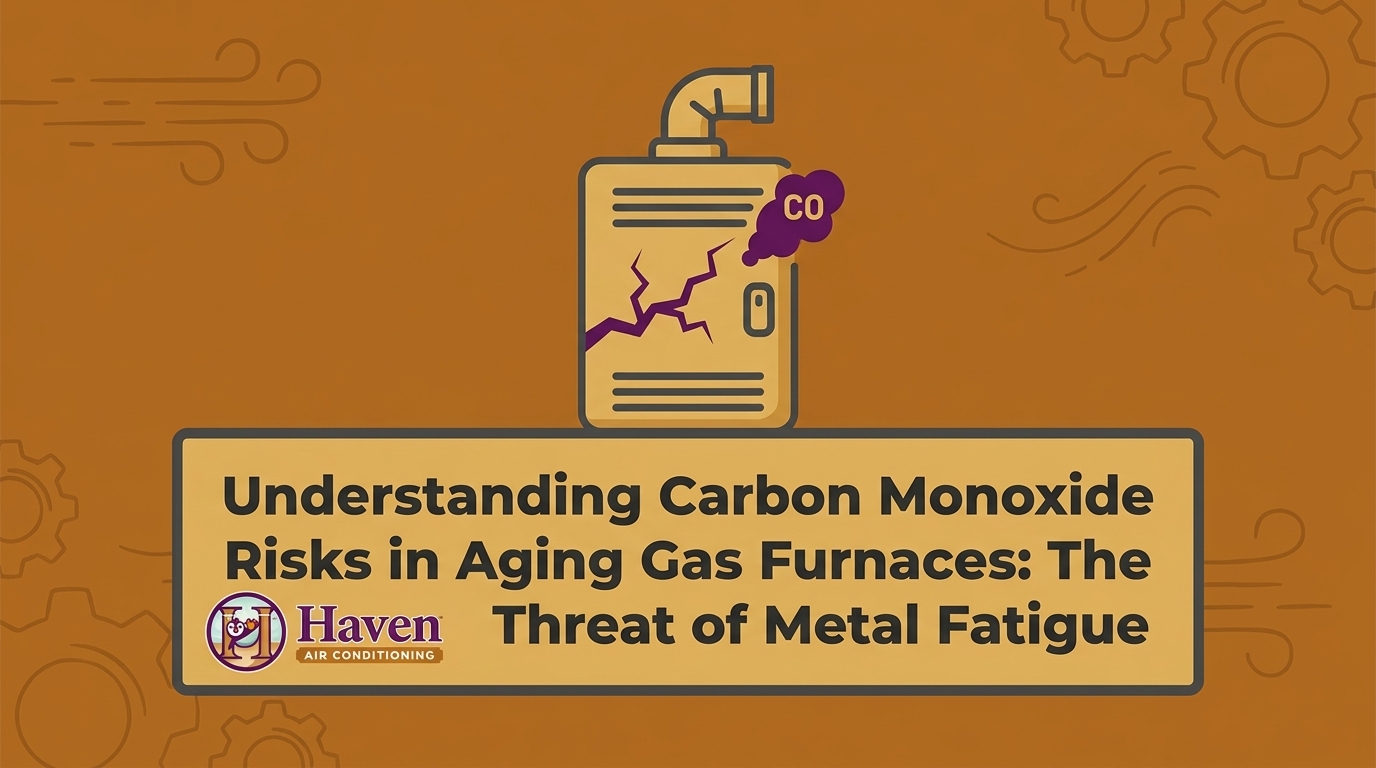
The core issue lies deep within the system, where microscopic cracks develop in the heat exchanger over years of use. These hairline fractures act as a gateway, allowing lethal, odorless gas to escape the combustion chamber and enter your home’s breathing air. Because these fissures are so small, a basic visual check with a flashlight simply cannot confirm your system is safe. Diagnosing this hidden threat requires specialized equipment, a trained eye, and a deep understanding of combustion science.
If you suspect your aging system might be compromised, working with a qualified heating repair company is the only way to get a definitive answer. Relying on guesswork with a gas appliance is a risk no household should take.
Why Standard Checks Miss the Mark
Many homeowners assume that if a furnace turns on and blows warm air, it is operating safely. In our field experience, this is a dangerous misconception. The heat exchanger is the metal shield that separates the toxic exhaust gases of the combustion process from the clean air being blown into your living spaces. When this shield is compromised, the furnace will still produce heat—it will just produce it alongside a steady leak of carbon monoxide.
- Invisible flaws: The cracks that leak carbon monoxide often start as microscopic stress fractures that cannot be seen without a high-definition inspection camera.
- Temperature-dependent expansion: A crack might be tightly closed when the furnace is turned off, only opening up to leak gas once the metal heats up and expands.
- Lack of operational symptoms: A cracked heat exchanger does not always cause the furnace to make strange noises or shut down, meaning the system will continue running normally while introducing exhaust into your ductwork.
How Metal Fatigue Weakens Heat Exchangers Over Time
The underlying problem: In our years of inspecting Anaheim area heating systems, we’ve found that heat exchanger failure is rarely a sudden, dramatic shatter. Instead, it is a slow, quiet degradation of the metal’s structural integrity. To understand why this happens, you have to look at the continuous physical stress the equipment endures every single time it runs.
The root cause: The physics of heating your home rely on extreme temperature changes. When your thermostat calls for heat, the burners ignite, and the metal heat exchanger rapidly heats up, causing it to physically expand. Once the cycle finishes and the burners shut off, the blower continues pushing air over the metal until it cools down and contracts. Over 10 to 15 years, this continuous cycle of thermal expansion and contraction takes a heavy toll. The constant flexing back and forth eventually leads to metal fatigue. Just like bending a paperclip back and forth will eventually cause it to snap, the constant expanding and contracting of the heat exchanger causes the molecular structure of the metal to weaken.
The necessary solution: Because this degradation happens at a microscopic level long before a major failure occurs, proactive monitoring is essential. Scheduling a professional evaluation during the September pre-heating-season window allows technicians to identify early signs of metal fatigue before the heavy winter usage forces those microscopic stress fractures to split wide open.
The Stages of Metal Degradation
Understanding the timeline of metal fatigue helps clarify why older units are at such a high risk:
- Initial operation (Years 1-5): The metal is highly resilient. It expands and contracts smoothly, absorbing the thermal stress exactly as engineered.
- Mid-life wear (Years 6-10): The constant flexing begins to alter the grain structure of the metal. The material becomes slightly more brittle, though it usually remains structurally sound.
- Advanced fatigue (Years 11-15+): The metal has lost its elasticity. Microscopic stress fractures begin forming along the seams, curves, and weakest points of the exchanger. It is at this stage that the risk of carbon monoxide leakage spikes dramatically.

The Hidden Impact of Long Dormancy Periods
While continuous use causes thermal fatigue, long periods of inactivity create an entirely different set of threats for your heating system. In areas with mild climates, such as our service area here in Anaheim CA, furnaces often sit completely inactive for 8 to 9 months of the year. Our technicians frequently encounter homeowners operating under a false sense of security, assuming that because they use their furnace less frequently than someone in a colder state, their equipment will naturally last much longer.
The reality is that long dormancy periods accelerate unseen wear and tear. When a furnace sits idle from early spring through late fall, ambient moisture and humidity in the air settle inside the combustion chamber and along the heat exchanger. Because the system is not turning on and burning off this moisture, condensation is allowed to sit on the metal components for months at a time. This standing moisture reacts with the metal, promoting silent, aggressive corrosion.
Corrosion and Structural Weakness
Rust and corrosion do more than just make the inside of your furnace look dirty—they actively eat away at the thickness and strength of the metal walls. As the heat exchanger rusts during the off-season, the metal becomes thinner and significantly more brittle.
When the furnace is finally turned on after a long hiatus, that thinned, corrozed metal is suddenly subjected to extreme heat. Because the structural integrity has been compromised by months of silent rusting, the metal is far less capable of handling the rapid thermal expansion. This combination of off-season corrosion and sudden operational stress is exactly what causes older heat exchangers to crack, creating a direct path for carbon monoxide to enter the home’s airstream. Regular maintenance is necessary to mitigate this moisture buildup before it causes irreversible damage.
Thermal Shock: The Danger of the First Fall Cold Snap
The transition from mild weather to the first significant temperature drop is the most dangerous time for an aging furnace. During the September pre-heating-season, our technicians often see systems that might only run for a few minutes at a time to take the chill out of the air. But when the first real cold snap hits, the furnace is suddenly forced into heavy, continuous operation. This sudden demand triggers a phenomenon known as thermal shock.
Thermal shock occurs when a dormant, cold furnace is fired up and the internal temperatures skyrocket in a matter of seconds. For a healthy, relatively new heat exchanger, this rapid expansion is easily absorbed. But for an older system suffering from metal fatigue and off-season corrosion, this sudden stress is often the breaking point. The rapid expansion forces existing microscopic stress fractures to stretch open wider.
As these cracks expand under the intense heat, the airtight seal of the combustion chamber is broken. Exhaust gases, which contain high levels of carbon monoxide, escape through these newly widened cracks and are immediately picked up by the blower motor. The blower then pushes this toxic air through your ductwork and directly into your living spaces.
This critical failure almost always happens precisely when you need the heating system the most. If your system fails during a sudden freeze, securing an emergency heater installation becomes a high-stress, immediate necessity to keep your household safe and warm.
Why Microscopic Carbon Monoxide Leaks Evade Detection
The problem of invisibility: Carbon monoxide is notoriously difficult to detect because it is completely colorless, odorless, and tasteless. Unlike a natural gas leak, which is treated with a chemical additive to smell like rotten eggs, a carbon monoxide leak gives no sensory warning whatsoever. You cannot see it, you cannot smell it, and you cannot taste it.
The mechanical disguise: Making matters worse, the hairline cracks that allow this gas to escape often evade basic visual inspections. When the furnace is turned off and the metal is cool, these stress fractures contract and pull tightly together, making them nearly invisible even to a trained eye with a flashlight. They only open up and leak when the furnace reaches its peak operating temperature. This is why cold visual inspections are entirely unreliable for confirming the safety of an aging heat exchanger.
The detection gap: While standard ceiling-mounted carbon monoxide detectors are absolutely vital for life safety, they have significant limitations. Store-bought detectors are designed to sound an alarm during high-level, emergency exposure events. However, they often do not alert you to chronic, low-level carbon monoxide exposure. A furnace with a microscopic crack might leak small amounts of CO into your home in Anaheim CA every time it runs—not enough to immediately trigger the ceiling alarm, but enough to cause chronic headaches, fatigue, and long-term health issues over the course of the winter.
Indicators of Incomplete Combustion
While you cannot see carbon monoxide, you can sometimes see signs that your furnace is not burning fuel cleanly. The color of your burner flame is a key indicator of combustion health:
- Blue flame: A crisp, steady blue flame indicates complete combustion, meaning the gas is burning cleanly and efficiently.
- Yellow or orange flame: A flickering, yellow, or lazy orange flame indicates incomplete combustion. This means the fuel is not burning properly, resulting in a significantly higher production of carbon monoxide and soot.
- Soot buildup: Black soot around the furnace registers or the exterior of the unit is a major red flag that the system is producing excessive carbon monoxide and failing to vent it properly.
Comprehensive Safety Inspections Beyond the Filter Change
We always acknowledge that changing your air filters regularly is a fantastic homeowner habit that protects your blower motor and improves indoor air quality. However, a clean air filter does absolutely nothing to detect, prevent, or stop a heat exchanger from cracking and leaking carbon monoxide. Protecting your home from this silent threat requires a level of diagnostic testing that goes far beyond basic DIY maintenance.
At Haven Air Conditioning, our daily field experience has shaped a family-oriented service philosophy: protecting a household from silent threats like CO leaks is our absolute highest priority. We believe in shifting the focus from basic mechanical troubleshooting to comprehensive life safety. Because you cannot put a price on your family’s well-being, verifying the structural integrity of your heating equipment is non-negotiable for our team.
A professional combustion analysis is the only way to definitively prove that a furnace is operating safely. During this assessment, technicians use highly sensitive digital combustion analyzers to test the flue gases while the system is running at peak temperature. This equipment measures the exact ratio of oxygen to carbon monoxide in the exhaust, detecting even the most minute traces of gas that might be escaping into the airstream. Technicians also use specialized infrared cameras to inspect the hidden curves of the heat exchanger for microscopic stress fractures.
Real-World Proactive Care
Handling gas components and diagnosing complex combustion issues strictly requires a licensed professional. Just last September, our Haven Air Conditioning technicians responded to an Anaheim homeowner who requested a full report on their aging heating and air system during a routine pre-season check-up. Our team performed a comprehensive safety evaluation and provided a detailed report on the system’s health, laying out clear advice and options for the future. Because the process was thorough, transparent, and focused on safety, the customer gained complete confidence in their equipment and now has a trusted go-to company for all their HVAC needs.
A thorough assessment provides a complete health report on your aging system, allowing you to make proactive rather than reactive decisions. If you want to ensure your system is structurally sound for the winter, scheduling expert heating repair and maintenance during the September pre-heating-season is a recommendation we stand by completely.
Navigating the Next Steps for a Compromised Furnace
If a professional evaluation uncovers microscopic cracks or severe metal fatigue in your heat exchanger, immediate action is required. The first and most critical safety protocol is to shut down the system completely. A furnace with a compromised heat exchanger is a direct hazard to the household and cannot be safely operated under any circumstances.
Homeowners in Anaheim CA often wonder if a cracked heat exchanger can simply be patched, welded, or sealed. The structural reality of thermal expansion makes this impossible. Because the metal must constantly expand and contract with extreme temperature changes, any weld or patch will quickly break under the thermal stress, leaving you right back where you started. The only safe solutions are to replace the heat exchanger component itself or upgrade the entire furnace.
Comparing Your Replacement Options
| Consideration | Replacing the Heat Exchanger Only | Upgrading the Entire Furnace |
|---|---|---|
| Safety Resolution | Eliminates the immediate CO leak by installing a new, uncompromised metal shield. | Completely eliminates the risk with a brand-new system built to modern safety standards. |
| Long-Term Reliability | The new part is safe, but the rest of the 10-to-15-year-old furnace (blower, control board, gas valve) remains prone to imminent failure. | Resets the clock on all components, providing a decade or more of reliable, warranty-backed performance. |
| Energy Efficiency | Does not improve the overall efficiency of the aging system; you continue paying higher utility bills. | Modern systems offer vastly superior AFUE ratings, reducing monthly energy consumption significantly. |
| Financial Logic | Often a poor investment for units over 10 years old, as the labor to rebuild the system is extensive and other parts will soon fail. | The most cost-effective long-term solution, often supported by utility incentives or generic federal tax credits for high-efficiency models. |
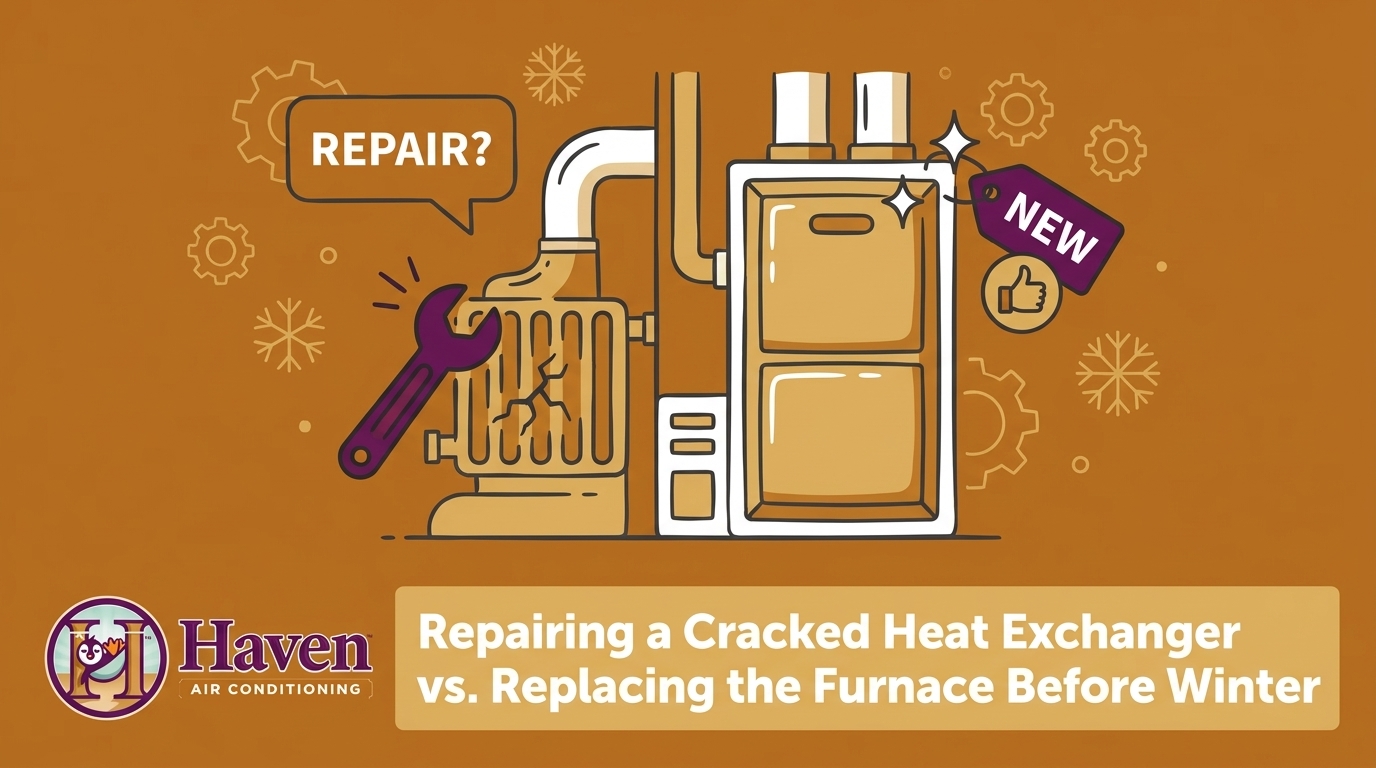
When weighing the decision of repairing a cracked heat exchanger vs. replacing the furnace, the age of the unit is the deciding factor. Modern, energy-efficient systems eliminate the immediate carbon monoxide risk while offering vastly superior heating performance and lower operational costs.
Frequently Asked Questions About Furnace Safety and Carbon Monoxide
Can an old furnace leak carbon monoxide?
Yes, as furnaces age, the heat exchanger undergoes repeated thermal expansion, leading to metal fatigue. This continuous flexing over 10 to 15 years causes the metal to weaken and eventually crack. These cracks break the airtight seal of the combustion chamber, allowing toxic carbon monoxide to escape into the home’s breathing air.
Why do furnace heat exchangers crack?
Cracks are primarily caused by the constant heating and cooling cycles the metal endures over its lifespan. Every time the furnace runs, the metal expands, and every time it shuts off, it contracts. Additionally, corrosion from standing moisture during long periods of dormancy weakens the metal, making it far more susceptible to cracking under thermal stress.
How do you check a furnace for carbon monoxide?
A simple visual inspection with a flashlight is not enough to confirm a system is safe, as cracks often only open when the metal is hot. Professional technicians use digital combustion analyzers to test the exhaust gases and detect trace amounts of carbon monoxide. Homeowners should also ensure they have working, properly placed carbon monoxide detectors on every level of their home, especially near sleeping areas.
What are the early signs of a cracked heat exchanger?
Signs of a severe combustion problem include a yellow or dancing burner flame, soot buildup around the exterior of the furnace, or unusual, pungent odors coming from the vents. However, many microscopic cracks present no early visible signs or smells whatsoever, making professional diagnostic testing the only reliable way to catch a leak early.
How often should a gas furnace be checked for carbon monoxide?
Industry standards strongly recommend an annual professional safety inspection for all gas-fired heating equipment. This thorough evaluation is best performed during the September pre-heating-season, ensuring the system is structurally sound and operating safely before it is subjected to heavy daily use during the winter cold snaps.
Prioritize Your Household’s Safety This Season
Metal fatigue, off-season corrosion, and invisible stress fractures are a natural consequence of an aging heating system. Understanding carbon monoxide risks in aging gas furnaces means recognizing that these threats develop slowly and silently, often evading basic visual detection. Because you cannot see or smell carbon monoxide, assuming an older unit is safe simply because it still produces warm air is a risk you should never take.
The only way to guarantee a leak-free system is through a scientifically grounded, professional safety check utilizing digital combustion analysis. As the early fall weather begins to cool down in Anaheim CA, we strongly encourage homeowners to schedule a pre-season evaluation. Taking proactive steps now ensures your family’s well-being, providing you with a safe, reliable, and healthy home environment before the cold weather truly sets in.