(714) 332-6302

The Silent Fall Invasion: When Cooler Nights Drive Pests Indoors
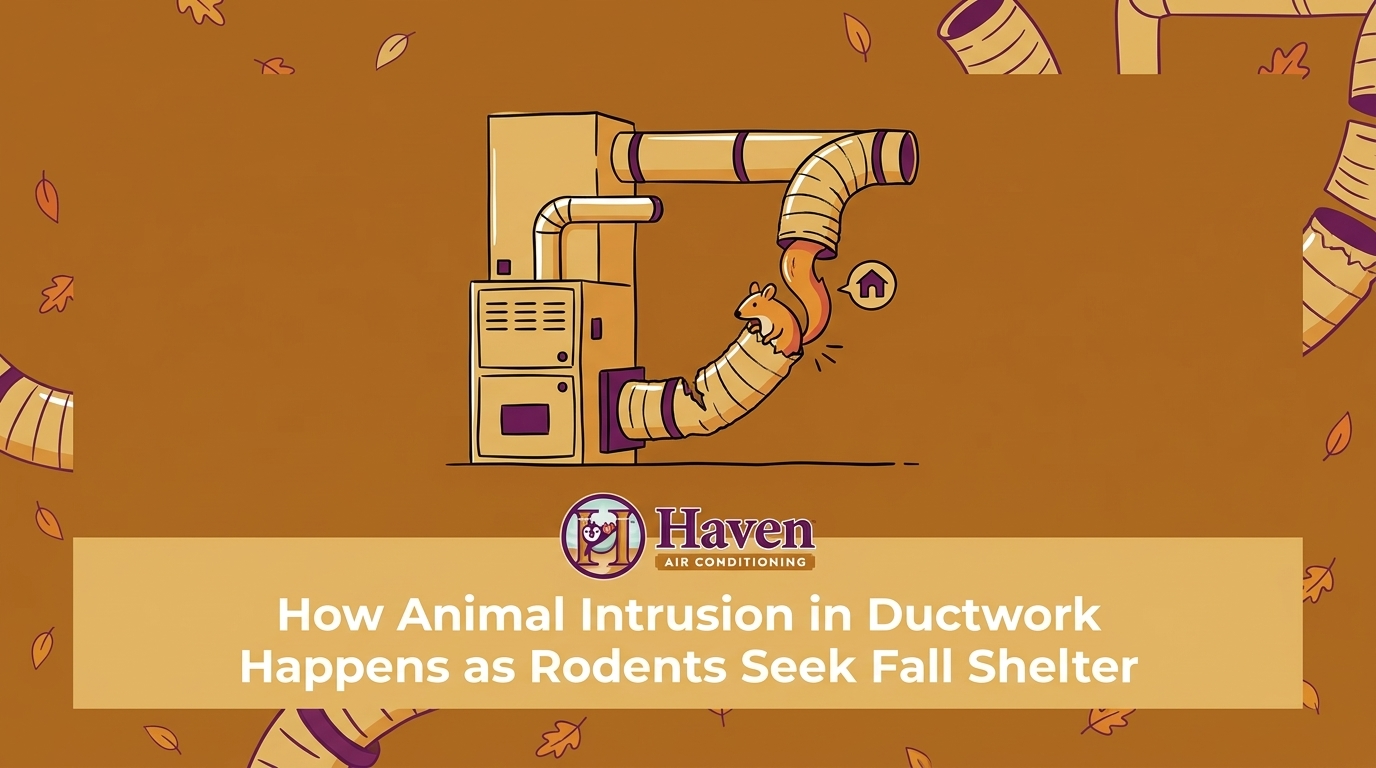
Before the first freeze hits, understanding exactly how animal intrusion in ductwork happens as rodents seek fall shelter is the single most important step you can take to protect your indoor air quality. As September/early fall temperature drops arrive in Southern California, a massive biological shift occurs right outside your door. The intense summer heat fades, and the suddenly cooler nights trigger a powerful survival instinct in local wildlife. Pests that spent the summer outdoors immediately begin searching for warm, insulated, and protected environments to build their winter nests.
Here in Anaheim, our technicians at Haven Air Conditioning see a rapid migration of pests directly into residential spaces as hot summers transition to cooler autumn evenings. Unfortunately, your heating and cooling system provides the perfect sanctuary. With its extensive network of pathways, abundant insulation, and radiant heat, the HVAC system becomes a prime target for these unwanted guests. When this happens, recognizing the early signs of intrusion is critical. Addressing the problem requires more than simply trapping a mouse; it demands a thorough approach to understanding your home’s ductwork and permanently sealing the structural breaches that allowed the pests inside.
If these vulnerabilities are left unchecked, compromised ducts quickly become a severe hazard. The moment your system kicks on, it can pull biological contaminants from the nest and distribute them into every room of your house, turning a minor pest issue into a major air quality crisis.
The Biological Drive: Why Your Heating System Becomes a Target
The Problem: When outdoor temperatures begin dipping into the 50s and 60s, rodents cannot rely on their natural environment to survive. They need external heat sources and dense materials to build insulated nests for the upcoming winter. Anaheim attics and crawlspaces offer exactly what they are looking for, but the ductwork itself is the ultimate prize.
The Cause: Your HVAC system is uniquely attractive to pests for two main reasons: heat and material. Even early-season furnace use generates residual warmth that radiates through the ductwork, drawing pests like a magnet. Southern California is home to determined species like roof rats and house mice, which are highly adept at climbing into elevated spaces and exploiting these warm zones. Furthermore, the thick fiberglass and foil-backed insulation wrapping your ducts serve as premium, pre-made nesting material.
The Solution: Preventing this migration requires blocking access before the temperature drops significantly. By understanding the biological drive of these pests, homeowners can take proactive measures. Partnering with our local experts for professional AC repair in Anaheim ensures that your system is thoroughly inspected and secured against these seasonal invaders before they can settle in.
The Search for Warmth and Insulation
Unlike larger mammals, small rodents lose body heat rapidly. They rely entirely on finding sheltered microclimates to survive cooler seasons. The soft, spun fiberglass surrounding your air ducts provides the perfect thermal barrier. Instead of foraging for leaves and twigs, a rodent can simply burrow into the exterior jacket of a flexible duct, instantly creating a highly insulated, temperature-controlled home right next to a reliable heat source.
Structural Weak Points: The Physical Mechanics of Duct Intrusion
Rodents do not simply materialize inside your vents; they actively breach the system through specific physical vulnerabilities. In our years of servicing local HVAC systems, we’ve learned that understanding the mechanics of these breaches is essential for protecting Anaheim attics and crawlspaces from infestation.
- Degraded Vapor Barriers: Over time, the outer plastic or foil vapor barrier of flexible ducting becomes brittle due to extreme attic heat. Rodents easily scratch or chew through this weakened outer layer.
- Insulation Mining: Once the vapor barrier is breached, pests pull away the fiberglass insulation to use for their nests, exposing the thin inner core of the duct.
- Inner Core Penetration: The inner core of a flexible duct is often just a thin plastic liner supported by wire. A mouse can easily chew through this final layer, gaining full access to the interior airflow pathway.
- Exploiting Loose Connections: Temperature fluctuations cause metal and plastic components to expand and contract. Over years of use, this movement degrades mastic sealant and loosens foil tape at connection points, creating small gaps.
It is a well-documented fact that mice can squeeze through holes as small as a quarter-inch. A slightly disconnected return plenum or a failing joint at a junction box provides a wide-open door for a determined pest. Because these vulnerabilities are usually buried under attic insulation or hidden in dark crawlspaces, they remain completely out of sight, making them incredibly difficult for the average homeowner to detect until the damage is severe.
The Degradation of Flexible Ducting
Our team frequently encounters flexible ducting in Southern California homes because it is cost-effective and easy to route through tight spaces. However, this material is highly susceptible to dry rot and physical damage over the years. As the material ages, it develops micro-tears. Rodents have an exceptional sense of smell and can detect the conditioned air escaping from these tiny leaks, leading them directly to the weak spot where they can chew their way inside.
Disconnected Joints and Failing Seals
Even rigid metal ductwork is not entirely immune to intrusion. The joints where different sections of duct meet, or where the duct connects to the main air handler, are common failure points. When the tape dries out or the mechanical fasteners loosen, a small gap forms. Rodents will aggressively gnaw at the edges of these gaps, expanding them just enough to slip inside the primary air stream.

Listening and Smelling for Trouble: Early Signs of Compromised Ducts
Because ductwork is largely hidden behind walls and ceilings, you have to rely on your senses to detect an intrusion. Catching the problem early—before the heating season peaks and the nest grows—can save your system from catastrophic damage. If you notice any of these signs as September/early fall temperature drops occur, immediate action is required.
- Scratching and Scurrying Sounds: If you hear light scratching, scurrying, or thumping coming from your vents when the HVAC system is completely idle, pests are likely using the ductwork as a highway.
- Sudden Foul Odors: A distinct, unpleasant smell that permeates the house the moment the blower fan kicks on is a major red flag. This is often the first indicator of biological waste inside the system.
- Ammonia-Like Smells: Rodent urine has a very strong, pungent ammonia scent. If your vents smell like a dirty pet cage, the inner core of the duct has been compromised.
- Restricted Airflow: If one specific room suddenly has very little air coming from the register, a large nest may be physically blocking the pathway, or the duct may be completely torn open, spilling air into the attic.
- Unexplained Cold Spots: Breached ducts pull in unconditioned attic or crawlspace air, causing certain rooms to feel noticeably colder or draftier than the rest of the house.
Ignoring these signs allows the pests to multiply and the structural damage to worsen. If you are unsure whether the sounds you hear are normal operational clicks or signs of wildlife, diagnosing strange noises from your HVAC system with a professional evaluation is the safest course of action.
The Invisible Threat: How Breaches Compromise Indoor Air Quality
The Problem: An animal inside your ductwork is not just a nuisance; it is a severe biological hazard. Anaheim attics and crawlspaces are dusty, dirty environments. When a rodent tears a hole in your air return or supply lines, that sealed system is broken, and the air quality in your living space is immediately threatened.
The Cause: Pests introduce a massive amount of biological material into the environment, including droppings, urine, shed fur, and dander. Furthermore, a torn return duct acts like a vacuum, pulling in raw, unfiltered attic air—complete with fiberglass particles, mold spores, and pest waste—bypassing your home’s air filter entirely.
The Solution: Restoring indoor air quality requires removing the source of the contamination and sealing the breach. Both the EPA and CDC issue strict guidelines regarding the health risks of poor indoor air quality and rodent exposure, noting that airborne pathogens from pest waste can trigger severe respiratory issues. If you have been wondering why your vents might smell musty as the weather cools, a compromised duct system pulling in contaminated air is a highly probable culprit.
The Multiplier Effect of HVAC Circulation
The true danger of duct intrusion lies in the mechanics of the HVAC system itself. A central air system is designed to circulate the entire volume of air in your home 5 to 7 times a day. This creates a dangerous multiplier effect. A single breach in one section of ductwork does not just affect that specific room; the blower fan acts as a high-powered distribution mechanism, rapidly spreading biological particulate matter into every single room connected to the system. What starts as an isolated nest in the attic quickly becomes a whole-home contamination event.
The Crucial Difference Between Pest Removal and System Restoration
When homeowners discover an animal in their vents during September/early fall temperature drops, their first instinct is usually to call an exterminator. While this is a necessary step, it only solves half of the problem.
Pest control companies are essential for safely trapping and removing the animal, but they do not repair the structural damage left behind.
Once the pest is gone, the gaping hole in your ductwork remains. Many homeowners attempt to fix these breaches themselves using standard duct tape. This is a critical mistake. Standard tape dries out, peels off, and fails rapidly in extreme attic temperatures. Furthermore, DIY repairs often violate local building and safety codes, leaving the system vulnerable to immediate re-infestation.
| Service Provider | Primary Function | What They Do NOT Do |
|---|---|---|
| Pest Control Company | Traps, removes, and exterminates rodents safely. | Cannot repair torn ducts, seal plenums, or restore HVAC airflow. |
| HVAC Professional | Inspects, repairs, and permanently seals structural duct breaches. | Does not handle live animal trapping or extermination. |
Professional HVAC structural sealing is the mandatory second step to restore safe airflow. At Haven Air Conditioning, our trusted local expertise ensures comprehensive inspections that catch hidden vulnerabilities before pests compromise your family’s air quality. Relying on our certified technicians guarantees that the repair meets safety standards and permanently locks out future intruders.
Securing Your System: The Necessity of Professional Structural Sealing
Permanently securing your ductwork requires a comprehensive approach that goes far beyond a quick patch job. When our HVAC professionals evaluate Anaheim attics and crawlspaces for structural integrity, they perform a rigorous inspection process to locate every hidden breach, disconnected segment, and degraded vapor barrier.
Professionals use industry-grade methods to permanently seal joints. Instead of unreliable tape, technicians apply thick mastic sealant—a specialized resin that hardens into an airtight, durable shell over the connections. For rigid ductwork, metal collars and mechanical fasteners are utilized to ensure that the joints cannot be pulled apart by thermal expansion or determined pests.
In cases where flexible ducting has been heavily mined for insulation or severely contaminated by biological waste, patching is not a viable or sanitary option. The damaged sections must be completely removed and replaced with new, intact ducting to ensure the air pathway is clean and secure. Proper sealing and replacement not only lock out pests but also dramatically restore the system’s energy efficiency, ensuring that you aren’t paying to heat your attic.
The impact of this professional restoration is significant. For example, our team recently helped a local homeowner dealing with very old heating and air units paired with outdated, compromised ductwork. Upon inspection, we found completely disconnected hidden ducting in the attic that was spilling conditioned air into the rafters. We upgraded the complete system, replaced the aging ductwork, and permanently fixed the hidden disconnections at no extra charge. The result was a drastically improved, highly efficient system, and we kept the entire work area spotless, safely removing all old, contaminated materials.
Protect Your Home’s Air Quality Before Winter Arrives
As the September/early fall temperature drops signal the changing of the seasons, the urgency of addressing duct vulnerabilities cannot be overstated. The window between the end of summer heat and the first heavy use of your furnace is the ideal time to secure your home against seasonal invaders.
Proactive, professional duct inspections are the only way to prevent severe indoor air quality hazards caused by rodent intrusion. Pest control removes the immediate threat, but only a certified HVAC professional like those on our team can permanently seal the structural breaches, restore proper airflow, and ensure that the air circulating through your living space is clean, safe, and healthy. If you suspect any structural breaches, hear strange noises, or notice foul odors coming from your vents, do not wait for the problem to multiply. Have your system evaluated immediately to protect your home and your family’s health before winter truly arrives.
Frequently Asked Questions
Can mice get into heating ducts?
Yes, mice can easily get into heating ducts if there are structural vulnerabilities. They are capable of squeezing through gaps as small as a quarter of an inch, making loose joints and degraded flexible ductwork prime entry points. Once inside, they use the insulated environment to build nests and stay warm.
How do rodents physically get into ductwork?
Rodents physically breach ductwork by exploiting existing damage or chewing through weak materials. They often scratch through the brittle outer vapor barrier of flexible ducts, pull away the fiberglass insulation, and gnaw through the thin inner plastic core. They also target disconnected metal joints where tape or mastic sealant has failed over time.
What are the signs of mice in air vents?
The most common signs of mice in air vents are strange noises and foul odors. You may hear scratching, scurrying, or thumping sounds when the HVAC system is turned off. When the blower fan kicks on, you might notice a sudden ammonia-like smell from urine or a generally musty, unpleasant odor circulating through the house.
What happens if a mouse dies in your air vent?
If a mouse dies in your air vent, the decomposition process will create a severe, highly localized foul odor that worsens when the HVAC system runs. The blower fan will actively push the airborne particles and smells from the decaying animal directly into your living spaces. This creates a significant biological hazard that requires immediate professional removal and duct sanitation.
Who do you call for an animal in the air duct?
You need to coordinate between two separate professionals to fully resolve the issue. First, call a licensed pest control company to safely trap and remove the live animal or clear the nest. Second, you must call a licensed HVAC professional, like our team at Haven Air Conditioning, to inspect the ductwork, repair the structural damage, and permanently seal the entry points.
How can you tell the difference between typical HVAC noises and pest intrusion?
Typical HVAC noises, like popping or pinging, usually occur right when the system turns on or off due to metal expanding and contracting with temperature changes. Pest intrusion noises, such as light scratching, squeaking, or scurrying, are irregular and often occur when the system is completely idle and quiet.
Is it safe to run my heater if I suspect compromised ductwork?
No, it is not safe to run your heater if you suspect animals have compromised your ductwork. Running the system will pull biological contaminants, waste particles, and unfiltered attic air directly into the blower and distribute them throughout your home. You should leave the system off until a professional from our team can inspect and seal the breaches.