(714) 332-6302

The Late-Summer Breakdown: A Critical Decision Point for Your AC
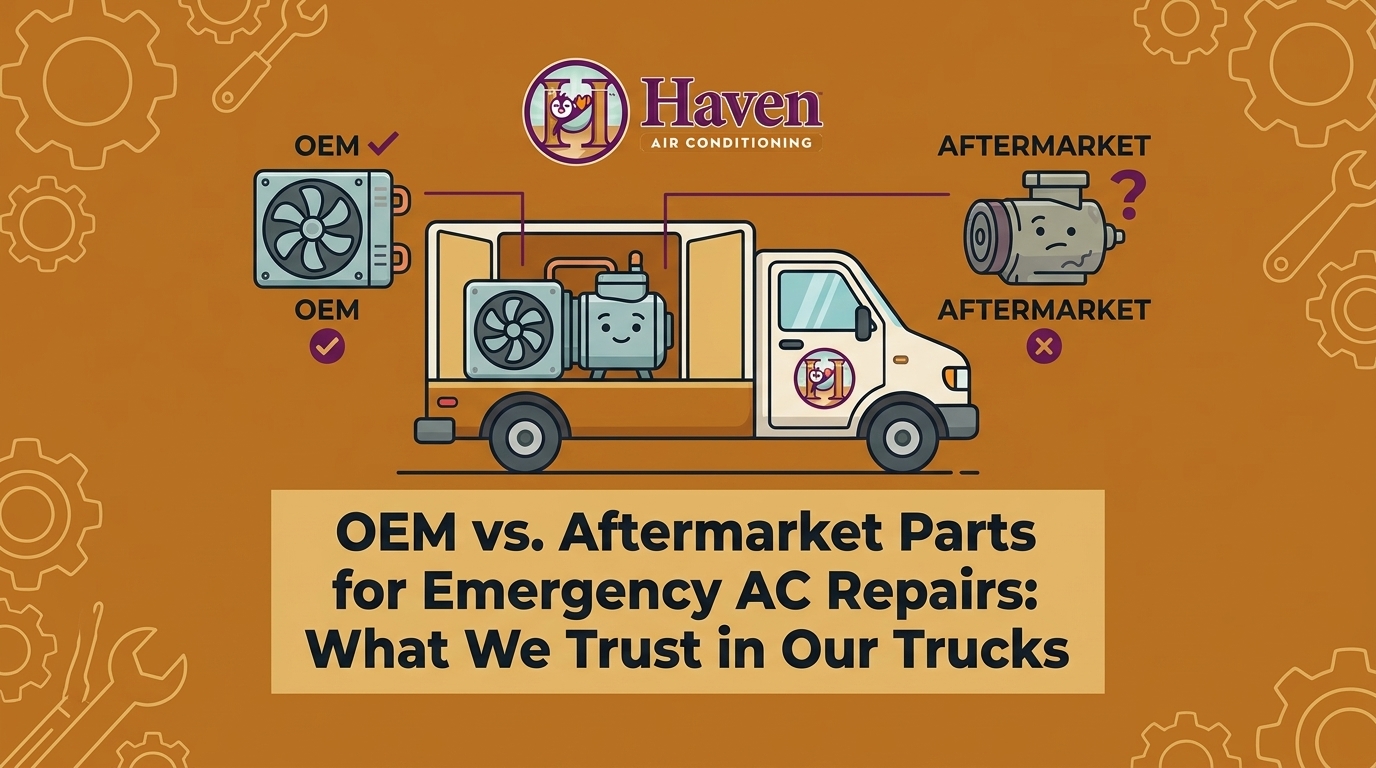
When the August late-summer heat causes a sudden system failure, understanding the difference between OEM vs. Aftermarket Parts for Emergency AC Repairs: What We Trust in Our Trucks is essential for a permanent fix. Your air conditioner has likely been running non-stop for months, battling high ambient temperatures and working overtime to keep your living space comfortable. When a crucial component finally gives out under that immense strain, you are faced with a hot house and an urgent need for relief.
When you need reliable Anaheim AC repair, ensuring your system gets the right components during an emergency AC repair makes all the difference between a lasting solution and a temporary patch.
The most critical moment of any service call happens right outside your home. It is the exact moment a technician opens the heavy metal doors of their service truck to pull a replacement part. Inside that truck sits a choice. On one side, there are cheap, generic, universal parts designed to fit dozens of different systems with “close enough” specifications. On the other side are Original Equipment Manufacturer (OEM) parts, engineered to the exact tolerances of your specific unit.
The temptation of the quick fix: It is entirely natural to want the fastest, most convenient solution when your home is heating up by the minute. Generic parts are heavily marketed as universal problem solvers. However, the specific components installed in your condenser unit dictate whether the repair will hold up through the rest of the season or leave you sweating again in two weeks. Settling for aftermarket compromises during peak cooling season is a gamble with your home’s comfort and your system’s longevity.
Understanding the Strain: Why Regional Heat Demands Exact Tolerances
Air conditioning systems operating in Southern California face a unique set of environmental challenges. The intense, sustained heat requires continuous cooling cycles just to maintain a baseline indoor temperature. This relentless operational demand pushes every electrical and mechanical component inside your condenser to its absolute limit.
The reality of exact tolerances: HVAC equipment is designed by engineers who calculate precise electrical loads, thermal expansion rates, and heat dissipation requirements. Every motor, contactor, and capacitor is calibrated to operate within a very narrow window of performance—known as exact tolerances. When a system runs within these parameters, it operates efficiently and safely.
- Thermal stress: High ambient temperatures reduce a component’s ability to shed excess heat, meaning parts must be perfectly sized to avoid overheating.
- Electrical precision: Compressors require a highly specific electrical boost to start up. If the voltage or capacitance is off by even a fraction, the motor struggles.
- Vibration and physical fit: Parts that do not fit the factory mounting brackets exactly will vibrate, leading to premature wear and loose electrical connections.
Generic aftermarket parts are built on a fundamentally different philosophy. They are manufactured with wider, less precise operating ranges so they can be installed in as many different brands and models as possible. While a universal part might survive in a mild climate where the AC only runs a few hours a day, Anaheim’s extreme summer heat ruthlessly exploits the weaknesses of these “one-size-fits-all” components.
Knowing when to call a professional for AC problems is only half the battle; ensuring that professional uses parts engineered specifically to survive end-of-season heat is what actually protects your system. Continuous late-summer cooling loads leave zero room for error, making precise tolerances non-negotiable.
The Showdown: OEM Dual Run Capacitors vs. Generic Universal Capacitors
To truly understand why part selection matters, we have to look closely at one of the most common failure points in any air conditioning system: the dual run capacitor. This small, cylindrical component stores electrical energy and delivers a precise jolt to start the compressor and the fan motor. It acts much like a high-powered battery that cycles on and off thousands of times a season.
When comparing OEM dual run capacitors vs. generic universal capacitors, the differences in engineering, build quality, and performance become immediately clear.
| Feature | OEM Dual Run Capacitors | Generic Universal Capacitors |
|---|---|---|
| Microfarad Tolerance | Exact match to factory specifications (usually +/- 3% to 5%) | Broader tolerance ranges, often requiring dial-in adjustments |
| Physical Dimensions | Fits perfectly into the factory mounting strap to prevent vibration | Varies wildly; often requires retrofitting, zip-ties, or loose mounting |
| Heat Dissipation | Engineered for the specific thermal load of the matching compressor | Prone to swelling and overheating under continuous heavy loads |
| Lifespan Expectancy | Designed to match the original factory component’s lifecycle | Significantly shorter, often failing after a single harsh summer |
OEM Precision
An OEM capacitor is identical to the one the factory originally installed on the assembly line. It is engineered specifically for the compressor motor it supports. This means it meets strict ASHRAE equipment tolerance guidelines and delivers the exact microfarad rating required. Because it is built for a specific chassis, it fits snugly into the mounting bracket, ensuring optimal heat dissipation and protecting the internal dielectric fluid from breaking down prematurely.
Aftermarket Compromises
Universal capacitors are designed to be a jack-of-all-trades but a master of none. To fit a wide variety of systems, they often feature a larger physical footprint or a cluster of extra terminals. This universal design frequently requires the technician to retrofit the mounting strap or add extra wiring just to make it fit. More importantly, the broader tolerance ranges can deliver slightly too much or too little power. Over time, this “close enough” electrical supply overworks the compressor, leading to a much higher risk of premature failure under continuous load.

The Hidden Risks of Relying on Aftermarket Parts During a Heat Wave
The dangers of using inferior generic parts go far beyond a simple component failure. In a complex HVAC system, every part relies on the others to function correctly. When one aftermarket piece begins to struggle under the August late-summer heat, it creates a domino effect that threatens the most expensive components in your unit.
The problem: A failing universal capacitor doesn’t usually just stop working instantly. Instead, it slowly loses its ability to hold a full charge. As its performance degrades, it fails to deliver the necessary electrical kick to the compressor.
The cause: Because the compressor still needs to start, it is forced to draw more electrical amperage directly from your home’s breaker panel to compensate for the weak capacitor. This massive increase in electrical strain causes the compressor motor to run incredibly hot. The internal windings begin to degrade, the oil breaks down, and the entire system operates under severe distress.
The solution: Getting the repair done right the first time with an exact-match factory part prevents this dangerous cascade of secondary failures. One local homeowner reached out when their AC unit failed during a severe Friday evening heat wave. A technician arrived that same evening, properly diagnosed the underlying electrical strain, and replaced a failed component with an exact-match factory part. The AC was repaired and functioning again quickly, preventing a miserable weekend and protecting the compressor from further damage.
There is nothing more frustrating than a secondary breakdown—having your AC fail again just days after a repair because a generic part couldn’t handle the heat. A minor repair should never turn into a major compressor replacement just because a technician used a cheaper, universal band-aid.
Our Truck Inventory Strategy: Why We Refuse to Cut Corners
What a technician carries on their truck is not an accident; it is a deliberate, calculated choice by the HVAC company. Many companies choose to stock their fleet entirely with aftermarket universal parts because it is cheaper and requires less inventory management. A single universal motor or capacitor can theoretically patch dozens of different calls, making the logistics easier for the business.
At Haven Air Conditioning, our strict policy is to stock our trucks with trusted OEM parts for critical components. We refuse to cut corners because we know firsthand how generic parts fail under the crushing weight of Southern California summers. When we compare OEM dual run capacitors vs. generic universal capacitors in the field, the data heavily favors the factory-engineered solution.
Why our inventory strategy matters to you:
- Permanent solutions: We do not believe in temporary band-aids. When we replace a part, our goal is to restore your cooling reliably for the long haul.
- Reduced wait times: By intentionally stocking the right factory-grade parts for the major brands we service, we minimize the time you spend waiting for a specialized component to be ordered and shipped.
- System protection: Every part we pull from our trucks is selected to protect the broader health of your condenser, ensuring that a simple fix doesn’t evolve into a catastrophic failure.
This inventory strategy is an investment in your comfort. We would rather carry a larger, more precise inventory of OEM components than leave an Anaheim homeowner vulnerable to the unpredictable performance of a generic substitute.
Protecting Your Investment: Warranty Compliance and System Health
One of the most overlooked aspects of emergency air conditioning repair is how the replacement parts affect your overall manufacturer warranty. Modern HVAC systems represent a significant investment in your home, and protecting that investment requires strict adherence to the manufacturer’s guidelines.
Major HVAC manufacturer warranty standard terms almost universally require the use of approved OEM parts for all repairs. If a technician installs a generic, non-OEM part into your system, the manufacturer has the right to void the warranty on the entire HVAC unit. If that universal part eventually causes your compressor to fail, you could be left entirely unprotected, bearing the full cost of a major replacement.
Steps to protect your system’s warranty and health:
- Verify the part: Before any repair begins, actively ask your technician if they are using an OEM part or an aftermarket generic.
- Check the fitment: Ensure that the new part fits perfectly into the existing factory mounts without the need for zip-ties, modified wiring, or forced retrofitting.
- Keep your documentation: Always request a detailed invoice that specifically lists the part numbers used during the repair, proving that factory-approved components were installed.
- Maintain the system: OEM parts integrate seamlessly with routine upkeep. Keeping up with your annual AC maintenance ensures that these high-quality components continue to operate at peak efficiency.
Your air conditioner is a finely tuned machine. Introducing a wildcard component into that ecosystem not only jeopardizes your warranty but also disrupts the system’s ability to cool your home efficiently. Insisting on authentic parts is the safest way to maintain long-term performance.
Beyond the Quick Fix: The True Value of a Permanent Repair
While aftermarket parts might seem like a fast track to restored cooling on a sweltering afternoon, they frequently pave the way for repeated service calls. The true value of a professional repair lies in the peace of mind that comes from knowing the job was completed with exact-match, factory-grade components designed to withstand the August late-summer heat.
The long-term perspective: When a system begins to experience component failures, it forces a broader conversation about the overall health of the unit. A high-quality OEM repair stabilizes the system, giving you time to evaluate your options without the pressure of an immediate crisis. It allows you to make informed decisions about repairing vs. replacing an older AC unit based on facts, rather than being forced into a sudden replacement because a generic part caused a catastrophic compressor failure.
A professional repair always focuses on the long-term health of the home’s comfort system. It is about restoring the unit to its original factory specifications so it can continue to operate safely, efficiently, and reliably for years to come. By choosing a company that prioritizes OEM inventory, you are choosing a partner dedicated to doing the job right the first time.
Frequently Asked Questions About AC Replacement Parts
Does using aftermarket parts void my AC warranty?
Yes, in many cases, using non-OEM parts can void the manufacturer’s warranty on the overall HVAC system. Manufacturers engineer their units to operate with specific components, and introducing generic parts alters the system’s performance metrics. If an aftermarket part causes secondary damage to a major component like the compressor, the manufacturer will typically deny the warranty claim, leaving you responsible for the repair.
Are OEM HVAC parts better than aftermarket?
OEM parts are manufactured to the exact specifications of your system, offering superior reliability, perfect fitment, and better performance under heavy strain. Because they are identical to the parts installed on the factory line, they maintain the precise electrical and thermal tolerances required for safe operation. Aftermarket parts often use broader tolerances to fit multiple brands, which can compromise efficiency and longevity.
Can I use a universal capacitor on my AC?
While a universal capacitor can technically function, its broader tolerances can overwork your compressor, making an exact-match OEM capacitor the safer choice. Universal models often require physical retrofitting to fit into the factory mounting bracket, which can lead to excessive vibration. Over time, the imprecise electrical delivery of a universal capacitor can shorten the lifespan of your blower motor and compressor.
Why do technicians prefer OEM parts for emergency repairs?
Professionals prefer OEM parts because they guarantee a permanent fix, reduce the risk of secondary breakdowns, and ensure the system operates exactly as designed. When responding to a severe breakdown during a heat wave, technicians know that OEM parts will handle the continuous cooling load without failing prematurely. It eliminates the guesswork and provides homeowners with true peace of mind.
How long does an OEM replacement part typically last?
OEM parts are designed to match the lifespan of the original component, significantly outlasting generic alternatives when subjected to continuous cooling cycles. Because they are built with higher-quality materials and engineered for specific thermal loads, they resist the swelling and electrical degradation that commonly plague aftermarket parts. With proper annual maintenance, an OEM part will reliably support your system for years.
Secure a Permanent Solution for Your Home’s Comfort
Surviving the brutal end of the season requires repairs you can trust without a shadow of a doubt. When the Anaheim heat pushes your system to the breaking point, a temporary band-aid is simply not enough to keep your family comfortable and safe.
Our trucks are intentionally stocked with the right factory-grade parts to ensure that every fix is a permanent solution. We refuse to compromise on quality because we know how much you rely on your air conditioner. If your system is struggling or has completely shut down, do not settle for a generic fix. Schedule a service call today to restore your cooling safely, effectively, and permanently.