(714) 332-6302

I’m wondering how long my AC will last in Anaheim. Can anyone explain the typical lifespan for Orange County homes?
How long does an AC last in Orange County depends on several factors — but here’s the short answer most homeowners need:
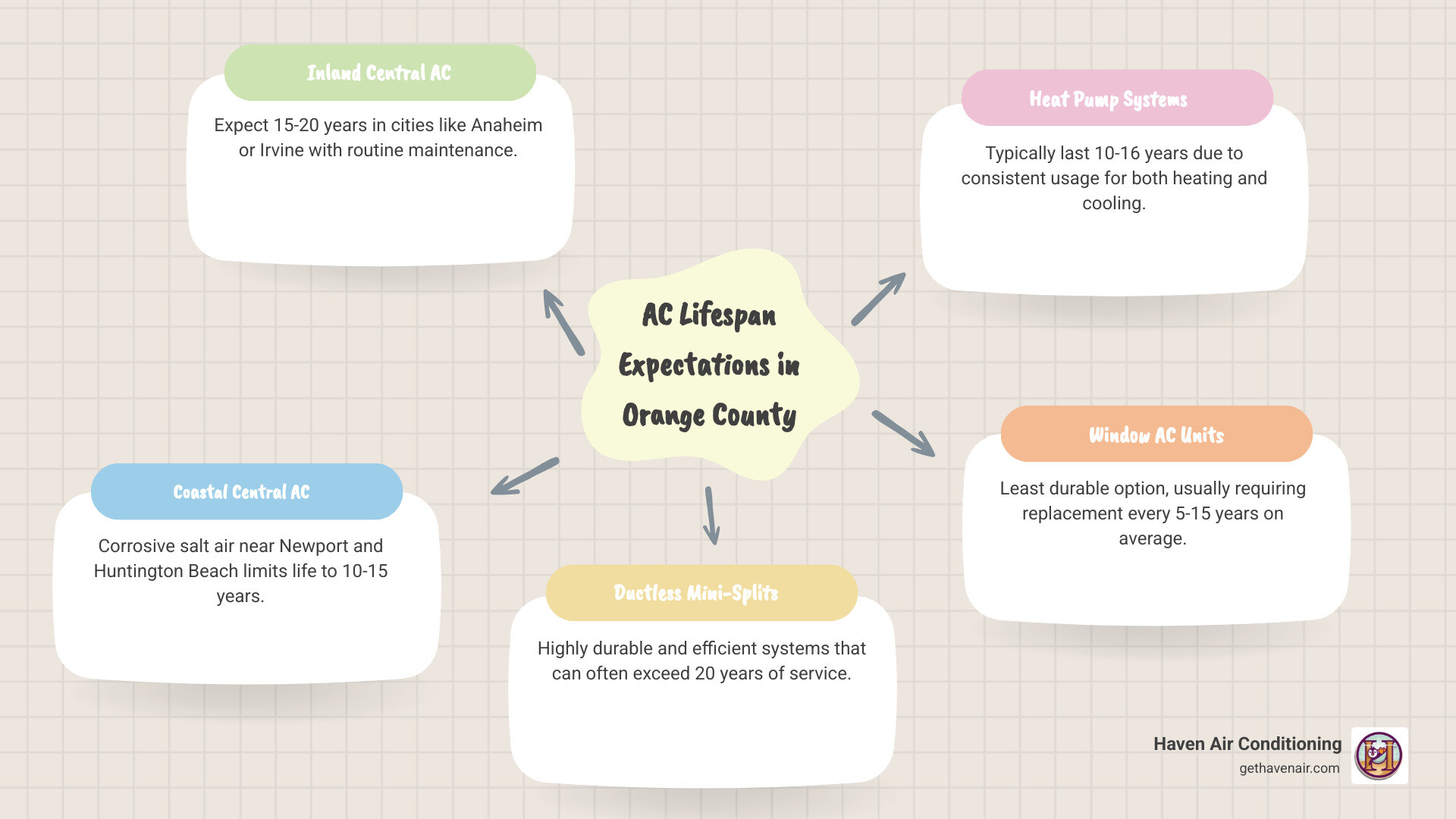
| AC System Type | Typical Lifespan in Orange County |
|---|---|
| Central AC (inland) | 15-20 years |
| Central AC (coastal) | 10-15 years |
| Ductless mini-split | 20+ years |
| Heat pump | 10-16 years |
| Window unit | 5-15 years |
Well-maintained systems consistently reach the higher end of these ranges. Poorly maintained or improperly installed units often fall short by 5 years or more.
If you own a home in Anaheim, Irvine, Huntington Beach, or anywhere across Orange County, your AC is working hard. Southern California’s long cooling season — often stretching from late spring well into October — puts more hours on a system each year than most other parts of the country. Add in coastal salt air near the beach cities, attic temperatures that can soar past 150°F, and SCE electricity rates that have climbed roughly 83% over the past decade, and you’ve got a situation where understanding your AC’s lifespan isn’t just trivia. It’s a real financial decision.
Most central AC systems in Orange County last somewhere between 15 and 20 years with proper care. But “proper care” is doing a lot of heavy lifting in that sentence. Units that miss annual maintenance, run in homes with leaky ducts, or sit too close to the ocean without protective coatings can start failing well before the 12-year mark.
This guide covers everything you need to know — from how your location within Orange County affects your unit’s lifespan, to when repair stops making sense and replacement becomes the smarter call.
How Long Does an AC Last in Orange County?
For most homes we service across the greater Orange County area, central AC lifespan usually falls into a pretty predictable range. Inland homes in places like Anaheim, Fullerton, Santa Ana, and Orange County neighborhoods farther from the coast often see about 15 to 20 years from a central air system. Near the coast, that range often drops closer to 10 to 15 years because salt air is rough on outdoor equipment.
If you want a broader overview of general equipment life expectancy, our guide on how long AC units last is a helpful companion read.
How long does an AC last in Orange County for central air systems?
A central air conditioner in Orange County will typically last 15 to 20 years when it is:
- Properly sized
- Professionally installed
- Maintained every year
- Not forced to run constantly because of duct leaks or insulation problems
On the lower end, we often see systems fail in 10 to 12 years when maintenance has been skipped, filters stayed dirty, or the compressor has been overworked for years. The compressor is the mechanical heart of the system. If it has to start and stop constantly, or run too long because the home cannot hold cool air, lifespan drops fast.
How long does an AC last in Orange County near the coast vs inland?
Location matters more than many homeowners realize.
In coastal parts of our service area such as Laguna Beach, salt-heavy air can settle on condenser coils and aluminum fins. Over time, that leads to corrosion, sometimes called white rust on aluminum surfaces. Once the fins and coil surfaces start breaking down, heat transfer suffers and the system has to work harder to cool the house.
Inland systems usually avoid that salt exposure, so they often last longer if everything else is equal. That is why a system in Laguna Beach may age faster than one in Anaheim or La Habra, even if both are the same brand and same age.
Lifespan by system type in Southern California homes
Not all cooling systems age the same way.
| System Type | Typical Lifespan Inland | Typical Lifespan Near Coast |
|---|---|---|
| Central split AC | 15-20 years | 10-15 years |
| Heat pump | 10-16 years | 10-14 years |
| Ductless mini-split | 20+ years | 15-20+ years |
| Window AC | 5-15 years | 5-10 years |
Ductless mini-splits often outlast traditional central systems because they can run more efficiently and avoid some of the duct-related stress central systems face. Heat pumps can have shorter lifespans because they typically operate year-round for both cooling and heating.
What Shortens or Extends AC Lifespan in Southern California?
Most AC lifespan issues come down to a few big factors:
- Installation quality
- Correct sizing
- Duct condition
- Maintenance habits
- Local climate exposure
- Thermostat behavior
Our HVAC preventive maintenance guide goes deeper into the upkeep side, but a few Orange County-specific issues are worth calling out here.
Why coastal salt air and humidity matter in Orange County
Salt air is the big one for coastal homes. Even if your AC is not directly on the sand, marine air can still speed up coil and cabinet corrosion. Over time, corrosion weakens condenser fins, reduces efficiency, and can contribute to refrigerant coil problems.
What helps:
- Gentle fresh-water rinsing of the outdoor unit in coastal areas
- Keeping vegetation and debris away from the unit
- Using equipment or coatings designed for coastal exposure
- Scheduling inspections before corrosion gets severe
Humidity is usually moderate in much of Southern California, but coastal moisture still adds load to the system. More moisture to remove means longer run times, and longer run times mean more wear.
The biggest lifespan factors homeowners can control
Here is the good news: homeowners do have real influence over AC longevity.
The biggest controllable factors are:
- Changing or checking filters regularly
- Keeping the outdoor unit clean and unobstructed
- Setting the thermostat reasonably, often around 77 to 78 degrees in summer
- Using a smart thermostat to reduce unnecessary runtime
- Closing blinds during the hottest part of the day
- Improving attic insulation and reducing heat gain
A thermostat set very low does not cool the house faster. It just tells the system to keep running longer. In plain English: the AC is not impressed by your optimism.
Why proper installation and ductwork matter more than most homeowners think
A perfectly good system can have a shortened life if it was installed poorly.
An oversized unit can short cycle, meaning it cools the space too quickly and shuts off before completing a healthy run cycle. That frequent starting and stopping puts extra strain on electrical components and the compressor.
An undersized unit has the opposite problem. It runs too long, especially during inland heat waves, and wears itself out trying to keep up.
Leaky ducts are another hidden problem in older Orange County homes. Research commonly estimates duct losses in the 20% to 40% range in some homes. That means a lot of paid-for cool air may be disappearing into attic space instead of your living room. The AC responds by running longer, and your system ages faster while your bill gets uglier.
A proper installation should include:
- A real load calculation, not guesswork
- Correct refrigerant charge
- Verified airflow
- Sound duct design and sealing
- A level outdoor pad
- Proper condensate drainage
How Maintenance Affects AC Life and Performance
Maintenance is one of the clearest predictors of lifespan. Well-maintained systems can often gain 3 to 5 extra years of service life compared to neglected ones.
For homeowners who want to stay ahead of breakdowns, our air conditioner maintenance plan and article on how AC tune-ups prevent mid-season breakdowns are useful next steps.
What regular maintenance should include in Orange County
A proper annual tune-up should typically include:
- Filter inspection or replacement
- Condenser and evaporator coil cleaning
- Refrigerant level check
- Capacitor and electrical testing
- Condensate drain inspection and clearing
- Blower component inspection
- Thermostat testing
- Airflow evaluation
These checks matter because small issues can turn into major failures if ignored. A weak capacitor today can become a no-cooling call on the hottest day of August. HVAC equipment has a great sense of drama that way.
DIY habits that help your AC last longer
There are several low-effort habits that can make a real difference:
- Check filters monthly and replace them every 30 to 60 days as needed
- Rinse the outdoor condenser gently if dust or salt buildup is visible
- Keep at least a couple feet of clearance around the condenser
- Trim nearby plants
- Close blinds on sunny windows
- Use ceiling fans so you can keep the thermostat a little higher
- Program cooling schedules instead of leaving the system at one setting all day
These steps reduce compressor strain, improve airflow, and help the system operate within normal limits.
When professional service makes the biggest difference
Some problems are easy to miss without testing tools or experience:
- Slight refrigerant loss
- Weak capacitors
- Dirty coils hidden inside the cabinet
- Duct leakage
- Drain line buildup
- Early compressor stress
That is where professional service matters most. Catching those issues early can prevent the kind of breakdown that turns a repair visit into a replacement conversation. If your system is acting up, our AC Repair Orange County Complete Guide explains common problems and what to expect next.
Signs Your AC Needs Repair or Replacement
Aging systems usually give warnings before they fail completely. The key is noticing those warnings before you are stuck sweating through a summer afternoon.
Our guide on when to consider HVAC replacement covers the broader decision-making process, but here are the main signs to watch.
Warning signs your AC is still repairable
A repair often makes sense when:
- The system is relatively young
- The issue is limited to one part
- Airflow problems are caused by a clogged filter or dirty coil
- The drain line is blocked
- A capacitor, contactor, or thermostat has failed
- The unit has otherwise been reliable
In other words, not every AC problem means the end is near. Sometimes it is a modest repair, not a farewell tour.
Warning signs replacement is the smarter move
Replacement becomes more likely when you have a mix of age, inefficiency, and major repair needs, such as:
- The unit is 10 to 15+ years old
- Breakdowns are becoming frequent
- Cooling is uneven from room to room
- Energy bills keep climbing without another explanation
- The compressor is failing
- The system uses R-22 refrigerant
- Comfort problems persist even after repairs
R-22 is especially important. Since it has been phased out, older systems that still use it can become much more expensive and difficult to repair.
Repair vs replace rules Orange County homeowners can use
A few rules of thumb can help simplify the choice:
- The 50% rule: if a repair is more than half the cost of a replacement, replacement deserves serious consideration
- The $5,000 rule: multiply the repair cost by the age of the system; if the total is over 5,000, replacement often makes more financial sense
- The frequency rule: if you are repairing the system every season, it is probably time to stop funding its comeback tour
Replacement also tends to be easier to plan during spring or fall, before extreme summer demand hits. If you are weighing your options, see AC replacement for optimal home comfort and our AC replacement cost guide 2025 for planning help.
What It Costs to Run an AC in Orange County in 2026
Operating cost is part of the lifespan conversation because high electric costs often push homeowners to replace older, less efficient systems sooner.
Southern California Edison rate structures matter here. Research shows SCE residential electricity rates have risen about 83% over the past decade, with about a 25% jump between 2022 and 2025 alone. That means an older unit does not just cool less efficiently. It can become much more expensive to live with.
How SCE time-of-use plans change your summer AC bill
Time-of-use plans charge more during peak periods, especially late afternoon and evening. In practical terms, the 4 PM to 9 PM window is often the expensive stretch.
That changes how homeowners should think about cooling:
- Pre-cool earlier in the day when rates are lower
- Raise the thermostat a bit during peak hours
- Use blinds, fans, and insulation to reduce afternoon heat gain
- Let a smart thermostat automate the schedule
Pre-cooling can be especially helpful in inland areas where late-day heat hangs on longer.
Typical daily cost to run AC all day in Orange County
Typical summer daily operating cost for a central AC in Orange County can range from about $13 to $26 per day depending on:
- Outdoor temperature
- System size
- Efficiency level
- Runtime or duty cycle
- Rate plan
- Whether the home is inland or closer to the coast
A 3-ton system commonly uses around 3 kWh per hour of compressor runtime. On mild coastal days, that system may run much less than it would during a triple-digit inland heat event. That is why one homeowner’s bill can look shockingly different from a neighbor’s.
How efficiency affects both cost and long-term value
Efficiency ratings matter a lot in Orange County because electricity is expensive and cooling season is long.
Higher-efficiency systems, especially variable-speed equipment and newer SEER2-rated models, can:
- Lower operating costs
- Reduce temperature swings
- Run more smoothly
- Put less extreme stress on components
Research also suggests many systems start showing noticeable efficiency gaps after around 12 years, even if they still technically work. So the question is not always “Is it broken?” Sometimes it is “Is it quietly costing too much to keep?”
Older ductwork can also erase a lot of efficiency gains. If ducts are leaking, even a good AC can perform like a mediocre one.
Best Practices to Help Your AC Last as Long as Possible
If your goal is to reach the high end of your system’s lifespan range, focus on consistency. There is no secret trick. It is mostly disciplined care.
For a broader maintenance overview, visit our HVAC preventive maintenance.
A practical Orange County AC longevity checklist
Use this checklist:
- Check filters monthly
- Replace filters every 30 to 60 days when needed
- Schedule professional maintenance once a year
- Keep the outdoor unit clear and clean
- Rinse coastal units periodically with fresh water
- Do not block vents indoors
- Keep thermostat settings reasonable
- Use ceiling fans to reduce cooling demand
- Close blinds on hot afternoons
- Inspect ductwork if rooms cool unevenly
- Upgrade insulation if the attic is superheated
- Address small repairs early
If you do only two things, make them filter care and annual maintenance. Those two habits do a surprising amount of heavy lifting.
When to plan ahead for replacement before a summer breakdown
The best time to plan replacement is before the system fails in peak heat.
Good times to prepare:
- Spring, before summer strain begins
- Fall, when cooling demand drops
- Any time your current unit is past the 12-year mark and needs major repair
Planning ahead gives you time to compare options, evaluate duct condition, think about efficiency, and avoid emergency decisions during a heat wave. It is much easier to make a smart choice when you are not standing in your living room wondering why it suddenly feels like a toaster oven.
Frequently Asked Questions About How Long ACs Last in Orange County
Can an AC in Orange County last 20 years or more?
Yes, especially inland and with excellent maintenance. A central AC lasting 20 years is possible, though not guaranteed. Ductless mini-splits can exceed 20 years even more often. The tradeoff is that very old systems are usually much less efficient than modern equipment, so a unit can still be “alive” while no longer being economical.
Does setting the thermostat lower wear out the AC faster?
Yes. Setting the thermostat to 70 instead of 77 or 78 usually means longer runtime and more compressor wear. It also increases electricity use. Lower settings do not make the system cool faster; they just keep it running longer.
Is replacing an older AC worth it with high SCE electricity rates?
In many cases, yes. With today’s higher electric rates, efficiency improvements can matter a lot. A newer, properly sized system may lower operating costs, improve comfort, reduce breakdowns, and make peak summer bills easier to manage. This is especially true if your current unit is older, struggling, or using outdated refrigerant.
Conclusion
So, how long does an AC last in Orange County? In most cases, about 15 to 20 years inland and 10 to 15 years near the coast, with ductless systems often lasting longer. The big difference-makers are maintenance, installation quality, duct condition, thermostat habits, and whether the unit has to fight coastal corrosion or excessive heat gain.
If your AC is showing its age, needing repeat repairs, or driving up your energy bills, it may be time for a professional evaluation. At Haven Air Conditioning, we help homeowners across Anaheim and the greater Orange County area with repairs, maintenance, replacements, ductless systems, and indoor air quality support. Our membership maintenance plan can help you stay ahead of breakdowns, and members benefit from priority scheduling when comfort cannot wait.
If you want a second opinion or just a check-up before summer gets serious, we are here to help. Learn more about our local services here: HVAC services in Orange County